The evolution of lash enhancement has moved beyond basic mechanical curlers and harsh chemical perms toward sophisticated chemical restructuring that prioritizes long-term lash integrity. For professional beauty technicians, the keratin lash lift represents a key advancement in eye-area services. By integrating structural proteins directly into the lifting and setting phases, this procedure enables technicians to deliver dramatic root lifts and defined curvature while actively reinforcing the natural hair structure.
Structural Science of Keratin Lash Lifting
Every natural eyelash consists primarily of keratin proteins bound by strong covalent lash disulfide bonds. These bonds create the three-dimensional structural network that determines the lash’s natural strength, direction, and curl pattern. During the initial stage of chemical lifting, an alkaline reducing agent – typically Ammonium Thioglycolate or Cysteamine HCl – swells the hair shaft and breaks these disulfide bridges through reduction, converting them into sulfhydryl groups and leaving the lash malleable.
The distinguishing feature of keratin-infused systems is what occurs while the hair cuticle is open. As the hair shaft expands, low-molecular-weight structural proteins – including hydrolyzed keratin, hydrolyzed silk, and soluble collagen – penetrate directly into gaps within the cortex. Often referred to as eyelash lamination, this process ensures that when the disulfide bonds reform during oxidation, the hair is structurally reinforced rather than depleted.

In classical chemical lifts, processing typically stops after neutralizing the setting lotion, leaving the hair vulnerable to moisture loss. A keratin lash lift concludes with a dedicated infusion step that flattens cuticle scale alignment and restores the natural lash pH to approximately 5.5. Formulations enriched with panthenol (Pro-Vitamin B5), peptides, and botanical oils replenish lipids, making the hair resilient against post-treatment environmental stress. Technicians evaluating specialized Korean lash lift formulations will note that modern formulas integrate these nourishing agents into both processing steps, refining traditional workflows as outlined in comparing classical versus Korean lash lift techniques.


Client Assessment, Safety Protocols, and Patch Testing
Precise technical execution begins with a pre-service consultation. Technicians must evaluate the client’s ocular health, natural lash density, cuticle porosity, and overall eye anatomy before selecting a lifting system.
- Conduct a medical history review to identify clear contraindications for lash lift treatments. Do not proceed if the client presents with active ocular infections, conjunctivitis, blepharitis, severe dry eye syndrome, glaucoma, eczema, or psoriasis affecting the orbital skin.
- Postpone chemical lifting for clients who have undergone ocular surgeries, such as LASIK, within the past six months, or those experiencing active seasonal allergies and eye watering.
- Exercise caution with pregnant or breastfeeding clients due to hormonal fluctuations that can alter hair porosity and yield unpredictable curl results.
- Perform a professional patch test 24 to 48 hours prior to the procedure. Apply a 1mm drop of both the lifting and setting solutions to the client’s inner wrist or behind the ear. If redness, swelling, itching, or inflammation occurs, cancel the treatment.
Precision Technical Protocol
Achieving symmetrical, long-lasting lift requires rigorous adherence to physical and chemical parameters during every stage of application.
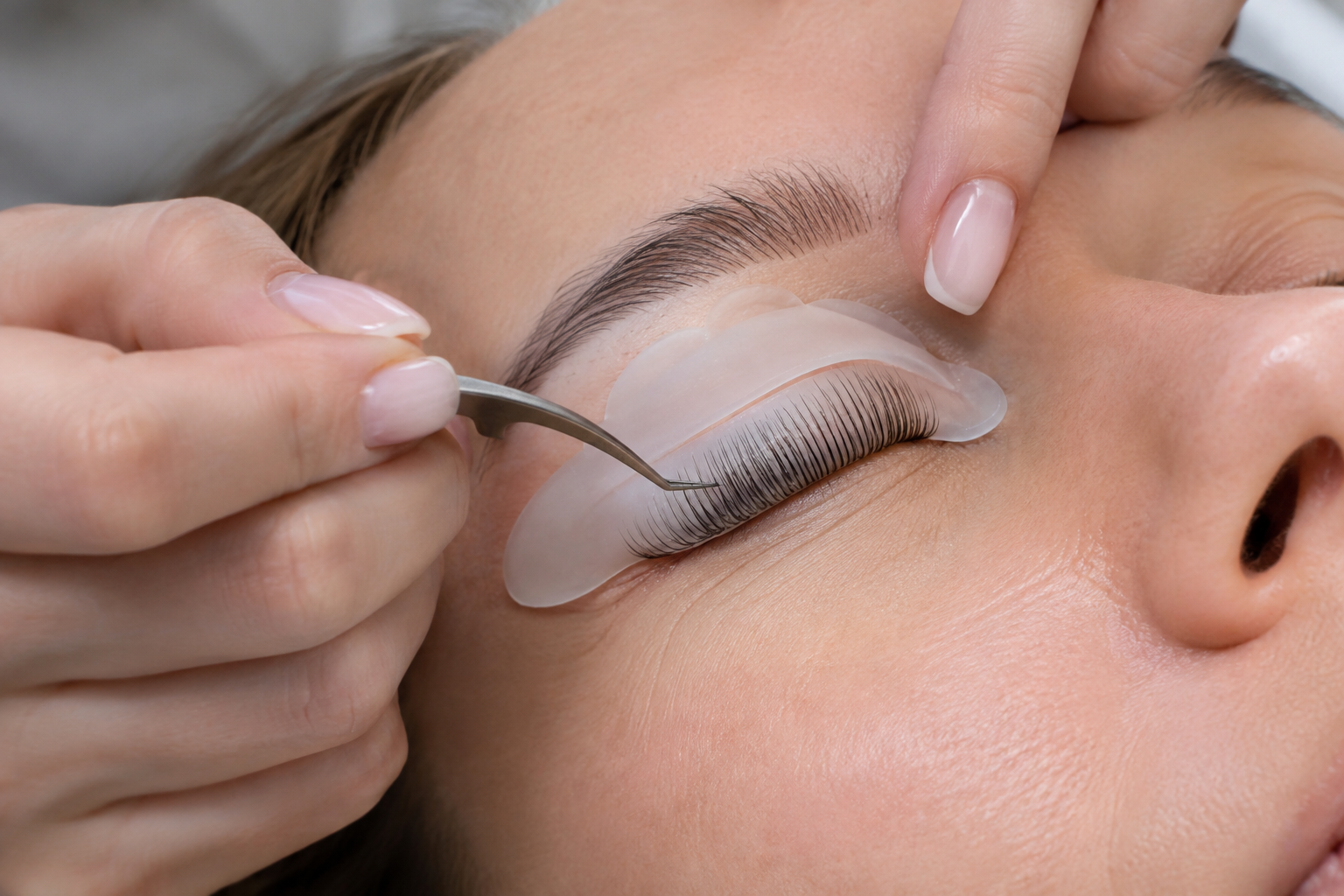
- Cleansing and prep: Thoroughly clean the lashes and eyelids using a dedicated oil-free cleansing foam to eliminate lipids, makeup, and microscopic residue that could block lotion absorption.
- Shield selection: Choose silicone shields based on the client’s natural lash length and target lift angle. Small shields create a sharp, dramatic lift from the root suitable for shorter lashes, whereas large shields produce a softer, rounded sweep appropriate for longer hair.
- Shield placement and alignment: Apply a thin 1mm layer of adhesive to secure the shield as close to the root line as possible without resting on the eyelid skin. Use an alignment tool to isolate and secure each lash onto the shield, keeping them parallel at a 45-degree angle without crossing.
- Solution application: Apply a thin, uniform layer of lifting lotion to the middle section of the lashes, keeping a 1mm to 2mm distance from the roots and completely avoiding the delicate tips. Refer to technical guidelines for perming and curling lotions.
- Timing management: Tailor processing times strictly to lash thickness and lotion chemistry.
- Neutralization and lamination: Remove the lifting lotion completely with a dry swab before applying setting lotion to the identical area for the same duration. Conclude by applying the keratin lamination cream for 5 to 10 minutes to close the cuticle and lock in moisture. An eyelash tint can be safely integrated directly before or during this final conditioning stage.

Iconic Duo Cysteamine Lash Lift Kit medium

Technical Troubleshooting and Risk Mitigation
Complications during lash lifting typically stem from inaccurate timing, incorrect shield placement, or improper chemical placement. Recognizing early indicators allows technicians to correct issues safely.
- Underprocessed lashes: If lashes fail to hold a curl or look uneven upon shield removal, the hair was likely underprocessed due to low room temperature, thick cuticles, or premature lotion removal. Do not re-treat immediately; allow the hair structure to rest for 4 weeks before scheduling a corrective service with slightly extended processing times.
- Overprocessed or frizzy lashes: Frizzy, crimped, or overly tight curls indicate overprocessing from excessive lotion contact at the tips or extended timing. Never re-apply chemical lifting solutions to damaged hair. Instead, focus on intensive hydration protocols, peptide conditioning, and daily structural repair as detailed in guidelines on how to moisturize eyelashes.
- Irritation and eye watering: Watering during application dilutes active solutions and leads to patchy results. Use ergonomic shields, keep solutions 1mm away from the eyelid skin, and switch sensitive clients to mild Cysteamine HCl formulations to reduce thermal sensation and redness.
Professional Aftercare and Maintenance Guidelines
Client aftercare dictates how successfully the reformed disulfide bonds solidify over time. Technicians must provide measurable maintenance steps to ensure results last through the full 6 to 8-week natural lash growth cycle.
- The initial 24 to 48-hour window: Inform clients that the chemical bonds continue stabilizing for up to two days. Instruct them to avoid water, steam rooms, saunas, intense exercise, eye makeup, mechanical curlers, and sleeping face-down to prevent premature drop or deformation. Provide complete lash lift aftercare guidelines for home reference.
- Cleansing regimen: After the 48-hour setting period, clients should wash their eye area daily using an oil-free cleansing foam to keep hair follicles clear of debris without breaking down structural proteins.
- Daily conditioning: Recommend daily application of peptide-infused keratin serums. These products act as effective professional serum alternatives to castor oil, penetrating the cortex to replenish protein loss without causing heavy build-up.
- Service intervals: Recommend booking full lash lift maintenance every 6 to 8 weeks, maintaining a minimum 4 to 6-week window between chemical services. If the lift remains intact at week 4 but the color has faded, offer a standalone tint service rather than re-lifting the hair shaft.


Elevating Salon Services Through Advanced Lash Chemistry
Integrating keratin lamination into your salon services transforms traditional lash perming into a restorative beauty procedure. Understanding disulfide bond manipulation, cuticle scale management, and precise solution timing allows you to create dramatic, symmetrical lifts while maintaining natural lash health.
Upgrade your salon treatment menu by incorporating high-performance professional lash lift solutions, stocking complete lash lift kits, and offering retail-ready lash lift aftercare products to ensure lasting results for every client.