


Understanding the structure and function of cuticle scales is fundamental to mastering professional lash lifts and brow lamination. As the outermost protective layer of the hair shaft, the cuticle controls product penetration, moisture balance, and overall hair health. By learning how cuticle scales respond to chemical processing, technicians can precise-tune processing times, refine application techniques, and consistently achieve long-lasting results.
Anatomy of the Hair Cuticle
The hair cuticle consists of 5 to 10 layers of flat, imbricate scales that overlap like roof shingles, pointing from the root toward the tip. This directional alignment creates an intact shield around the underlying cortex, regulating what enters and exits the hair fiber.
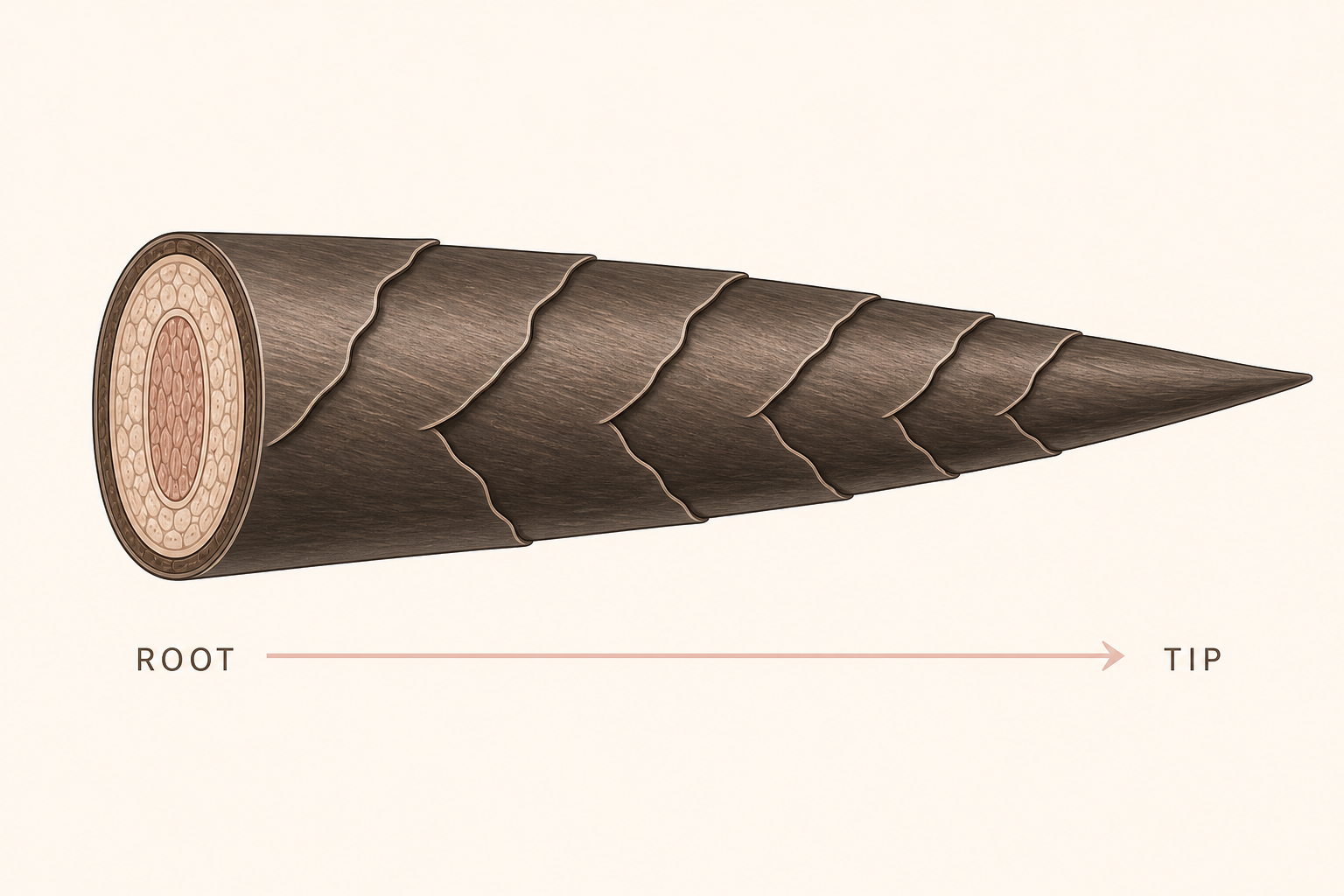
Each individual cuticle cell features a complex sublamellar structure:
- Epicuticle: The ultra-thin outermost membrane covered by the F-layer, a protective lipid layer rich in 18-methyleicosanoic acid (18-MEA) that gives natural hair its hydrophobic, low-friction surface.
- A-Layer: A rigid, cystine-rich region that provides high mechanical strength and chemical resistance.
- Exocuticle: Another heavily cross-linked layer that adds structural integrity to the cuticle cell.
- Endocuticle: The flexible, low-sulfur innermost region that swells readily when exposed to water or alkaline chemicals.
- Cell Membrane Complex (CMC): The intercellular cement between overlapping scale cells that binds the cuticle layers together.
During chemical services, alkaline lifting agents alter the hair’s natural pH, causing the endocuticle and CMC to swell. This lifting action opens the cuticle scales, allowing active reducing agents to penetrate into the cortex. Understanding this structural transformation helps technicians evaluate lash porosity accurately prior to every treatment.
Cuticle Scale Alignment and Treatment Outcomes
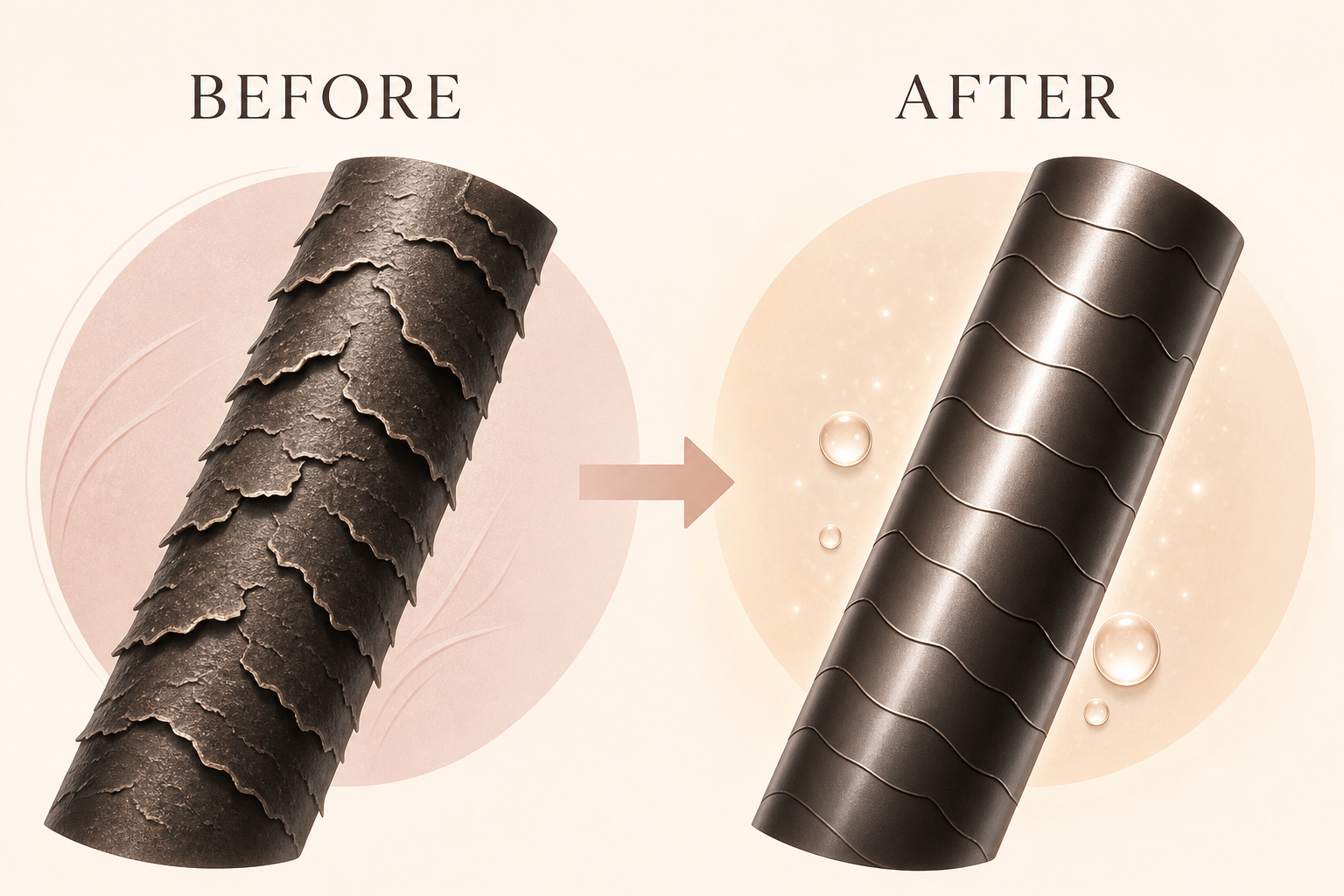
The state of the cuticle layer directly dictates the visual and physical success of chemical lash and brow enhancements. When cuticle scales lie flat and aligned, they create a uniform surface that reflects light cleanly, producing a high-shine finish. When scales become disrupted, lifted, or missing, light scatters, leaving the hair looking dull or frizzy.
- Product Absorption: Healthy, tightly closed cuticle scales act as a natural barrier. Opening the cuticles controlledly is essential for solution absorption during the eyelash lamination process.
- Processing Consistency: Uniform cuticle structure ensures even penetration of reducing lotions. Irregular cuticle density can lead to patchy processing or spotty tint uptake.
- Structure Retention: After reshaping disulfide bonds in the cortex, properly closing and smoothing the cuticles seals the new structure into place, extending treatment longevity.
Selecting calibrated perming and fixing formulations ensures controlled cuticle opening without compromising structural cohesion. Technicians can explore high-performance formulas by browsing professional lash lift lotions.

Assessing Cuticle Integrity and Modifying Processing Times
Before applying chemical solutions, technicians must assess cuticle integrity through visual inspection and history intake. Modifying processing times based on cuticle condition prevents underprocessing or severe structural breakdown.

- Low Porosity (Virgin Hair): Cuticles are tightly sealed and hydrophobic. Solutions take longer to enter the cortex. Standard timing applies, and gentle thermal isolation may be used to assist scale opening.
- Medium Porosity (Healthy Hair): Cuticles are intact but responsive. Standard timing guidelines yield predictable, optimal lifting without stress.
- High Porosity (Previously Chemically Treated): Cuticle scales are partially raised or fragmented. Solutions penetrate rapidly. Reduce processing time by 15% to 20% to prevent over-softening.
Recognizing early signs of structural stress helps avoid severe lash cuticle damage. If a client presents with compromised lashes, avoid re-processing immediately. Instead, evaluate previous service outcomes to correct issues like underprocessed lash lifts or rectify severe brow lamination complications through restorative conditioning schedules.
Precision Techniques for Cuticle Protection
Executing refined mechanical application techniques protects fragile scale edges during chemical processing:
- Apply Unidirectional Strokes: Use a microbrush or brush to apply lotions gently in the direction of hair growth (root to tip). Avoid aggressive back-and-forth brushing, which can strip lifted scale edges mechanically.
- Maintain Controlled Layering: Apply a 1mm thick layer of lifting lotion across the target working zone of the hair shaft. Keep lotion at least 1mm away from the extreme hair tips, where the cuticle layer is thinnest and most prone to frying.
- Use Gentle Formulations: Utilizing modern Korean lash lift solutions or cysteamine HCl-based systems softens bonds while minimizing extreme cuticle swelling.
- Tailor Brow Application: Brow hairs often feature variable cuticle thickness. Choose specialized brow lamination lotions formulated to protect delicate facial hair while providing predictable directional control.
Post-Treatment Cuticle Restoration and Sealing
Once the chemical reshaping and tinting stages are complete, restoring the cuticle layer to its natural closed state is vital. Chemical processing strips natural lipid coatings and leaves cuticle scales slightly raised.
Applying an acidic conditioning treatment or lamination cream as the final step counteracts alkalinity, lowers hair pH, and flattens the cuticle scales. Formulations rich in hydrolyzed keratin, amino acids, and plant oils fill micro-gaps along damaged scale edges, re-establishing a smooth outer surface that seals in moisture and adds intense shine.

Client Aftercare for Long-Term Cuticle Maintenance
Professional maintenance does not end when the client leaves the salon chair. Daily wear, friction, and harsh cleansers can cause ongoing cuticle loss if hair is left unprotected.
Technicians should provide clear post-treatment care guidelines, instructing clients to avoid water and steam for the first 24 to 48 hours while disulfide bonds fully re-stabilize. For ongoing home maintenance, recommend specialized lash lift aftercare products designed to nourish the cuticle layer, preserve lash flexibility, and prevent premature breakage.


Mastering Cuticle Management for Superior Results
Understanding cuticle scale mechanics elevates standard beauty treatments into precise, health-first hair services. By accurately diagnosing cuticle condition, customizing timing, applying lotions with measured technique, and sealing the hair fiber thoroughly, beauty technicians deliver radiant, long-lasting lifts while preserving natural lash and brow integrity.
Upgrade your service menu with professional perming systems, keratin sealants, and client aftercare essentials to deliver outstanding results on every client.
