


Understanding the chemistry of disulfide bonds is essential for delivering safe, consistent, and long-lasting lash lifts. As a lash technician, mastering how these internal chemical connections break and reform allows you to transition from simply following step-by-step protocols to precise lash manipulation based on individual client hair integrity.
Understanding Disulfide Bonds in Lash Structure
Natural eyelashes consist primarily of keratin proteins arranged in three structural layers: the outer cuticle, the central cortex, and the inner medulla. A thorough assessment of eyelash anatomy shows that the strength, elasticity, and natural curl pattern of the lash reside within the cortex. Here, polypeptide chains of keratin wrap around each other in tight helical structures, bound together by three distinct chemical bonds:
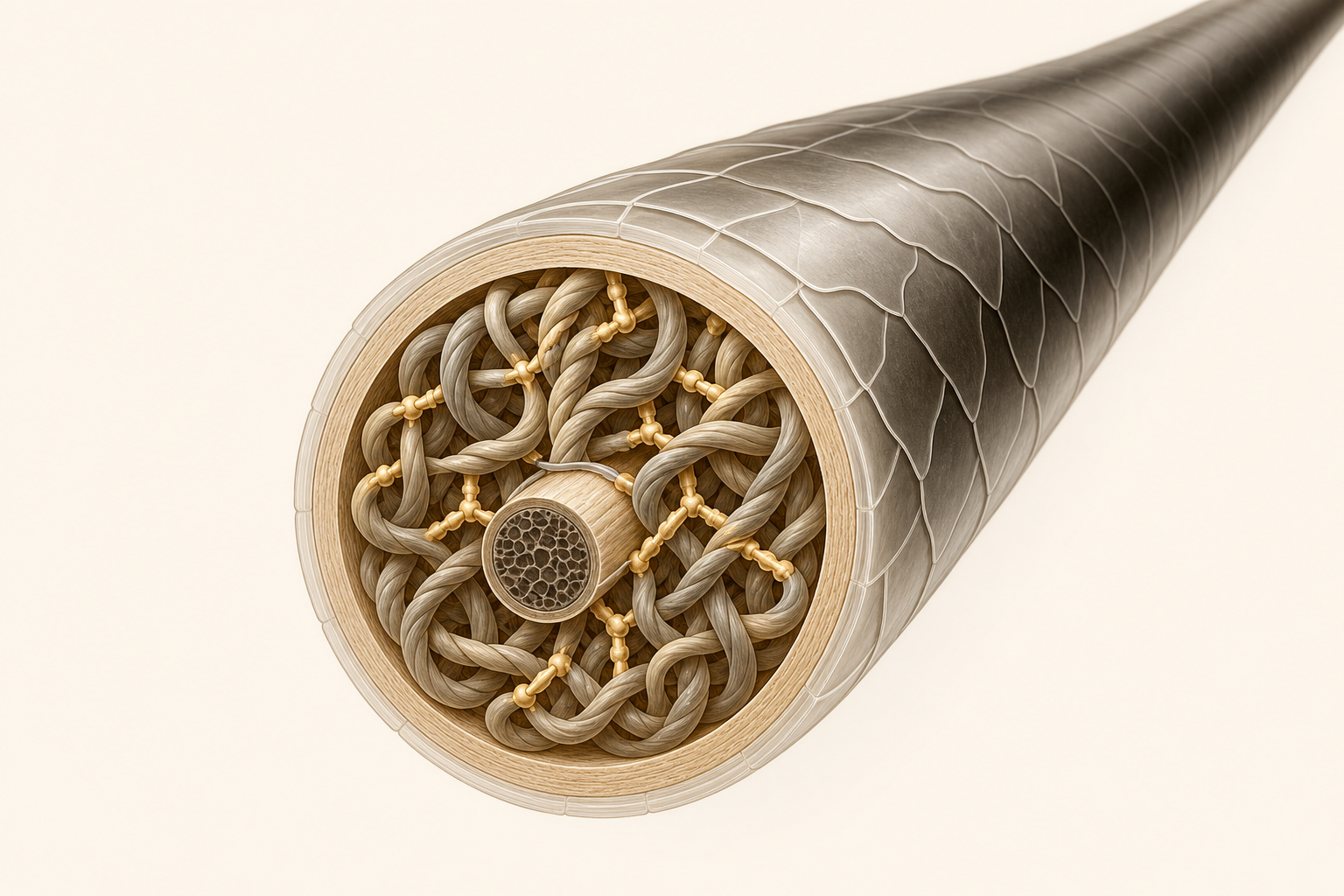
- Hydrogen bonds: Temporary physical connections that break easily when exposed to water or heat.
- Salt bonds: Ionic connections that respond to changes in pH levels.
- Disulfide bonds: Strong, covalent sulfur-sulfur bridges (-S-S-) formed between adjacent cysteine amino acids.
Disulfide bonds are the strongest connections within the hair shaft. They act as permanent cross-links locking the keratin chains into their natural shape. Because protective cuticle scales shield the inner cortex, specialized chemical formulations are required to open the cuticle, reach the cortex, and alter these disulfide bridges during a professional service.
The Chemical Process of Lash Lifting
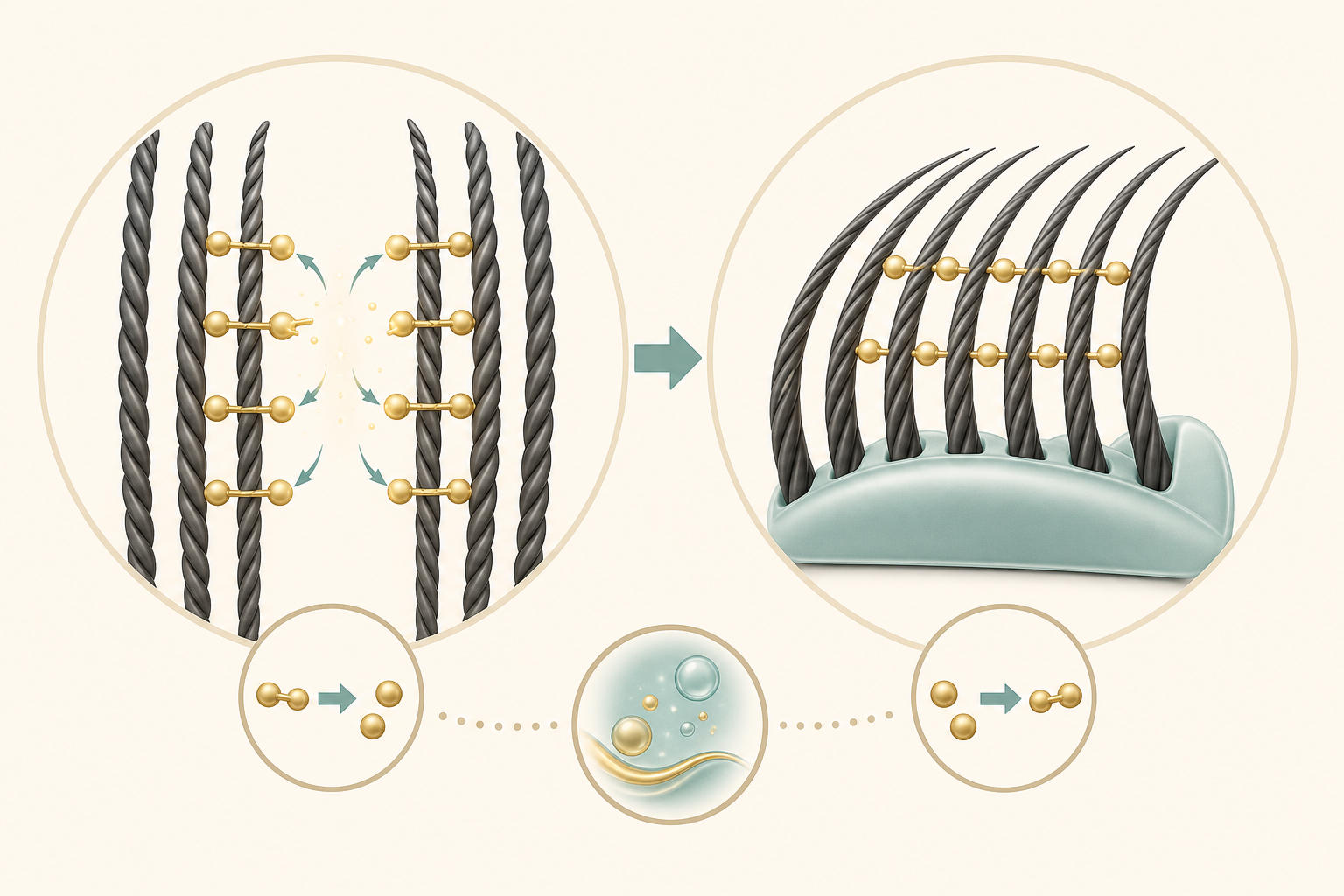
Lash lifting is a controlled two-stage chemical reaction: reduction followed by oxidation.
Reduction: Breaking Disulfide Bonds
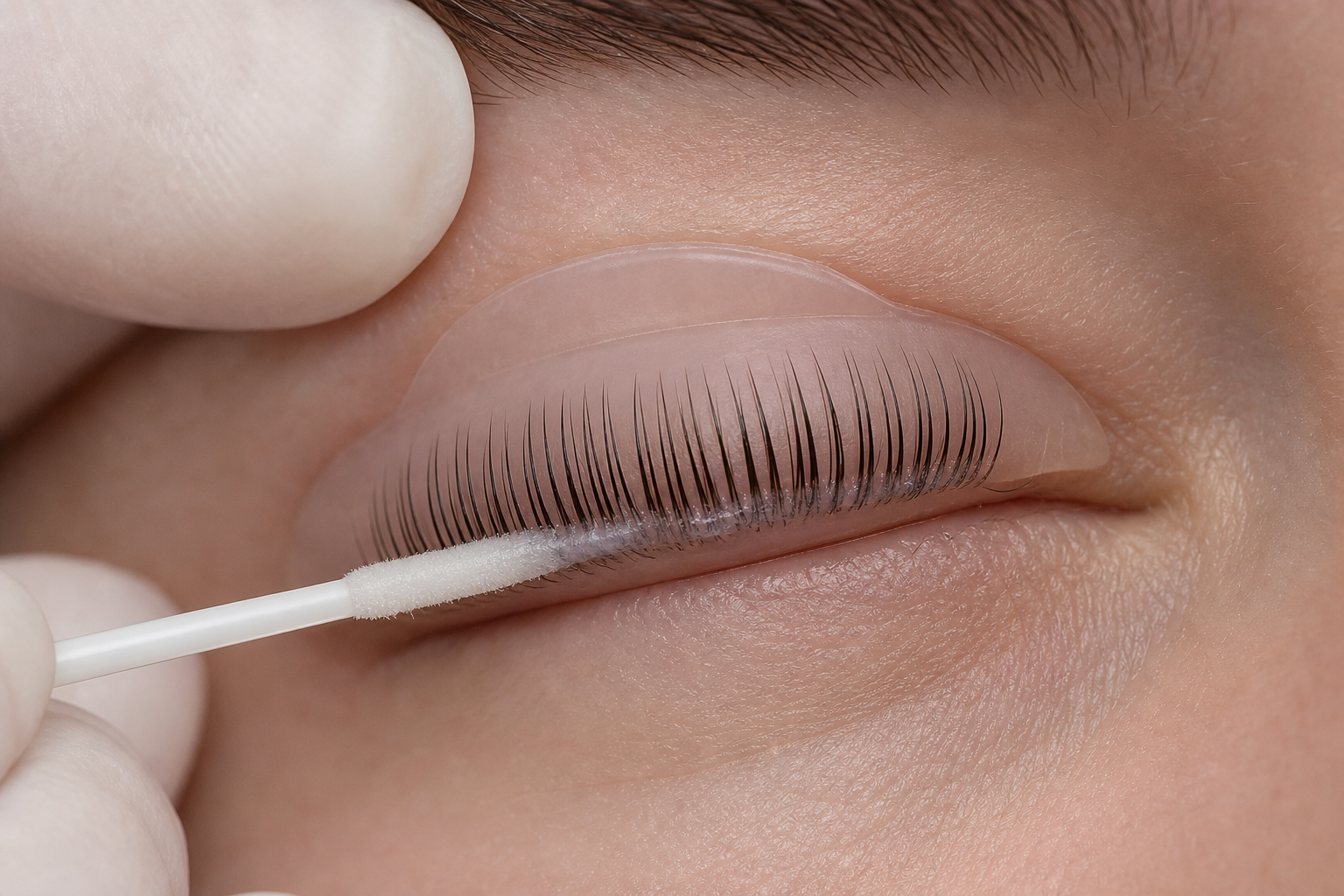
The first stage of the treatment softens the lash structure so it can take on the shape of the silicone shield. When you apply Step 1 lifting lotion, its alkaline environment (typically maintaining a pH range between 8.5 and 9.5) causes the lash shaft to swell and the cuticle scales to lift. This opening allows the active reducing agent to penetrate the cortex.
During reduction, active agents such as Ammonium Thioglycolate or Cysteamine HCl donate hydrogen atoms to the disulfide bonds. This reaction breaks the strong sulfur-sulfur linkages (-S-S-) and converts them into weaker sulfhydryl groups (-SH). Once these covalent bridges are severed, the internal keratin chains slide past one another, leaving the lash pliable and ready to assume the shape of the shield. For a deeper breakdown of formulation mechanics, refer to our guide on lash lift solution chemistry and active perming lotions.


Oxidation: Reforming Disulfide Bonds
Once the lashes have been reshaped over the silicone shield, the reduction phase must be halted and reversed. Applying Step 2 fixing lotion initiates the oxidation process. The fixing lotion has an acidic pH and commonly utilizes hydrogen peroxide as its active oxidizing agent.
The hydrogen peroxide removes the added hydrogen atoms from the sulfhydryl groups (-SH), causing adjacent sulfur atoms to reunite in their new positions along the shield. The chemical reaction follows this equation:
2 keratin–SH + H₂O₂ → keratin–S–S–keratin + 2 H₂O
This step locks the keratin chains into their new lifted alignment and restores structural rigidity to the fiber. Reviewing fixing lotion effects and understanding pH neutralization highlights how restoring natural pH levels (~5.5) seals the cuticle scales back down and stabilizes the hair.

Critical Factors Affecting Bond Manipulation
Manipulating chemical bonds requires careful evaluation of timing, application technique, and environmental conditions.
Lash Texture and Processing Timing
Processing times vary based on product used, lash thickness, porosity, and overall hair health. Adhering to precise timing standards prevents under-processing or chemical over-exposure:
Detailed application rules are available in our guide on lash lifting timing.
Solution Placement and pH Control
When applying lifting lotion, spread a precise 1mm layer across the middle and lower sections of the lash shaft where the curl needs to be established. Avoid applying lifting lotion directly to the delicate lash tips. The ends of the lashes are thinner and more porous, making them prone to rapid over-processing and frizzing.
Environmental Factors
Chemical reactions accelerate in warmer temperatures and higher humidity. Maintain a controlled treatment room temperature between 20°C and 25°C (68°F–77°F). If working in a warmer room, monitor development closely as bond reduction will occur faster than standard processing windows suggest.
Active Reducing Agents in Modern Systems
Selecting the right active ingredient allows you to tailor treatments to specific lash textures and client sensitivities.
Ammonium Thioglycolate (ATG)
Traditional systems rely on Ammonium Thioglycolate, a robust reducing agent that efficiently opens the hair shaft and breaks disulfide bonds in resistant or coarse lashes. These formulas deliver crisp, high-impact lifts on strong natural hair. Explore options in our classical lash lift lotions category.
Cysteamine HCl
Modern systems frequently feature Cysteamine HCl, an active ingredient structurally close to natural cysteine amino acids. Cysteamine systems provide a gentler reduction process that maintains optimal lash hydration, making them ideal for fine lashes, sensitive eyes, and dual-purpose brow lamination services. Discover these gentle formulations under our Korean lash lift systems section.

Iconic Duo Cysteamine Lash Lift Kit medium


Troubleshooting Bond Issues
Recognizing signs of incomplete or excessive chemical reactions helps you adjust technique and prevent recurring issues.
Under-Processed Lashes
If the curl fails to hold or drops immediately, an insufficient number of disulfide bonds were broken during the reduction phase. Common causes include under-estimating lash coarse texture, cold room temperatures, or applying too thin a product layer. If re-lifting a healthy under-processed lash, reapply solution for a brief re-processing window of 3–4 minutes. Further details on troubleshooting can be found in our overview on lash lift underprocessing.
Over-Processed Lashes
Over-processing occurs when lifting lotion remains on the hair too long, or when fixing lotion is over-exposed. Excessive reduction or extended oxidation damages the internal keratin matrix and leads to irreversible cysteic acid formation. Affected lashes appear frizzy, singed, or unnaturally bent. If over-processing occurs, refrain from further chemical processing and apply deep conditioning treatments enriched with keratin and plant oils to soothe damaged fibers.
Uneven Lift Results
Uneven curls across the eye originate from inconsistent lotion application or poor shield attachment. Ensure lashes are stretched straight across the shield with uniform tension and that lotion coverage is identical across all natural lashes.
Mastering Disulfide Bond Manipulation
Mastering the chemistry behind disulfide bond reduction and oxidation is what separates standard application from professional lash artistry. By accurately assessing lash porosity, selecting appropriate active ingredients, and controlling processing times, you preserve client lash health while delivering reliable, beautifully lifted results.
To upgrade your salon setup with professional formulations and tools, explore our full range of professional lash lift kits and specialized lash lift lotions.


