


For beauty technicians, mastering pH neutralization during a lash lift procedure is the single most important factor in delivering long-lasting curl retention while protecting client lash health. Eyelash lamination and lifting relies on a controlled chemical transformation inside the cortex of the hair shaft. Understanding how pH shifts break and reform structural protein bonds allows technicians to troubleshoot stubborn lashes, prevent structural damage, and deliver consistent results on every client.
The Science of pH in Lash Lifts
Healthy natural eyelashes have a slightly acidic natural pH level of approximately 5.5, which helps seal the outer cuticle layer and preserve moisture within the hair shaft. To change the natural straight shape of a lash, technicians must temporarily disrupt this acidic state. The initial lifting lotion elevates the pH environment, causing the hair shaft to swell and the cuticle scales to open so active chemical agents can reach the internal cortex.

Inside the cortex, helical keratin proteins are cross-linked by strong disulfide bonds. During the reduction phase of treatment, the high pH environment breaks these disulfide linkages, rendering the lash flexible and ready to mold against a silicone shield. Understanding lash lift solution chemistry helps technicians appreciate why precise application zones and timing are critical during both the reduction and reoxidation stages.
The Alkaline Lifting Phase
The active reduction phase relies on alkaline lifting lotions, typically formulated within a pH range of 8.1 to 9.5. Active reducing agents, such as Ammonium Thioglycolate or Cysteamine HCl, break down disulfide linkages in the keratin structure. As explored in our technical breakdown of curling lotion active ingredients, higher pH levels accelerate cystine cleavage. If the hair remains in an alkaline state past the required processing window, excessive cystine cleavage occurs, preventing the disulfide bonds from fully reforming during oxidation.
The Oxidation and Neutralization Phase
Once the lashes have taken the shape of the silicone shield, the reduction process must be halted and reversed. The setting or fixing lotion serves as an oxidizing agent, typically formulated with hydrogen peroxide at a lower pH. This step lowers the pH environment, closes the open cuticle scales, and locks the keratin proteins into their new position by reforming new disulfide bonds.
Proper oxidation is not merely a setting step; it neutralizes residual alkalinity and halts chemical action. Detailed insights into fixing lotion mechanics show that full bond reformation requires accurate timing and complete coverage across all processed areas of the lash.
Step-by-Step Neutralization Protocol
Achieving consistent curl retention without over-processing requires a disciplined, step-by-step application protocol. Follow these measurable instructions during every treatment:
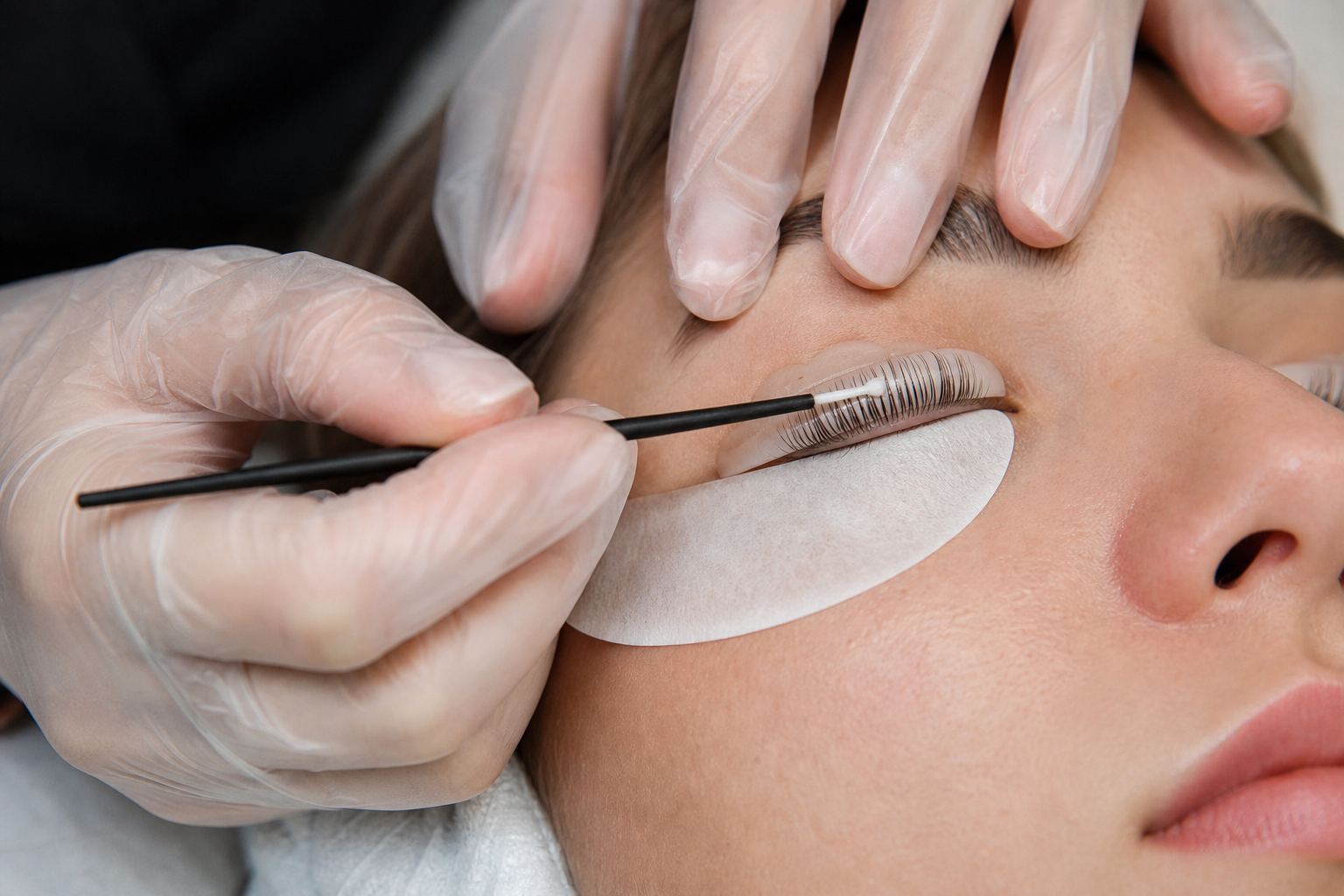
- Cleansing and Preparation: Begin by thoroughly removing all makeup, sebum, and environmental debris using an oil-free cleanser before shield application. Detailed steps can be reviewed in our step-by-step lash lift application guide.
- Shield Attachment and Lash Lash Isolation: Position the silicone shield along the eyelid margin and secure the lashes upward using a lifting tool, ensuring every hair is separated evenly. Refer to our guide on attaching lashes to lash lift shields for precise isolation techniques.
- Lifting Lotion Application: Apply a 1mm layer of Step 1 lifting lotion evenly across the lower-to-middle section of the lash shaft with a disposable brush. Keep the lotion at least 1mm away from the lash roots and completely off the delicate tips.
- Lifting Processing Times: Allow Step 1 to process based strictly on lash hair thickness. Check the manufacturer’s instructions and always perform a lash bend check to make sure the lashes are not under or over processed.
- Thorough Step 1 Removal: Remove 100% of the Step 1 lifting lotion using a dry cotton swab. Leaving behind any trace of lifting lotion allows the alkaline reduction to continue under the fixing lotion, causing severe over-processing and cuticle damage.
- Fixing Lotion Application: Apply Step 2 fixing lotion evenly to the exact same zone where Step 1 was applied, maintaining the same 1mm clearance from the root and leaving the tips uncovered.
- Neutralization Timing: Process Step 2 according to the product guidelines.
- Final Removal: Carefully remove the fixing lotion with a dry cotton swab before applying any tinting or nourishing lamination creams.


Identifying and Troubleshooting pH Imbalances
Recognizing the visual and tactile signs of proper vs. improper pH balance is essential for maintaining client satisfaction and lash integrity.
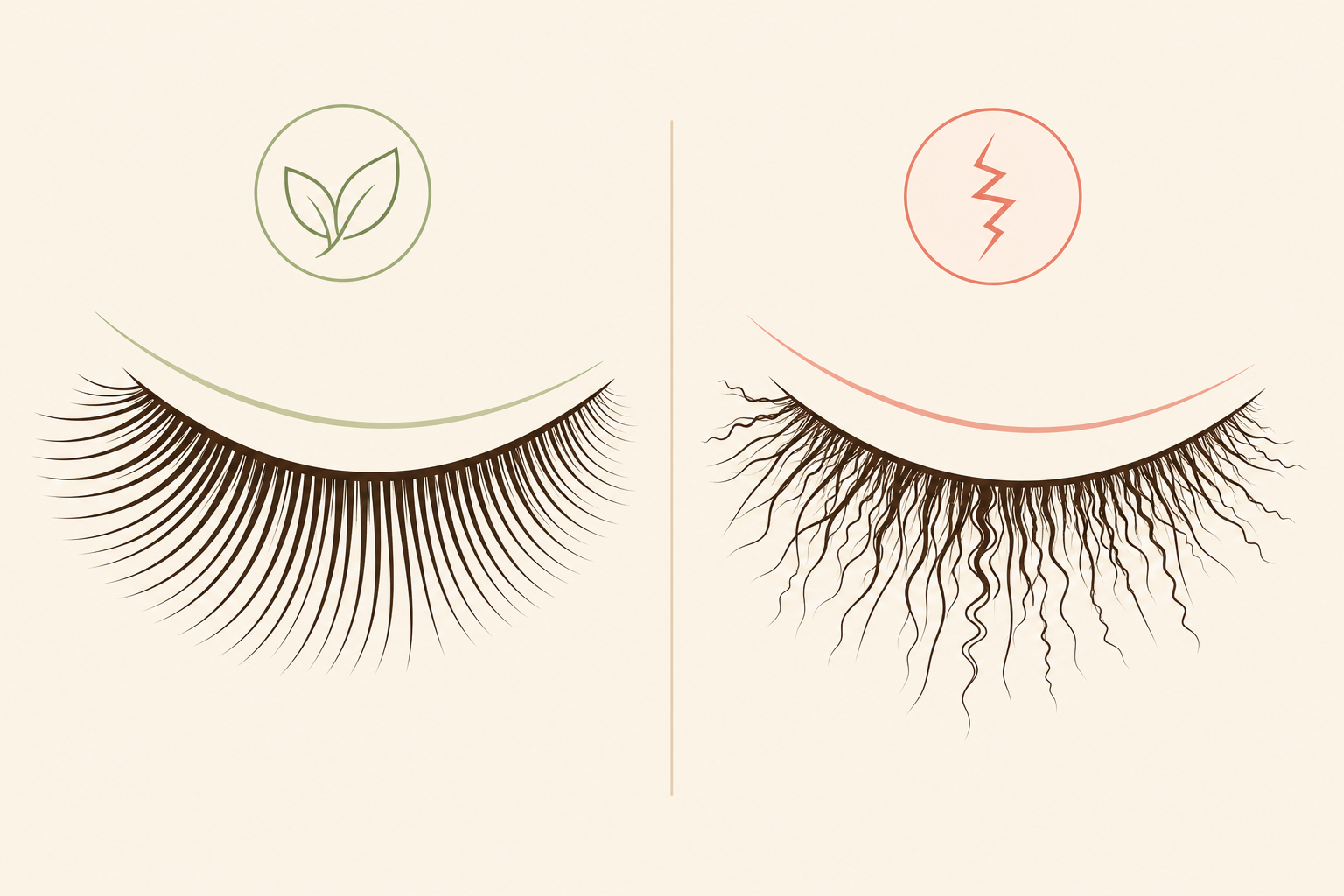
When neutralization is completely successful, the lashes feel firm, flexible, and responsive to light touch while adhering cleanly to the shield curve. There should be no residual chemical odor, and the client should feel zero heat, stinging, or discomfort.
Inadequate neutralization leaves the disulfide bonds unstable. Lashes that suffer from incomplete reoxidation often exhibit a sticky or gummy texture, drop their curl within 24 to 48 hours, or continue to process slowly post-treatment. Technicians encountering poor lift outcomes can consult our guide on troubleshooting underprocessed lash lifts.
Over-processing occurs when high-pH lifting solutions are left on too long, applied to the porous lash tips, or paired with insufficient neutralization time. Over-processed lashes look frizzy, crimped, or wiry, and feel dry or brittle to the touch. When faced with severely over-curled or damaged lashes, technicians should avoid immediate re-lifting with full processing times. Instead, follow protocols for safely reversing an over-curled lash lift, or explore corrective relaxation methods outlined in our guide to correcting uneven lash lifts. For additional complex scenarios, explore our complete library of lash lift troubleshooting guides.
Choosing Formulations for Optimal Bond Reformation
Selecting the right system depends on your client’s lash structure, sensitivity levels, and desired outcome.
Traditional formulations utilizing Ammonium Thioglycolate offer strong, reliable bond reduction for coarse or stubborn hair types. These are commonly available in classical lash lift systems.
Modern cysteamine HCl-based products, such as those used in Korean lash lift systems, provide a gentler alternative for clients with fine or delicate hair structures. Reviewing the complete breakdown of lash lift lotion ingredients helps clarify how built-in conditioning agents like aloe barbadensis, castor oil, and peptides preserve lash moisture throughout the pH shift.
Technicians combining lifting with conditioning treatments can explore eyelash lamination techniques or specialized keratin lash lift treatments to seal moisture into the hair shaft following Step 2 neutralization.


Korean Lash Lift & Brow Lamination Mini Kit


Elevating Your Lash Lift Practice
Mastering pH dynamics turns a standard aesthetic treatment into a precise, reliable discipline. By controlling the alkaline expansion during Step 1, removing all residual product before Step 2, and allowing full oxidation during Step 2, you protect lash hair integrity while creating beautifully lifted curls that last up to six to eight weeks.
To keep your salon equipped with high-performance, Italian-made formulations, browse our professional selection of professional lash lift supplies and explore our complete range of lash lift lotions. To further refine your technique and learn advanced chemical customization, explore our upcoming advanced lash lift training workshops.
