


An underprocessed lash lift – where natural lashes show minimal curl or drop shortly after treatment – is one of the most common challenges in professional lash styling. When a treatment yields disappointing results, identifying the exact chemical, structural, or mechanical breakdown allows beauty technicians to rectify the outcome safely and prevent future occurrences.
Achieving a consistent, long-lasting lift depends on properly manipulating the hair’s structure. Chemical perming works by breaking and reforming disulfide bonds within the lash keratin. When these internal covalent bonds are insufficiently broken during the perming phase or inadequately reset during the fixing phase, the result is a weak or flat curl pattern.

Key Causes of Lash Lift Underprocessing
Understanding why a lash lift failed requires systematically auditing each stage of the service, from surface preparation to processing chemistry.
Residual Surface Oils and Barriers
Lifting lotions must penetrate the cuticles of the natural lash to alter its internal bond structure. Residual makeup, skincare oils, sebum, or cleanser residue form an impermeable barrier over the hair shaft, preventing uniform lotion absorption.
Thorough pre-treatment cleansing is essential. Utilizing a dedicated oil-free cleanser removes environmental buildup and surface lipids without dehydrating the hair follicle prior to chemical placement.

Incorrect Shield Selection and Placement
Shield geometry directly dictates the outcome of the curl. Choosing a shield size that is too large for the client’s natural lash length creates a shallow, barely noticeable curve that looks unlifted. Conversely, an oversized pad placed too far from the root line reduces tension at the base, leading to an immediate drop in vertical lift.
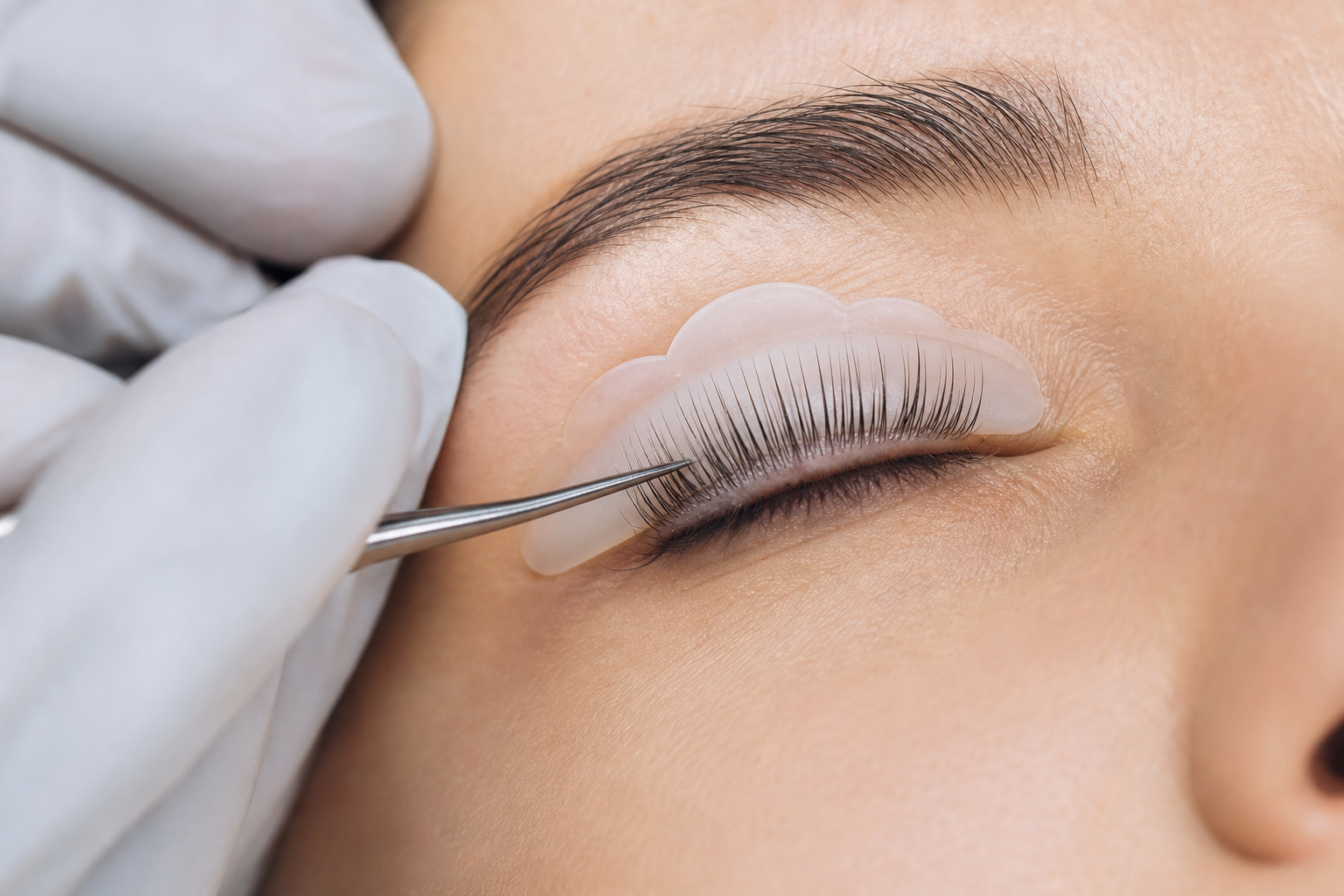
Consulting a comprehensive lash lift shield size guide during consultation helps determine whether a small, medium, or large apex is necessary for the desired outcome. Reviewing proper techniques for how to apply lash lift shields ensures the pad sits flush against the eyelid margin, providing maximum root support.


Excessive Adhesive and Lash Isolation Issues
While water-soluble adhesive secures natural lashes to the silicone pad, applying excessive adhesive creates a thick coating over the hair shaft. This layer acts as a physical shield, blocking Step 1 perming lotion from reaching the hair cuticle and leaving the disulfide bonds intact.
Technicians should apply thin, controlled layers of adhesive. Using precision alignment instruments helps tension and separate each lash without overloading glue onto the mid-shafts.

Lash Lift Compensators, 3 Pairs

Processing Time and Chemistry Mismatches
Timing errors remain a leading cause of underprocessed lifts. Classic ammonium thioglycolate and cysteamine formulations require precise exposure windows tailored to hair diameter and porosity. Standard processing guidelines for classic perming lotions typically follow set baselines.
Removing Step 1 prematurely leaves insufficient disulfide bonds broken, rendering the lash unable to adopt the curve of the shield. Furthermore, if the neutralizing fixing lotion is under-processed or unevenly distributed, the broken bonds cannot re-form into their new configuration. Complete pH neutralization is required to lock in the new structure and return the hair cuticle to its natural equilibrium.
For a deeper analysis of step-by-step chemical reaction timing, refer to our detailed breakdown of lash lifting timing.
Why a Lash Lift Fails on One Eye
Technicians frequently encounter situations where one eye achieves a perfect lift while the opposite eye remains flat or uneven. This discrepancy usually stems from distinct physical or operational variables:
- Asymmetrical Lash Density and Texture: Hair growth patterns, follicle angles, and lash thickness can vary between eyes. One eye may possess coarser hair that requires additional processing time.
- Uneven Solution Placement: Natural hand position and angle changes when switching sides can lead to inconsistent lotion distribution or unequal amounts of product being applied.
- Eye Shape Variations: Differences in eyelid hoodedness affect how close the silicone shield sits relative to the root line, influencing overall tension on the lashes.
- Dominant Sleeping Position: Clients who sleep predominantly on one side may experience higher physical friction, resulting in weaker or slightly damaged lashes on that eye.
When dealing with challenging hair directional issues, such as lifting downward pointing lashes, precise shield adjustment and customized processing times per eye are vital for balanced outcomes.
Correcting Underprocessed Lash Lifts
When a treatment results in an underprocessed or incomplete lift, immediate or structured corrective protocols can restore the shape while preserving hair health.
Assessing Lash Integrity
Before applying chemical solutions a second time, assess the hair shaft using a micro-brush. Examine the elasticity and condition of the cuticles. If the hair appears dry or compromised, pause chemical treatments and focus on deep nourishment before attempting a correction.
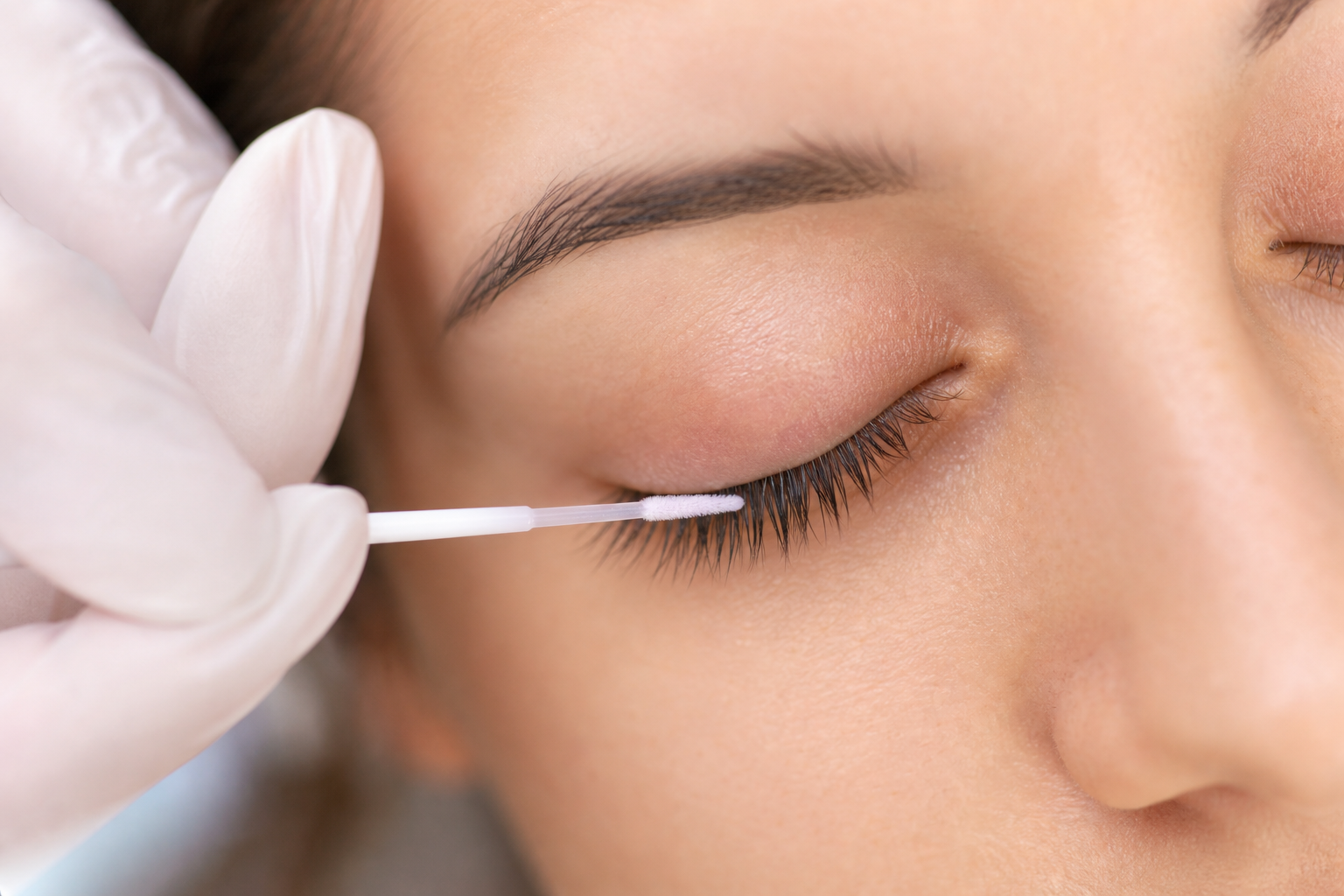
Targeted Re-Lifting Protocols
If the natural lashes remain healthy and untreated disulfide bonds are the primary reason for a flat result, targeted re-lifting can correct the outcome. For step-by-step troubleshooting instructions, consult our guide on correcting uneven lash lifts.
When executing a quick corrective pass, follow these professional principles:
- Re-cleanse the lashes thoroughly to eliminate any protective films or condition residues.
- Re-attach the lashes to an appropriately sized silicone shield with minimal adhesive.
- Apply Step 1 perming lotion exclusively to the underprocessed areas, avoiding previously processed tips.
- Reduce processing exposure significantly, using roughly 30% to 50% of the initial timing baseline while monitoring bond breakdown closely.
- Neutralize thoroughly with Step 2 setting solution to stabilize the reformed bonds.
Timing Guidelines for Full Re-Treatment
If the entire set requires a complete re-lift and immediate correction is not advisable, establish a strict waiting period. Understanding how soon can you re-do a lash lift is critical for client safety; waiting 4 to 6 weeks allows the natural lash cycle to generate fresh growth and regain full structural resistance.
When evaluating alternative lifting systems or gentler cysteamine formulations for sensitive clients, sampling professional trial packs provides flexibility without opening full-sized inventory.

Iconic Duo Cysteamine Lash Lift Kit medium

Preventing Underprocessing in Salon Practice
Consistent salon results rely on standardized pre-service assessments and strict application protocols.
- Conduct Thorough Pre-Service Assessments: Check natural lash diameter, porosity, and health under bright lighting before selecting shield curvature or setting timers.
- Maintain Precise Solution Boundaries: Apply perming and fixing lotions from the outer corner inward, spreading evenly up to the bottom edge of the shield while strictly avoiding the extreme tips of the hair shaft.
- Monitor Environmental Variables: Salon temperature and humidity affect chemical action rates. Keep treatment room temperatures controlled between 20°C and 24°C (68°F–75°F).
- Enforce Aftercare Compliance: Educate clients on proper lash lift aftercare, emphasizing the need to avoid water, steam, heavy eye creams, and makeup for 24 to 48 hours while the newly established disulfide bonds complete their stabilization.
Retaining hair hydration post-treatment with professional lash lift aftercare products maintains cuticle smooth texture and extends curl longevity between salon visits.


Elevating Salon Results with Reliable Techniques
Mastering lash lift troubleshooting requires balancing chemical precision with careful physical application. By correctly analyzing lash porosity, choosing optimal shield shapes, controlling adhesive application, and closely monitoring lotion timing, technicians can consistently prevent underprocessing and deliver lasting lift outcomes.
Equip your treatment room with high-performance formulas and tools designed for exacting standards. Explore our selection of professional lash lift lotions, premium silicone shields, precision lash lift tools, and complete lash lift kits at Lami Super Booster to elevate your lash services today.
