
Eyelash lamination is a chemical and restorative treatment designed to restructure, curl, and condition natural lashes. Unlike basic perming methods that focus solely on altering hair shape, lamination incorporates an advanced nourishing step that repairs internal disulfide bonds, closes hair cuticles, and locks hydration directly into the cortex. For beauty technicians, mastering lash lamination provides a high-value service that delivers a defined curl while maintaining long-term natural lash health.
Chemical Process and Mechanism
Natural eyelashes are primarily composed of keratin proteins bound together by covalent disulfide bonds. During the initial lifting phase, a chemical reducing agent – typically Ammonium Thioglycolate or Cysteamine HCl – opens the hair cuticle and breaks these bonds, converting them into sulfhydryl groups and making the hair shaft malleable. Once the lashes are shaped over a silicone form, a setting or neutralizer solution oxidizes these groups to rebuild up to 90% of the disulfide bridges into their new position.
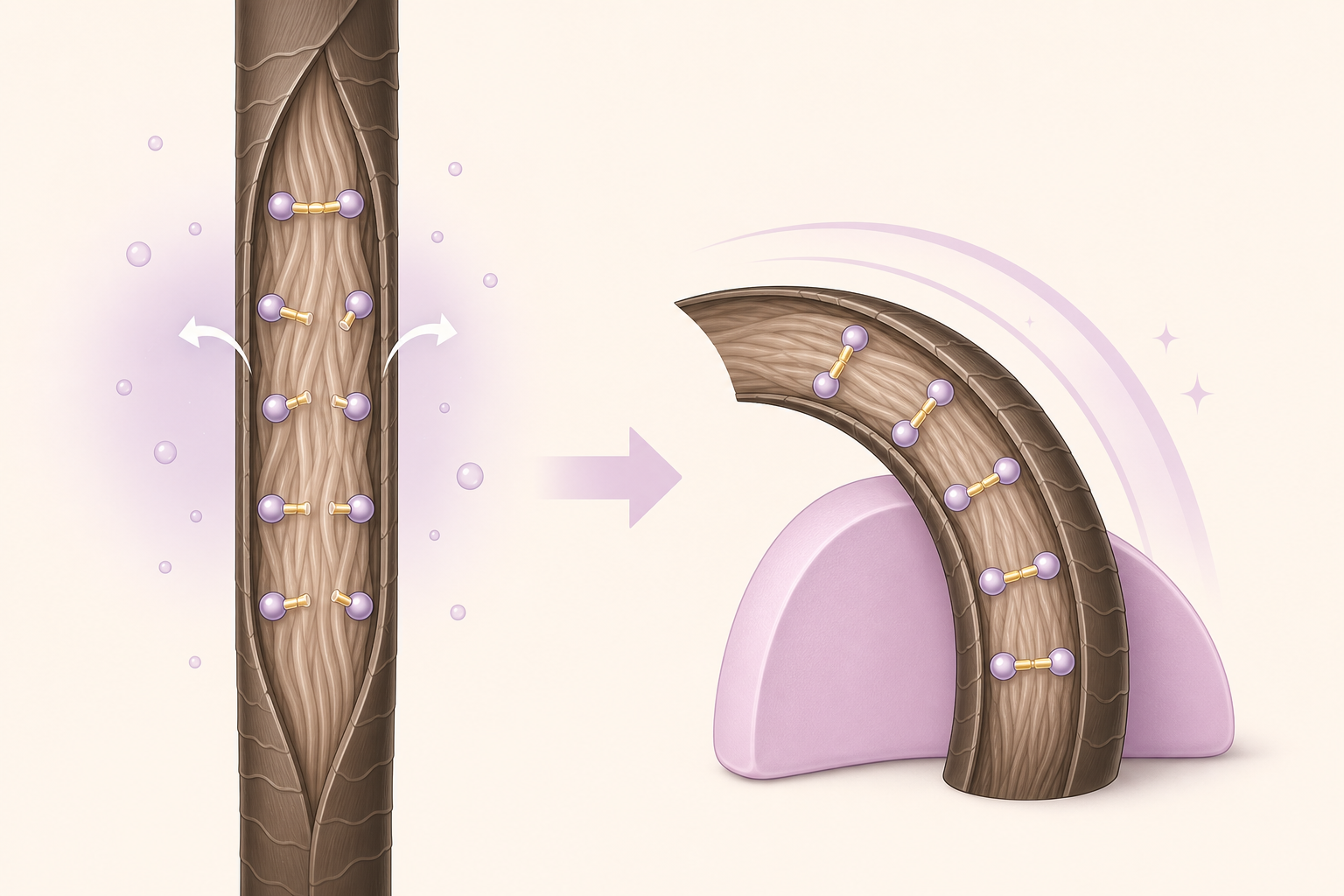
The defining phase of lamination occurs immediately after bond reformation. When chemical processing and optional tinting open the cuticle, a specialized cream-mask containing hydrolyzed keratin, silk proteins, argan oil, jojoba oil, and amino acids is applied. These low-molecular-weight actives penetrate deep into the hair shaft, reinforcing the internal structure and sealing the outer cuticle. Technicians can study the deeper chemical interactions involved by reading about disulfide bond structure and reviewing keratin lash lifting science.


Distinguishing Lash Lamination from a Standard Lash Lift
While technicians and clients frequently use the terms interchangeably, standard lash lifting and eyelash lamination differ in formula composition and structural restoration. A traditional service focuses primarily on curling and setting the natural hair. In contrast, lamination incorporates an intensive conditioning phase – often referred to as Step 3 – that actively counters chemical drying, swelling, and protein loss.
Additionally, formulations vary based on technician preference and local protocols. Classical methods often employ thioglycolate-based solutions for swift processing on dense lashes, whereas modern Korean and cysteamine-based systems provide a gentler, vegan alternative that minimizes processing stress on fine or compromised hairs. Technicians looking to refine their service style can compare techniques in our breakdown of classical and Korean lash lift methods or explore professional lash lift lotions alongside gentle Korean lash lift solutions.

Korean Lash Lift & Brow Lamination Mini Kit


Step-by-Step Lamination Protocol
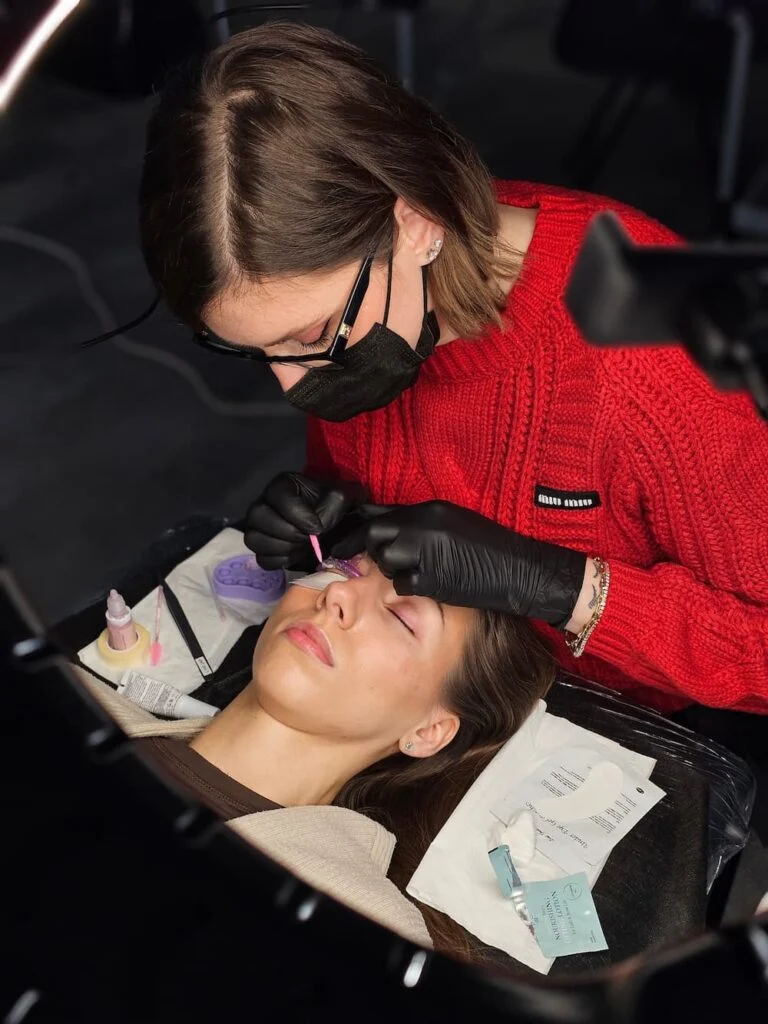
Achieving consistent curvature and optimal retention requires systematic preparation and precise timing throughout the appointment:
- Cleanse and prep: Cleanse the eye area thoroughly using an oil-free cleanser to eliminate sebum and makeup residue that prevent optimal adhesion. Place protective under-eye pads over the bottom lashes.
- Select and position shields: Choose silicone forms based on client eye shape and lash length. Apply a thin 1mm layer of water-soluble adhesive to the rear of the shield, allow it to become tacky for approximately 30 seconds, and position it directly along the lash line without touching the eyelid skin.
- Secure and align lashes: Apply adhesive to the shield surface and use a precision lash tool to wrap lashes straight, parallel, and at a 45-degree angle without crisscrossing.
- Apply perming lotion: Spread a uniform layer of lifting solution over the lower to mid-shaft of the lashes, taking care to avoid the tips and waterline. Monitor processing based on natural hair texture and porosity.
- Apply fixing lotion: After removing the lifting lotion with a dry cotton swab, apply setting lotion across the same section for the exact same processing duration to lock the new shape.
- Tint (optional): If tinting, apply the chosen dye across the mid-shaft and tips after completely removing the fixing solution.
- Nourish with lamination cream: Generously apply a keratin-infused lamination cream across all lashes. Allow the product to process for 5 to 10 minutes to close cuticles, seal moisture, and restore flexibility before gently removing the silicone shields.
For a deeper look into tool selection and precise step execution, review our guide to the step-by-step lash lift procedure. Technicians should also consult details on perming lotion mechanics and fixing lotion application to select appropriate silicone lash lift shields.


Service Duration, Longevity, and Key Benefits
A professional lamination appointment typically requires 45 to 60 minutes when performed as a standalone service, or up to 75 to 90 minutes when paired with custom lash tinting. The resulting lift and conditioning effect generally lasts between 6 and 8 weeks, directly tracking the natural hair shedding and growth cycle.
Integrating lamination into your salon offerings provides clear technical and commercial advantages:
- Delivers a fuller, darker, and more defined appearance without synthetic lash extensions
- Restores lipid barriers and hair proteins compromised during chemical processing
- Requires minimal daily maintenance compared to extensions
- Suitable for straight, downward-pointing, or rigid lash growth patterns
Technicians interested in workflow optimization can evaluate client consultation guidelines in our article on fundamental lash lift mechanics and review timing details in our overview of lash lift service timing.
Assessment, Safety, and Contraindications
Prior to beginning any chemical treatment, technicians must evaluate client suitability and document health history. A patch test performed 24 to 48 hours before treatment helps identify potential sensitivities to lotions or tinting agents.
Technicians must recognize key conditions that require delaying or declining treatment:
- Absolute contraindications: Active ocular infections such as conjunctivitis, blepharitis, or styes require full resolution and completion of prescribed medication before service.
- Skin inflammation: Active eczema, psoriasis, or dermatitis on or around the eyelids must heal completely before chemical application.
- Recent surgical procedures: Clients who have undergone eye surgeries, including LASIK or cataract removal, must wait 6 to 8 weeks and obtain medical clearance from their surgeon.
- Hormonal and health factors: Pregnancy (particularly the first trimester), thyroid imbalances, or recent medical treatments can affect hair texture and chemical processing response.
Refer to our complete guide on lash lift contraindications for extended screening checklists and client management strategies.
Maintenance and Client Aftercare Guidelines
Proper aftercare instruction is vital to maintain shape stability while chemical bonds stabilize over the first 24 to 48 hours. Provide clear guidance to every client before they leave the chair:
- Keep lashes completely dry and avoid water, steam, saunas, and hot showers for the initial 24 to 48 hours.
- Avoid eye makeup, oil-based makeup removers, and waterproof mascaras during the initial stabilization window.
- Cleanse eye areas gently using downward motions with oil-free foaming cleansers and pat dry with a lint-free towel.
- Brush lashes daily with a clean spoolie to maintain uniform direction and prevent tangling.
- Recommend daily application of a specialized lash serum or conditioner to keep cuticles hydrated between appointments.
Directing clients toward specialized lash aftercare products helps preserve initial results while reinforcing lash health. Review complete post-service recommendations in our guide on lash lift aftercare protocol.
Mastering Professional Lamination for Salon Success
Eyelash lamination elevates standard lash lifting by pairing targeted chemical restructuring with deep protein nourishment. By understanding the chemical mechanisms of disulfide bond manipulation, selecting correct shield sizes, and enforcing comprehensive step-by-step cuticle care, technicians achieve consistently symmetrical, healthy, and long-lasting curls for every client.
Elevate your service offerings and guarantee consistent results by exploring our professional lamination systems, premium silicone forms, and nourishing aftercare lines today.
