


As beauty professionals, understanding the intricate relationship between internal biology and external hair development is essential for managing client expectations and delivering consistent, high-quality results. Eyelashes do not grow in isolation; their developmental cycles, structural integrity, and response to chemical styling are deeply influenced by the body’s endocrine system.
By analyzing the hormonal factors that dictate lash health, salon owners and beauty technicians can refine their technical protocols, tailor processing times, and successfully troubleshoot retention and structural issues.
Eyelash Follicle Biology and the Growth Cycle
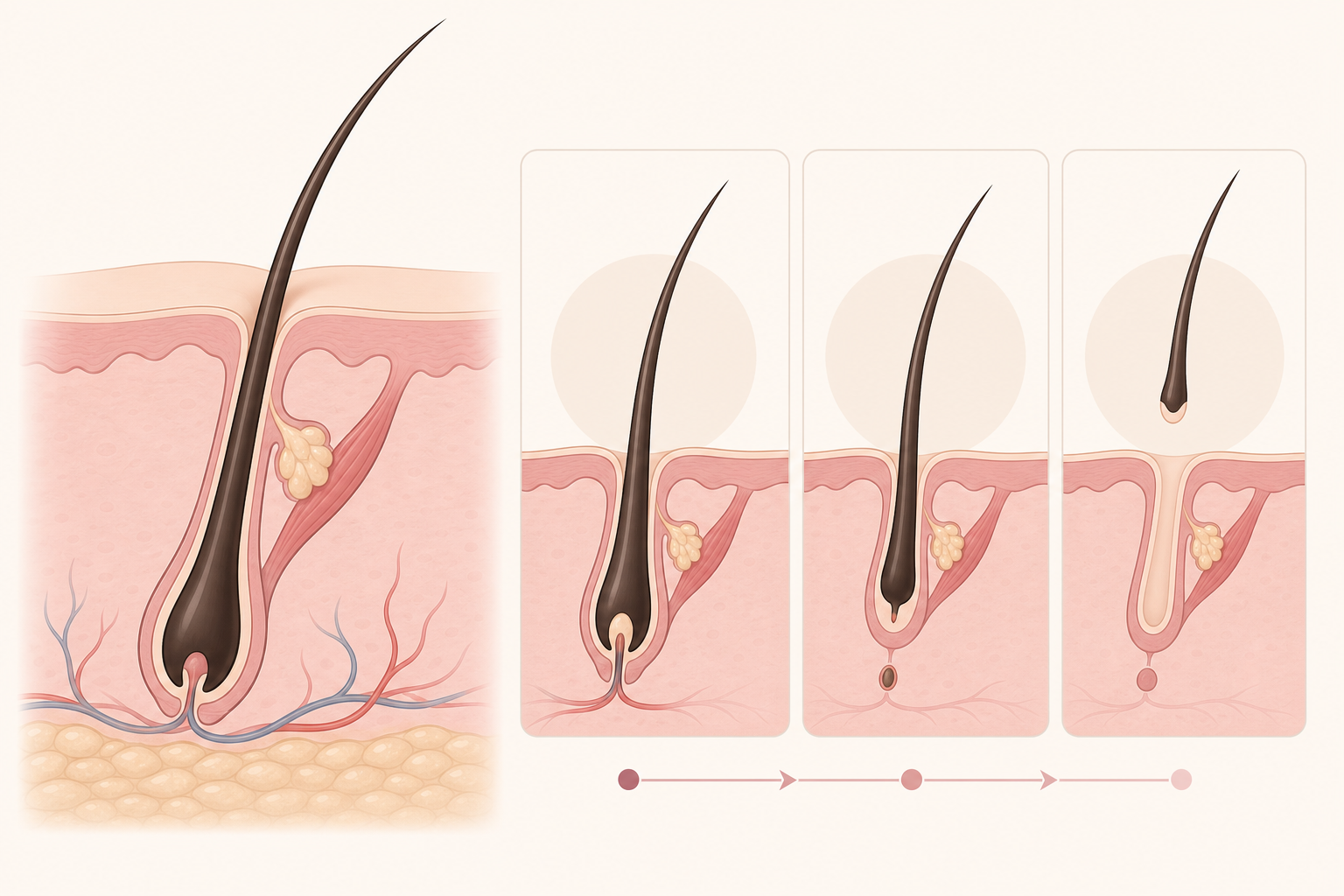
To understand hormonal impacts, technicians must first evaluate the underlying structure of the eyelash follicle anatomy and the phases of hair development. Eyelashes progress through three distinct stages of hair growth, with the entire cycle typically spanning between three and four months:
- The Anagen Phase (Active Growth): Lasting approximately 4 to 8 weeks (or 30 to 45 days), this is the active phase where the hair grows at a rate of roughly 0.12 to 0.14 mm per day. Only about 17.8% to 41% of upper eyelashes are in this phase at any single time, meaning a minority of the lashes are actively extending.
- The Catagen Phase (Transition): Lasting about 2 to 3 weeks, this is a brief transition period where the follicle shrinks and active growth ceases. Only 1% to 3% of the lashes reside in this phase.
- The Telogen Phase (Resting and Shedding): Lasting roughly 3 to 4 months, this dormant phase accounts for 10% to 15% of the lashes. At the end of this resting period, the old lash naturally sheds as a new anagen hair begins to form beneath it.
Because only a limited portion of lashes are actively growing at once, any disruption to this delicate timeline directly impacts the overall density, length, and eyelash growth rate observed during client consultations.
Hormonal Influences on Lash Cycling
Hormones serve as the primary biochemical messengers regulating cellular activity within hair follicles. When endocrine balance shifts, the duration of growth phases and the physical characteristics of the lash hair change accordingly.
Thyroid Hormone Imbalances
Thyroid hormones (specifically T3 and T4) directly regulate cell proliferation and metabolism within the hair follicles. Balanced thyroid signaling is necessary to initiate and maintain the active anagen phase.
- Hypothyroidism (Underactive Thyroid): A deficiency in T3 and T4 limits cellular division in the hair follicle. This delays re-entry into the anagen phase and precipitates premature transition into catagen. The result is dry, brittle hair, diffuse shedding, and prolonged telogen effluvium.
- Hyperthyroidism (Overactive Thyroid): An excess of thyroid hormones also disrupts follicular balance, leading to increased breakage, thinning, and temporary hair loss.
In both thyroid states, the compromised structural integrity of the lashes affects how they absorb and process professional chemical solutions. This biological fragility is often compounded if the client also experiences nutritional shifts, such as a vitamin D impact on follicle health, which further diminishes the hair’s resilience.
Estrogen Shifts during Pregnancy, Postpartum, and Menopause
Estrogen plays a key role in extending the active growth phase of hair follicles. Fluctuations throughout a client’s life cycle can cause dramatic shifts in lash density and styling performance:
- Pregnancy: High levels of estrogen, progesterone, and growth factors during pregnancy increase the anagen-to-telogen ratio. This prevents normal shedding and leads to significantly enhanced lash density and thickness. Technicians should review the physiological changes of eyelash growth during pregnancy to understand these temporary shifts. While performing a lash lift while pregnant is possible, unpredictable hormonal changes can cause inconsistent lift results. Technicians must strictly apply specialized protocols for pregnancy lash treatments to ensure safety and comfort.
- Postpartum: Following childbirth, estrogen and progesterone levels drop abruptly. This sudden drop triggers postpartum telogen effluvium, forcing a massive proportion of follicles to transition into the resting phase simultaneously. Clients will experience heavy shedding and temporary thinning several months after delivery.
- Menopause: As estrogen levels permanently decline during menopause, the anagen phase shortens. This leads to slower growth, diffuse thinning, and a higher rate of shedding, making the lashes finer and more susceptible to chemical damage.
Cortisol and Androgen Fluctuations
Other endocrine pathways can also alter follicular health:
- Stress-Induced Cortisol: Chronic physical or emotional stress elevates systemic cortisol levels. High cortisol levels disrupt the normal growth cycle, triggering telogen effluvium by prematurely pushing a significant percentage of active follicles into the resting phase.
- Androgen Excess: Elevated levels of androgens, often associated with conditions like Polycystic Ovary Syndrome (PCOS), can lead to hair follicle miniaturization. Over time, this shortens the anagen phase and yields weaker, finer, and less dense eyelashes.
The Impact of Prostaglandin Analogs
Many clients turn to eyelash growth serums to combat thinning. It is vital for beauty professionals to distinguish between hormone-free conditioning formulas and those containing active prostaglandin analogs.
Bimatoprost ophthalmic solution 0.03% (commercially known as LATISSE) is an FDA-approved prescription treatment for eyelash hypotrichosis. Bimatoprost increases eyelash length, thickness, and darkness by artificially prolonging the active anagen phase, reducing the percentage of telogen follicles, and stimulating fine vellus hairs to develop into thicker, pigmented hairs.
However, because these active compounds behave similarly to local tissue hormones, they carry notable side effects that technicians must be aware of:
- Common adverse reactions include eye pruritus (itching), conjunctival hyperemia (redness), ocular irritation, dry eyes, and skin hyperpigmentation along the eyelid margin.
- Users may experience permanent brown pigmentation of the iris, which does not reverse after discontinuing the product.
- Discontinuing prostaglandin-based products causes the hair follicles to return to their original, genetically determined cycling patterns. Consequently, the enhanced eyelash growth gradually reverts to baseline over several weeks to months.
Providing Safe, Non-Hormonal Alternatives
For clients seeking to support and strengthen their lashes without the risks associated with prostaglandin analogs, beauty professionals should recommend daily, non-hormonal conditioning treatments.
Applying peptide-rich, keratin-infused nourishing serums provides deep hydration and structural support to delicate hair fibers. Rather than relying on heavy lipids, introducing professional castor oil alternatives – such as lightweight jojoba, argan, or sweet almond oils – helps maintain lash elasticity and prevents premature breakage without blocking hair follicles or irritating sensitive skin.


Clinical Implications and Salon Practice Modifications
To safeguard lash health and ensure predictable styling results, beauty salons must adapt their operational protocols to accommodate clients experiencing hormonal fluctuations.
Pre-Treatment Consultations and Mapping
Technicians should establish a comprehensive, hormone-aware intake process. Document any known thyroid imbalances, recent pregnancies, postpartum phases, menopausal transitions, or active use of prescription lash serums.

Assess the current structural health of the lashes and identify any signs of accelerated shedding or follicle miniaturization. This consultation helps identify any physical contraindications for a lash lift and allows the technician to set realistic expectations regarding treatment durability.
Adjusting Chemical Processing Times
Lashes affected by thyroid dysfunction, menopausal estrogen declines, or cortisol spikes are often structurally compromised. When performing lifting or lamination treatments on these clients, technicians should make the following adjustments:
- Reduce Processing Times: Reduce chemical exposure times by 1 to 2 minutes to prevent over-processing and structural damage to fragile, porous hair.
- Select Gentle Formulations: Opt for mild, Cysteamine HCl-based lifting lotions from our professional lash lift range to protect compromised hair bonds.
- Increase Nourishment: Extend the duration of the final nourishing and hydrating steps to compensate for natural lipid and protein deficiencies in the lash shaft.
Tailoring Aftercare and Maintenance
Hormone-affected lashes require diligent, structured home care. Provide clients with clear, measurable instructions to protect their investment and support hair health:
- Recommend oil-free, non-stripping cleansers and gentle lash lift aftercare products to preserve the hair’s structural integrity.
- Advise daily application of professional lash serums to deliver keratin, sodium hyaluronate, and collagen directly to the hair shaft.
- Adjust the appointment schedule to match the client’s altered growth cycle, recommending slightly longer intervals between active chemical lifting sessions for clients experiencing accelerated shedding.
Nutrilash Eyelash Serum, 6pc
Nutrilash Eyelash Serum, 12pc
Mastering the biological factors behind eyelash growth empowers beauty professionals to transition from basic service providers to highly specialized tech consultants. Understanding how systemic shifts in thyroid hormones, estrogens, and active styling compounds alter follicular performance allows salons to deliver safer, customized, and more reliable treatments.
To elevate your salon’s services, explore our professional-grade, Italian-formulated lash lamination and nourishment solutions designed to protect and revitalize even the most delicate hair structures.
