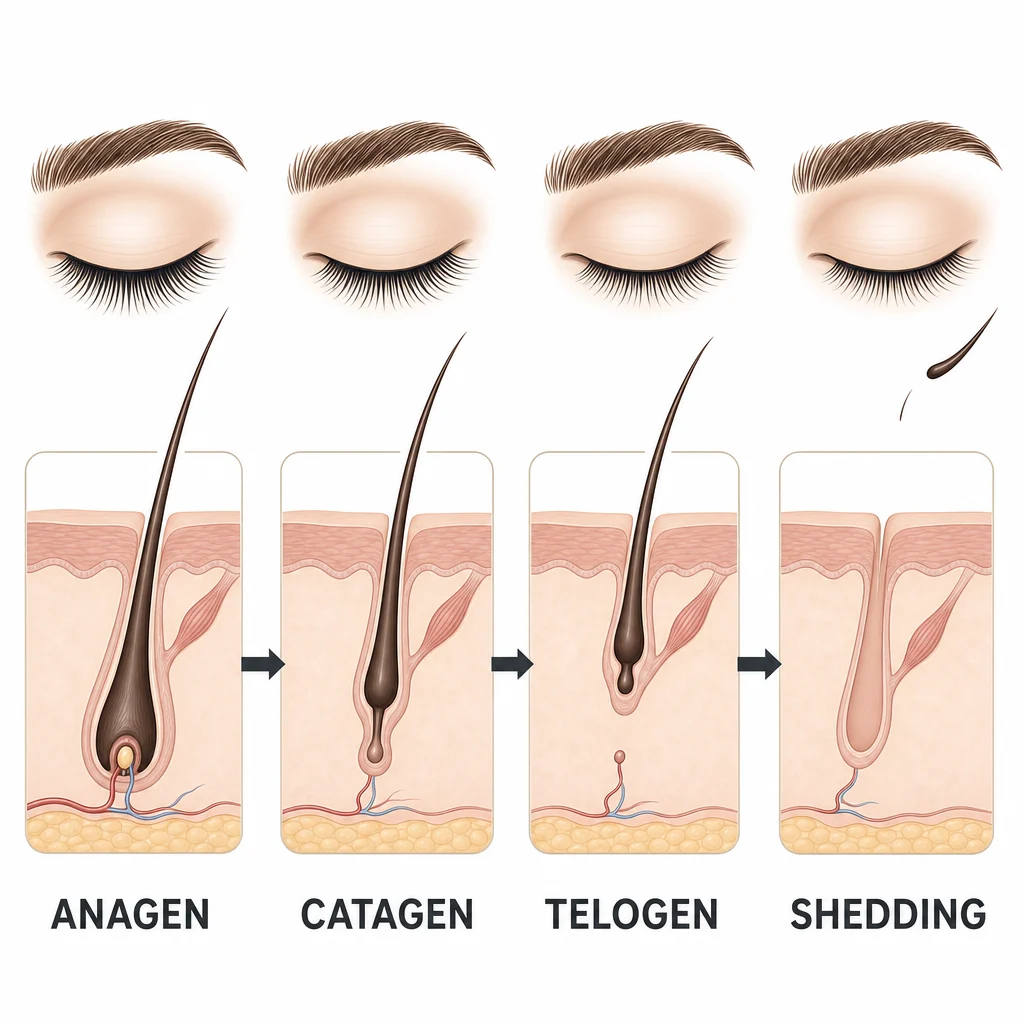
For beauty professionals, performing a lash lift or brow lamination is as much a study in biology as it is in aesthetics. Every follicle on the human body operates on an independent, genetically programmed loop known as the hair growth cycle. Recognizing these biological phases allows beauty technicians to optimize treatment timing, manage client expectations, and diagnose unexpected retention issues.
The Anagen Phase: Active Growth and Cellular Division
The anagen phase is the active growth period. This is when the hair bulb experiences rapid cellular mitosis to build the hair shaft.
- For eyelashes, the eyelash growth rate shows that the anagen phase typically lasts 30 to 45 days.
- During this active window, lashes grow at a rate of approximately 0.12 to 0.14 millimeters per day.
- At any given time, roughly 80% to 95% of a client’s natural eyelashes are in this phase, deeply anchored and well-nourished by the dermal papilla.
- For eyebrows, the active anagen phase is relatively short, typically lasting 4 to 8 weeks, which is why brow hair growth results in a shorter maximum length compared to scalp hair.
Because anagen lashes and brow hairs are actively growing, they are highly receptive to nourishing treatments. If a client receives a chemical service when a high percentage of hairs are in the very early anagen stage, the treatment will maintain its curl or lift for a longer portion of the hair’s overall lifespan. However, technicians must look closely for “baby” lashes. Applying setting formulations to extremely short, active anagen lashes can cause uneven results as they quickly grow out over the following weeks.
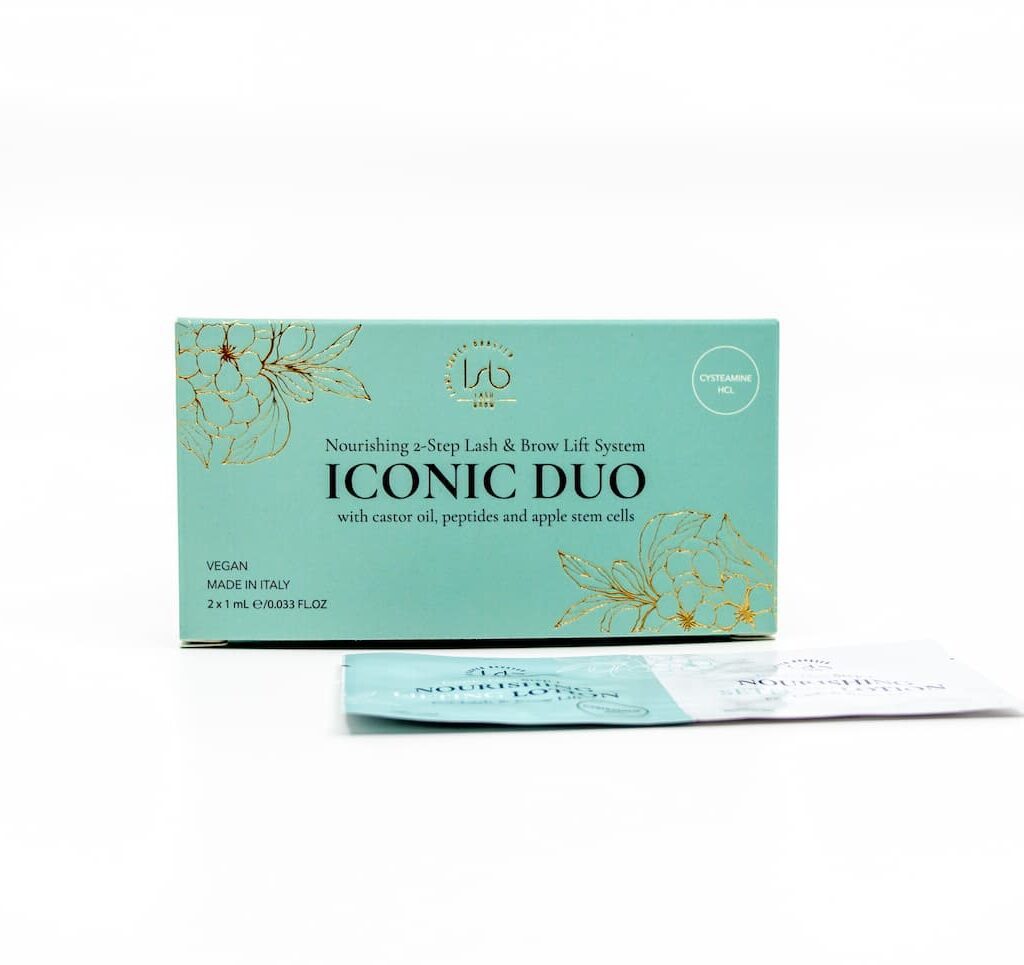
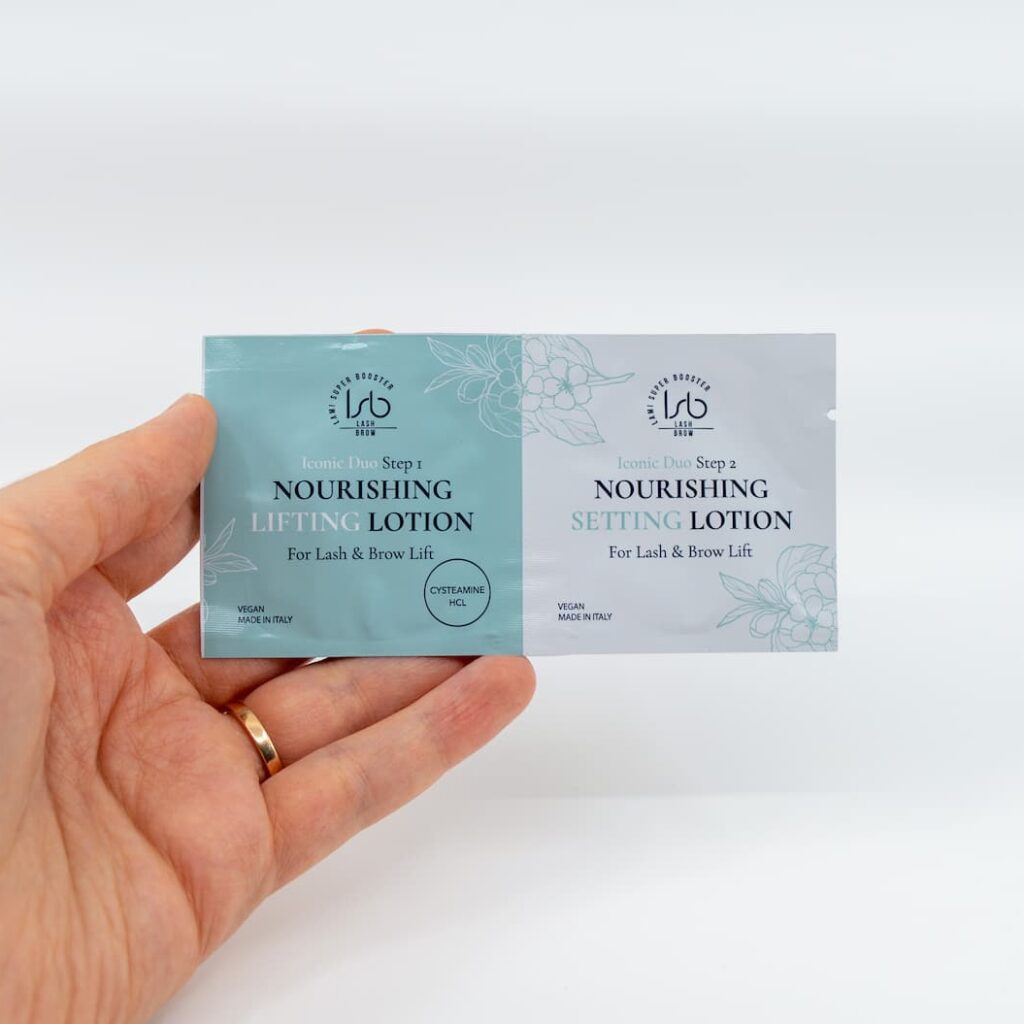
For chemical processing during this active growth window, professionals rely on highly precise, nourishing systems to maintain hair integrity:
The Catagen Phase: The Transition Period
Once the active growth phase concludes, the hair follicle enters the catagen phase, a brief transitional period lasting approximately 14 to 21 days (2 to 3 weeks).
- During this phase, the follicle begins to shrink and undergo regression.
- The hair shaft detaches from the dermal papilla, cutting off the active blood and nutrient supply.
- This transition state typically affects only 1% to 5% of a client’s lashes or brow hairs at any given moment.
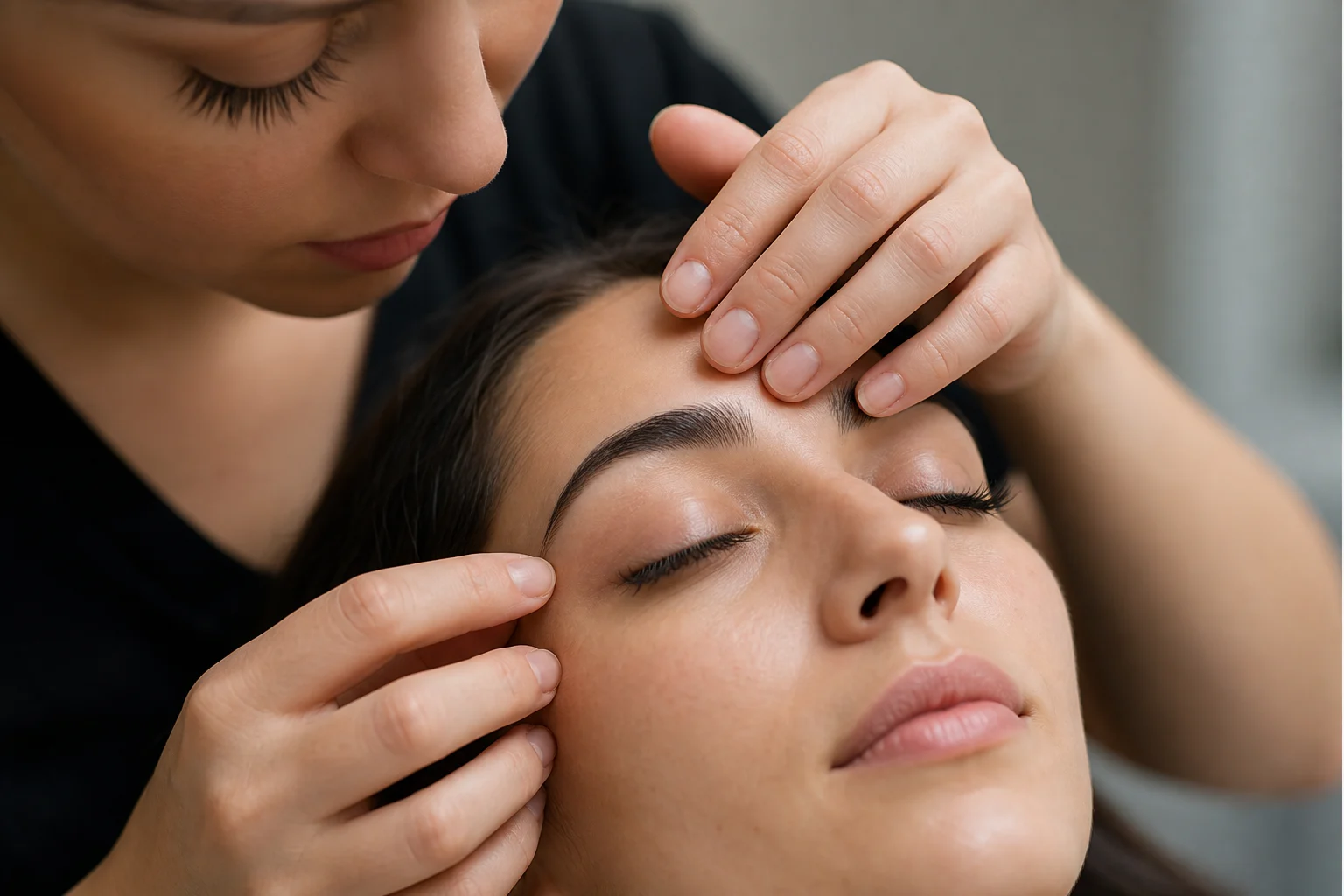
Because catagen hairs are no longer receiving active nourishment from the body, they are highly fragile. Technicians must exercise caution during mechanical styling, mapping, or lifting processes. If chemical lotions are overprocessed on catagen hairs, it can accelerate cuticle damage. Understanding the state of the hair’s outer layer is essential; assessing cuticle scales before applying solutions ensures you modify processing times appropriately to preserve the structural stability of transitioning hairs.
The Telogen and Exogen Phases: Rest and Shedding
The telogen phase is the resting period where the hair follicle remains completely dormant.
- For eyelashes, this phase lasts approximately 100 days (about 3 to 4 months).
- Around 10% of lashes are in this resting phase at any given time.
- The existing hair remains firmly resting in the follicle but does not grow.
- The exogen phase represents the final part of the cycle where natural shedding occurs as a new anagen hair begins to push the old shaft out of the follicle.
Educating clients on natural lash shedding is one of the most effective ways to build trust. Technicians must help clients understand that shedding 1 to 5 lashes per day (approximately 35 lashes per week) is a normal, healthy biological event rather than a sign of treatment damage. In brows, normal cycle-based shedding is also a routine biological occurrence, preventing clients from mistaking normal hair fall for pathological eyebrow hair loss. When performing a keratin lash lift or tint, telogen-phase hairs will eventually drop off naturally, which can sometimes create a temporary “patchy” appearance as new, untreated hairs take their place.
To support the hair follicle during the critical transition between shedding and new growth, daily nourishing aftercare is essential.

Environmental, Hormonal, and Nutritional Influences
While the hair cycle is genetically determined, several physiological and external factors can alter its timing, causing premature shedding or delayed growth:
- Hormonal Fluctuations: Estrogen, thyroid hormones, and cortisol levels deeply dictate follicle behavior. As detailed in our guide on hormones and lash growth, thyroid imbalances can cause brittle lashes, while high stress levels elevate cortisol, potentially forcing follicles prematurely from the anagen phase into the telogen phase.
- Nutritional Deficiencies: Follicles require specific vitamins and minerals to sustain active mitotic growth. For instance, a lack of vitamin D and lashes can lead to slower follicle regeneration, increased shedding, and reduced lash lift longevity.
- Seasonal Shedding: Environmental shifts also play a role. Many clients experience increased hair shedding during seasonal transitions, specifically in the spring (March–May) and autumn (September–November).
Optimizing Treatment Schedules Around Natural Cycles
For consistent, high-quality lash and brow services, technicians should align appointment schedules with the natural biological timelines of their clients:
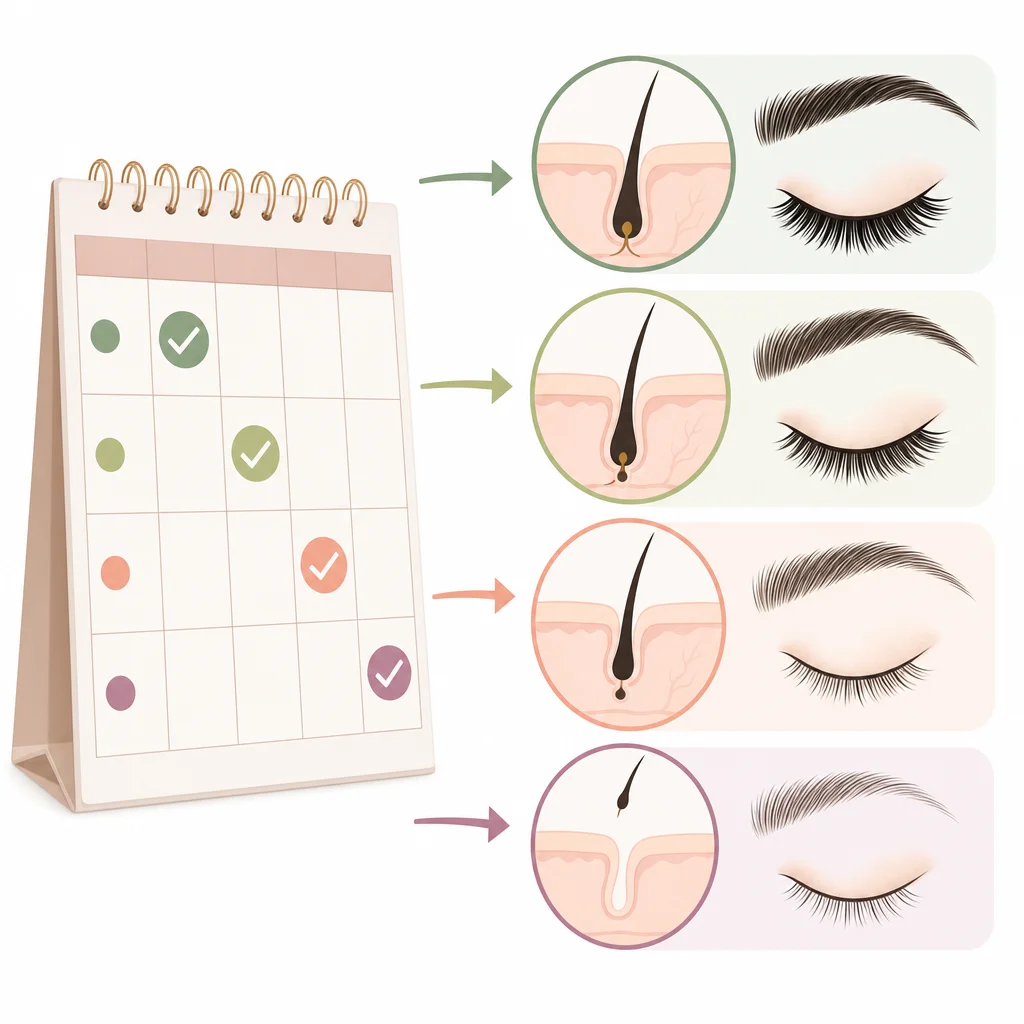
- Interval Timing: To prevent chemical damage and allow adequate new growth to emerge, standard lash lifts and brow laminations should be scheduled 6 to 8 weeks apart. This frequency matches the natural transition of follicles back into the early growth phase.
- Customizing Processing Times: Always perform a thorough hair assessment. Hairs that are thick and healthy can handle normal processing times, while transitioning or damaged hairs require gentler treatment. When designing brows, refer to professional brow shaping techniques and understand how brow lamination treatment time must be carefully calibrated to avoid overprocessing.
- Managing Hair Length: Assessing eyebrow length before beginning a service helps you determine which hairs are in the telogen phase (and thus fully grown) versus those in the active growth phase, allowing you to tailor your mapping and chemical placement accordingly.
- Post-Treatment Hydration: Once chemical links are broken and reformed, sealing the hair cuticle is paramount. Aftercare products like nourishing serums or professional lash lift aftercare systems can help smooth down the cuticle scales, locks in moisture, and preserves hair health.
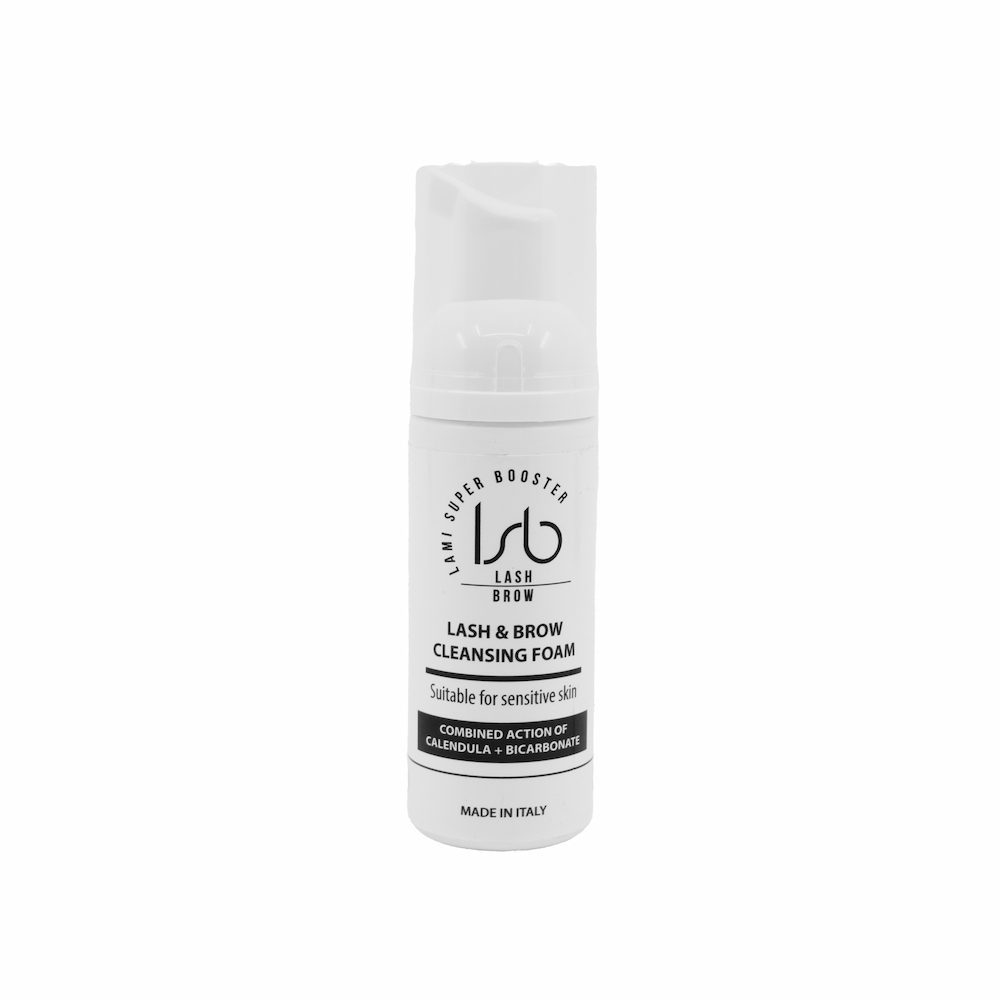
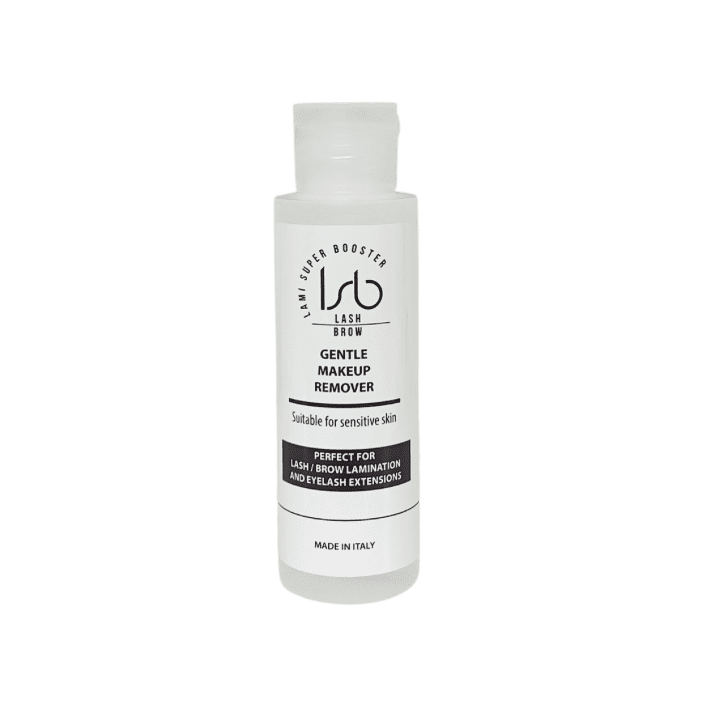
For clean prep before treatments and gentle daily maintenance that won’t disrupt the growth cycle, professional-grade cleansers and removers are vital:
Mastering Hair Biology for Salon Success
Understanding the intricate biological phases of hair growth separates standard technicians from true industry experts. By mastering follicle science, you can accurately troubleshoot retention issues, manage seasonal shedding expectations, and customize chemical application times safely. To further elevate your theoretical knowledge and hands-on skills, consider attending a professional workshop or webinar through Education by Lami Super Booster. Equipping your salon with both scientific expertise and premium, nutrient-rich products is the ultimate strategy for delivering long-lasting, beautifully defined lash and brow transformations.