


Understanding Root Causes of Asymmetry
Encountering uneven results post-treatment is an obstacle every professional lash technician faces. Addressing lash lift asymmetry effectively requires diagnosing whether the variation stems from technical execution, chemical timing, or inherent anatomical differences. Misalignment during shield placement or inconsistent tension across the lash line can leave one eye dramatically lifted while the other appears flat or uneven.
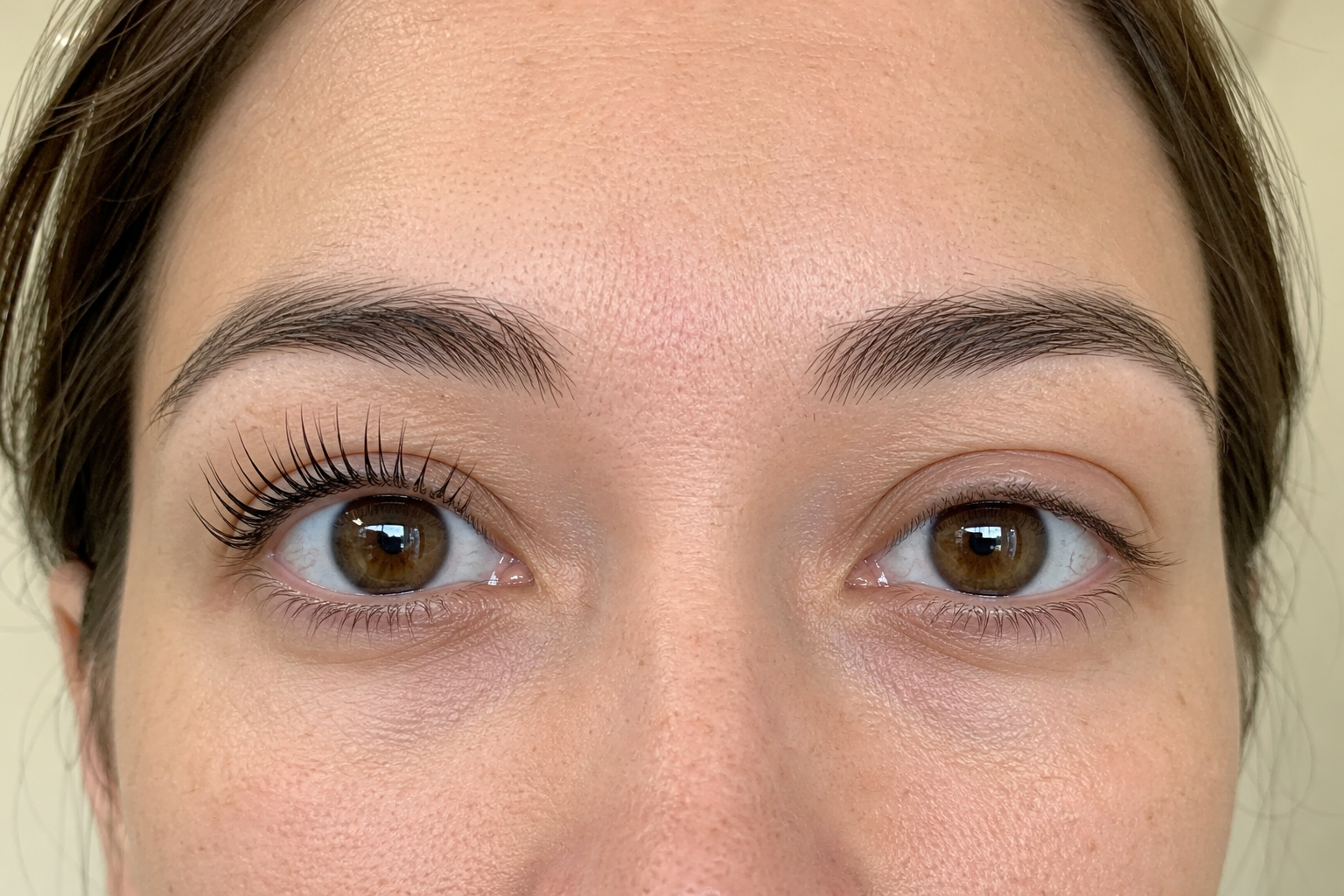
Chemical processing variances also play a major role in asymmetrical outcomes. Applying uneven lotion amounts, failing to maintain a consistent 1mm application layer, or misjudging lash lifting timing can lead to under-processed or over-processed sections. Deviating from these metrics on one eye naturally causes unequal curl height and retention.
Client anatomy introduces additional variables. Natural lash growth patterns, differences in root directional growth, variations in eyelash density, and eyelid fold height frequently differ between the left and right eye. Recognizing these natural nuances allows technicians to adapt their technique rather than forcing identical shield configurations on asymmetrical eyes.
Professional Diagnostic Assessment
Before attempting chemical correction, conduct a systematic evaluation to formulate a precise corrective strategy.
- Evaluate under bright, natural-spectrum lighting to accurately inspect the lift angle, root direction, and hair shaft integrity across both eyes.
- Document the current state with close-up photos from front, profile, and overhead angles to establish an objective diagnostic record.
- Examine natural growth orientation, noting density differences, growth direction, and structural hair strength.
- Inspect the lash cuticle for signs of over-processing, frizzy tips, or chemical stress.
- Review initial service records, checking shield sizes, adhesive choice, exact lotion processing times, and room environmental conditions.
- Perform a side-by-side comparison to pinpoint whether the issue is localized under-processing, root collapse, or over-curling.
- Consult with the client to discuss your findings, outline the correction steps, and manage expectations regarding final symmetry and lash safety.
Accurately diagnosing an uneven lash lift ensures you apply targeted corrective measures without subjecting the natural lashes to unnecessary chemical exposure.

Lash Lift Compensators, 3 Pairs


Immediate Correction Techniques
When asymmetry is identified immediately after service or within the first 24 hours, targeted immediate corrections can restore balance before the lash structure fully sets.
For minor asymmetry or localized under-processed areas, isolate the affected lashes on the shield. Using a precision micro-brush, apply lifting lotion exclusively to the sections requiring additional sweep. Process the lotion for exactly 50% of the original processing time while visually checking the lash malleability every 2 minutes to prevent over-correction.
If an entire side is noticeably under-processed, mount the lashes on a smaller shield size chosen from a professional lash lift shield size guide. Ensure lifting lotion is kept strictly 1 to 2mm away from the root line to safeguard delicate follicle bases, and reduce standard processing times by 30% to achieve the intended curl elevation safely.
For over-processed or over-curled eyelashes, execute a gentle relaxation protocol. Apply a small amount of cysteamine HCl-based or mild lifting lotion over the over-curled section for 2 to 4 minutes while continuously combing the hair downward with a clean spoolie to relax the curl bond. Rinse thoroughly, neutralize, and apply a rich conditioning treatment.
Delayed Corrections and Lash Recovery
Correcting asymmetry on lifts older than 24 hours demands extra caution to maintain hair structure and cuticle integrity.
Understanding chemical restructuring requires knowledge of how lash disulfide bonds are broken down and re-formed during chemical perming. Chemical manipulation alters internal cystine bridges, so rushing into repeated chemical services can compromise hair elasticity. Before planning a corrective service, verify how soon you can re-do a lash lift; full re-lifts typically require a full 4 to 6 week natural lash cycle.
For selective re-lifting on under-processed areas after 24 hours, wait at least one full week to allow the natural hair shaft to regain balance. Cleanse the eye area thoroughly, secure the under-lifted lashes on a properly fitted shield, and apply lifting solution only to the specific straight sections. Process for 50% of standard exposure times, ensuring fixing lotion effects are properly controlled during the neutralization phase.
When handling compromised or damaged lashes, prioritize restoration over aggressive curling. Postpone further chemical lifting for 10 to 12 weeks if severe cuticle stress is present. Modify future timing by 20% to 30%, shorten lotion placement zones, and implement a daily conditioning regimen. If complete removal of an extreme curl is required, follow professional procedures for reversing the curl safely.
Properly neutralizing pH in lash lifts restores natural acidity (~5.5 pH), preventing ongoing cuticle degradation and stabilizing the corrected lash shape.
Prevention Strategies and Precision Technique
Preventing asymmetrical lifts requires meticulous preparation, standardized tool selection, and refined application techniques.
Mastering how to apply lash lift shields is fundamental to achieving balanced symmetry. Position shields flush against the eyelid margin without touching raw skin, securing natural lashes with smooth, parallel isolation. When working with asymmetrical eyes, customize shield choices between the left and right eye rather than feeling restricted to matching pairs.

- Complete a comprehensive pre-treatment assessment, noting growth direction variations, eyelid fold differences, and natural lash density on each eye.
- Maintain a consistent 1mm application thickness when spreading perming and setting lotions across the mid-zone of the lashes.
- Time each eye independently using digital timers to prevent exposure discrepancies between the first and second eye.
- Utilize specialized lash lift tools such as Y-combs and precision separation picks to keep lashes straight and uncrossed before applying lotions.
- Select high-performance lash lift lotions formulated with predictable processing speeds and active conditioning agents.
- Protect processed lashes post-service using dedicated lash lift aftercare serums to strengthen newly reformed disulfide bonds.


Client Communication and Expectation Management
Professional communication builds client trust and sets realistic standards when managing corrective procedures.
During the initial consultation, educate clients on how ocular symmetry, facial structure, and natural lash growth directions affect final curl shape. When an asymmetrical outcome occurs, explain the technical causes clearly without assigning blame, and present a structured correction strategy. Reassure the client by emphasizing that preserving natural lash health is your primary priority.
Provide clear post-correction guidance, advising clients to avoid water, steam, and oil-based eye products for 24 to 48 hours while chemical bonds finish stabilizing. Prescribe a daily nourishing regimen using specialized lash lift aftercare products to keep the lashes hydrated, flexible, and healthy between salon visits.
Elevating Your Lash Lift Practice
Correcting lash lift asymmetry relies on a balanced understanding of chemical processing, precise mechanical tension, and thorough structural assessment. By tailoring shield sizes to individual eye anatomy, maintaining strict timing control, and utilizing gentle touch-up techniques, you can safely resolve uneven curl results while protecting natural lash health.
Explore our professional collection of lash lift products to stock your salon with premium lotions, ergonomic silicone shields, and advanced keratin treatments designed for precision results.
