As a professional beauty technician, maintaining skin health and protecting client safety during chemical brow services is a critical standard of care. Brow lamination relies on alkaline solutions to break disulfide bonds in hair keratin, allowing brows to be styled into a fuller shape. However, when improper application, overprocessing, or unrecognized contraindications occur, chemical injuries and severe skin reactions can result.
Understanding how to manage an acute adverse reaction, executing precise salon first aid, and recognizing when medical care is necessary protects both your clients and your salon practice.
Distinguishing Chemical Burns from Allergic Reactions
Recognizing the physiological difference between a chemical burn and an allergic reaction is essential for proper immediate response and documentation. While both conditions cause skin distress around the brow area, their timing, mechanisms, and clinical symptoms differ significantly.
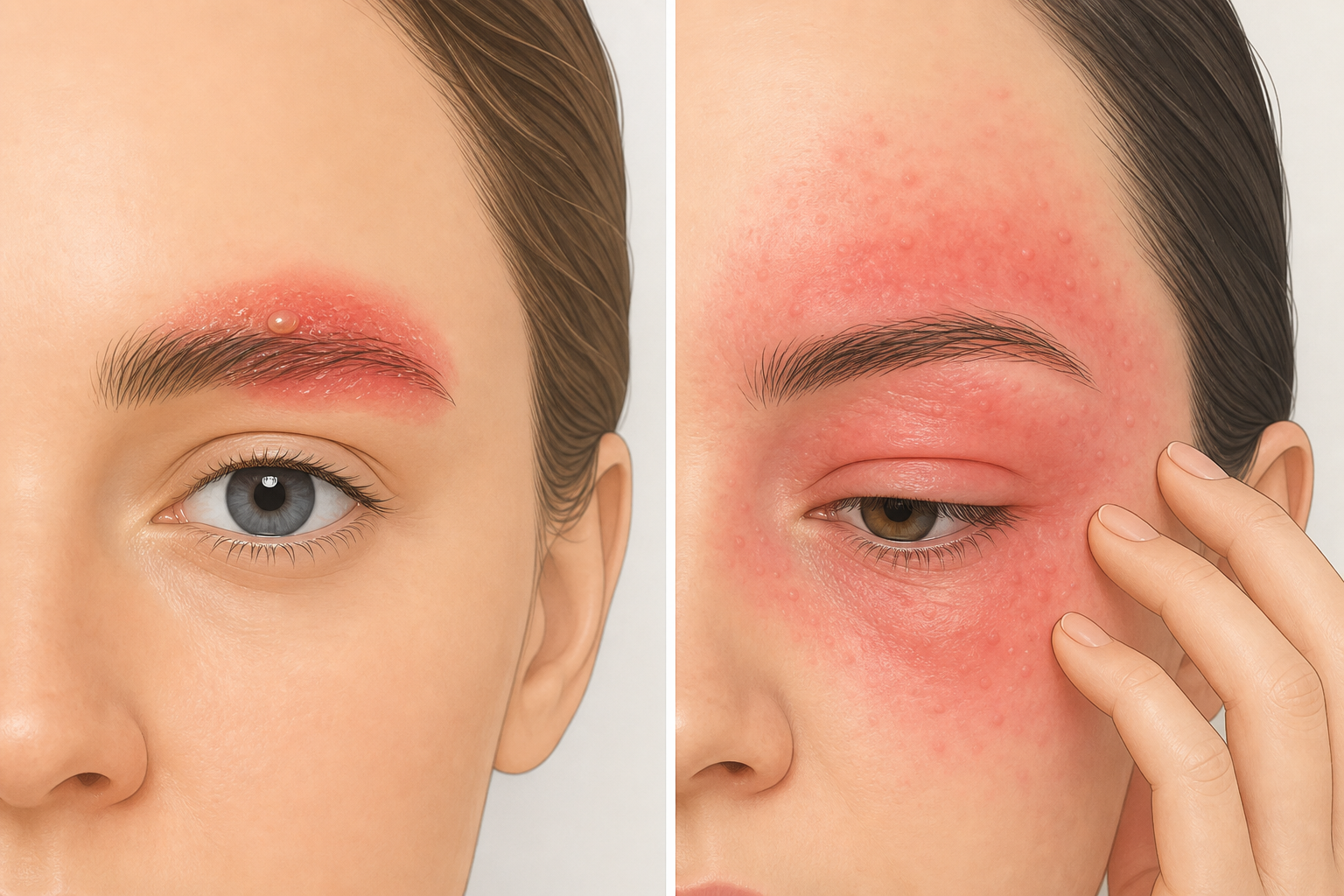
Irritant contact dermatitis, or a chemical burn, is a non-immunologic injury caused by direct caustic contact with chemical lifting agents. It occurs when solution breaches the epidermal barrier, causing immediate cellular damage.
- Onset: Symptoms usually manifest immediately or within minutes to hours during or right after treatment.
- Symptoms: Clients experience localized sharp stinging, burning sensations, intense erythema (redness), and localized swelling confined strictly to the area where the lotion was applied.
- Visual indicators: Fissured skin, localized tightness, blanching, or blistering without intense systemic itching.
Allergic contact dermatitis is a delayed, immune-mediated hypersensitivity reaction occurring after prior sensitization to a specific chemical ingredient, such as preservatives, fragrances, or processing agents.
- Onset: Symptoms typically develop 12 to 48 hours post-service, peaking around 48 to 72 hours.
- Symptoms: Intense itching (pruritus), widespread redness, and swelling that often spreads beyond the initial brow area into the upper eyelids, forehead, or cheekbones.
- Visual indicators: Small fluid-filled papules or vesicles, weeping, scaling, and diffuse facial edema.
In rare cases, clients may experience contact urticaria (developing within 5 to 20 minutes with hives and wheals) or severe anaphylaxis. Anaphylaxis is a life-threatening systemic emergency characterized by swelling of the lips, tongue, or throat, respiratory distress, hives across the body, dizziness, and a rapid drop in blood pressure.
When determining whether a treatment is safe to perform on a client, assessing overall service parameters through guidelines on evaluating brow lamination safety provides a foundational risk management framework.
Immediate Salon First Aid Protocol
If a client reports a sharp, burning sensation during processing or exhibits immediate signs of tissue injury, you must act instantly to minimize epidermal trauma.
Skin Exposure Emergency Protocol
- Stop the service immediately: Cease processing at the first report of abnormal pain or heat.
- Remove excess chemical: Use a dry cotton swab or microbrush to gently lift the bulk of the solution off the brow area. Do not wipe or drag active product across unexposed, healthy skin.
- Irrigate thoroughly: Immediately flush the brow area with clean, cool running water or sterile saline for a minimum of 15 to 20 minutes. Continuous low-pressure water flow dilutes and removes chemical residues from the skin.
- Avoid chemical neutralization: Never attempt to neutralize alkaline perming lotions with acidic home remedies such as vinegar or lemon juice. Neutralization causes an exothermic chemical reaction that generates localized heat, significantly worsening tissue burns.
- Protect compromised skin: Do not pop, puncture, or debride blisters, and do not pull away peeling or dead skin.
- Apply a cool compress: Place a cool, damp, sterile compress over the surrounding intact area to soothe residual heat and minimize localized edema.
- Cover loosely: Once clean and thoroughly dry, cover the area loosely with a dry, sterile gauze pad to protect it from friction and atmospheric contaminants.

Ocular Exposure Emergency Protocol
If chemical solution accidentally splashes or seeps into the client’s eye:
- Begin flushing immediately: Flush the exposed eye with large amounts of clean, room-temperature water or sterile saline for 15 to 20 minutes continuously.
- Keep eyelids open: Gently hold the client’s eyelids open during irrigation, instructing them to move their eye in all directions so water reaches all mucosal folds under the lids.
- Manage contact lenses: If the client wears contact lenses, do not delay flushing to remove them. Remove lenses during or immediately after initial irrigation begins.
- Do not introduce foreign drops: Avoid applying medicated eye drops, ointment, or neutralizing agents into the eye unless explicitly directed by emergency medical staff.
- Seek urgent ophthalmic evaluation: Transport or refer the client for urgent ophthalmic evaluation immediately following initial irrigation.
Medical Referral and Emergency Criteria
Technicians are trained beauty professionals, not medical providers. You are qualified to provide immediate salon first aid and comfort measures only. You must never attempt to diagnose, prescribe medication, or medically treat a chemical burn.
Refer the client to a medical practitioner, urgent care clinic, or pharmacist if they exhibit any of the following:
- Signs of secondary bacterial infection, such as yellow or green purulent discharge, foul odor, extreme localized heat, or systemic fever.
- Open sores, deep erosion, or severe blistering across the brow bone.
- Periorbital swelling that impairs or obstructs normal vision.
- Chemical contact with the eyeball itself.
- Pain that persists or worsens 24 hours post-treatment and fails to respond to basic care.
- A chemical burn that shows no sign of healing within 10 to 14 days.
Call emergency medical services immediately if the client exhibits signs of anaphylaxis or shock, including difficulty breathing, throat tightness, facial angioedema, dizziness, confusion, or loss of consciousness.
When contacting Poison Control or emergency medical staff, have the exact chemical product name, manufacturer, processing time, estimated duration of skin contact, and first aid steps already performed readily available.
Phased Skin Healing Timeline
Recovery from an acute chemical injury around the periocular region requires strict adherence to barrier preservation. Guiding your client through the healing stages prevents permanent scarring and loss of brow hair.
- Acute Phase (Days 1 to 3): The skin presents with severe erythema, sensitivity, and surface tenderness. Fine crusting may form. Instruct the client to keep the area clean with gentle cool water, avoid all cosmetic active ingredients, omit makeup, and strictly avoid touching or picking the brows.
- Reparative Phase (Days 4 to 10): Epithelial regeneration begins, leading to localized flaking and peeling. Hydration is essential to rebuild the damaged lipid barrier. The client must avoid physical friction, manual exfoliation, and hot steam environments.
- Recovery Phase (Days 11 to 14): Epidermal barrier integrity is restored, though skin may remain sensitive or hyperpigmented. Hair shafts may feel dry or brittle following chemical exposure.
During the recovery phase, recommendations should focus on gentle hydration, conditioning the brow hairs, and avoiding re-exposure to harsh chemicals until the skin is fully restored.


Prevention Protocols and Risk Mitigation
Eliminating chemical burns in the salon depends on meticulous consultation practices, precise technical execution, and informed product selection.
Client Screening and Actives Management
Reviewing client health history before every service is mandatory. Consult the comprehensive list of brow lamination contraindications before applying chemical solutions. Active eczema, psoriasis, dermatitis, open cuts, recent scar tissue, or compromised barrier function in the brow region completely preclude chemical services.
Topical skincare ingredients significantly affect skin permeability. Clients using prescription retinoids, over-the-counter retinol, alpha-hydroxy acids (AHAs), beta-hydroxy acids (BHAs), or chemical exfoliants must discontinue these products for 4 to 7 days prior to treatment and 4 to 7 days post-treatment. Active exfoliants thin the stratum corneum, allowing perming chemicals to penetrate deep into living epidermal tissue and cause immediate chemical burns.
Furthermore, clients must maintain appropriate intervals between chemical services. Standard guidelines on how often to laminate brows dictate waiting 6 to 8 weeks between treatments to protect both hair structure and underlying skin integrity.
Patch Testing Protocols
A patch test performed 24 to 48 hours prior to service is an industry-standard safety requirement. Apply a 1mm layer of active perming lotion, fixing lotion, and tint behind the client’s ear or in the crook of the elbow. If the client experiences any redness, itching, stinging, or swelling during the patch test, the full treatment cannot proceed.
Solution Chemistry and Application Technique
Understanding chemical formulations is central to safe application. Reviewing details on curling lotion mechanisms and analyzing lash lifting lotion ingredients allows technicians to select appropriate solutions for individual hair and skin types.
- Ammonium Thioglycolate: A traditional active agent that breaks disulfide bonds efficiently. Highly effective on coarse or stubborn hair, but requires precise barrier control to protect surrounding skin.
- Cysteamine HCl: A hair-friendly alternative that reduces disulfide bonds while minimizing risk to hair integrity. However, cysteamine formulations carry a higher rate of skin sensitization and allergic contact dermatitis compared to thioglycolates. Precise application without skin flooding is critical regardless of formula.
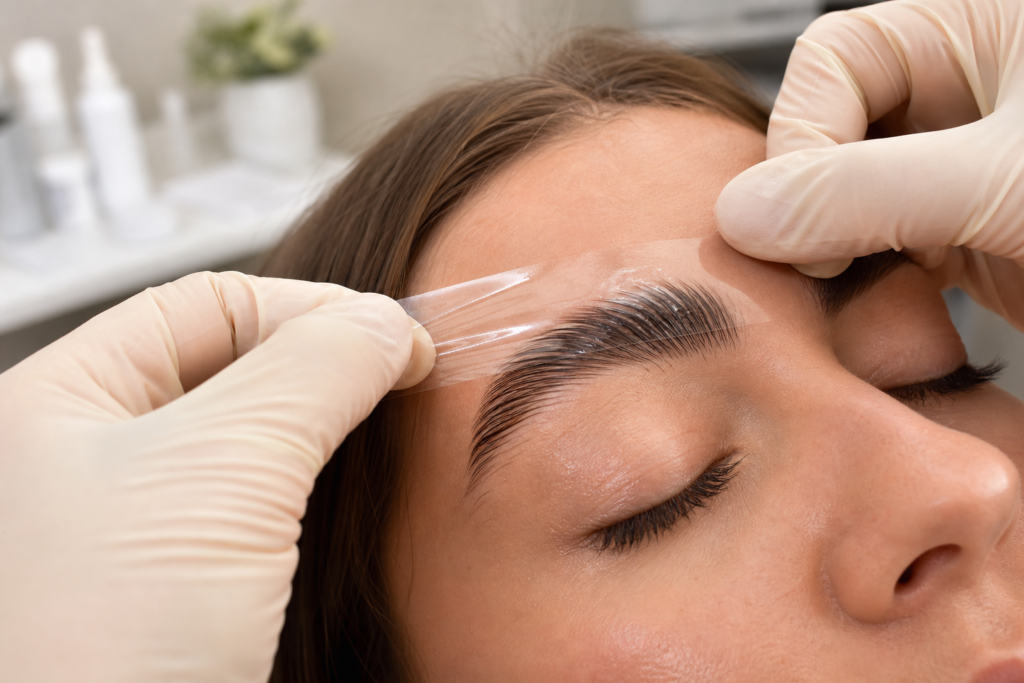
Technicians should apply protective barrier cream around the perimeter of the brow prior to applying lotion. Tailor processing times strictly to hair texture (e.g., 4 to 7 minutes for fine brow hair, 10 to 12 minutes for coarse brow hair). Perform a tension test every 2 minutes by gently lifting brow hairs with a microbrush to monitor bond breaking.
If an overprocessing event or poor result occurs without severe skin burns, refer to professional protocols for fixing a bad brow lamination to safely restore hair texture.
To ensure consistent application and maintain fresh chemical stability, professionals rely on high-quality systems from our brow lamination range, specialized brow lamination lotions, and professional lash lift aftercare solutions.
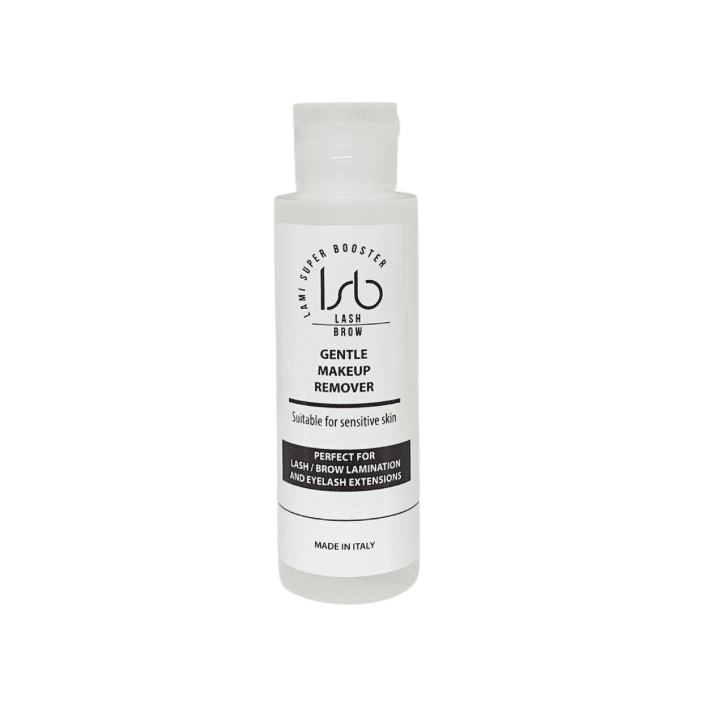
Gentle Makeup Remover, 6pc
Gentle Makeup Remover, 12pc
Elevate your salon’s service standards and protect your client relationships by pairing flawless technique with top-tier chemical systems. Explore our professional collection of single-use lotions, nourishing conditioning creams, and gentle cleansers designed to ensure safety and superior brow results on every client.