


Determining the safe timing for a repeat lash lift is one of the most critical decisions a beauty technician makes. While clients often want to maintain an immaculate, freshly lifted look, chemical restructuring alters the internal hair architecture. Chemical lifting solutions temporarily open the cuticle and break down internal disulfide bonds within the keratin structure, while setting solutions reform those bonds into a new shape. Repeating this chemical process too quickly weakens the hair shaft, leading to over-processed, brittle, or singed lashes.
Understanding hair growth cycles, assessing structural lash health, and adjusting technical application parameters allow professional lash technicians to schedule repeat treatments safely without compromising natural lash integrity.
Recommended Timeframe Between Lash Lifts
As a general professional guideline, the standard interval between lash lift appointments is 6 to 8 weeks. This timeframe aligns directly with the natural eyelash growth rate and hair replacement cycle. Because lashes continuously shed and replace themselves, most clients experience a mixed lash line by week 6, consisting of newly grown straight lashes alongside older lifted lashes.
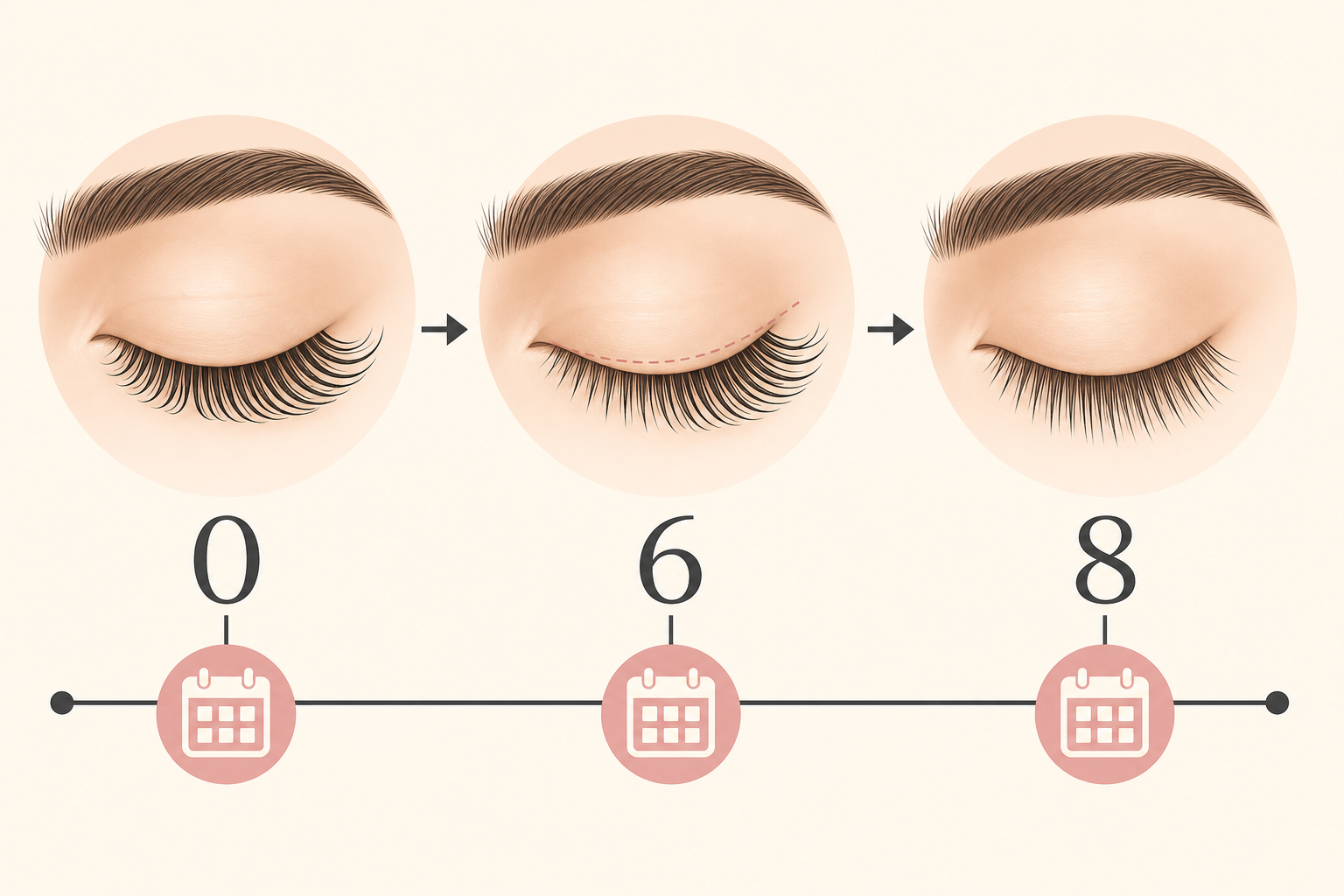
Clients frequently ask if 4 weeks is too soon for a repeat lift. While 4 weeks is considered the absolute minimum interval before re-processing hair, repeating the service this early should be reserved for exceptional cases – such as correcting severe under-processing – rather than routine maintenance. Re-lifting at 4 weeks carries a significantly higher risk of over-processing because a large percentage of the natural lashes were treated during the previous session and have not yet shed.
Understanding the stages of hair growth helps explain why spacing appointments correctly yields better results:
- Anagen (Growth) Phase: Active growth lasts approximately 30 to 45 days. Scheduling initial or repeat treatments during early anagen ensures that new growth receives a full, uniform lift.
- Catagen (Transition) Phase: Lasting 2 to 3 weeks, hair follicles shrink and growth stops. Lashes treated in late anagen or catagen will hold their curl until they naturally shed.
- Telogen (Resting) Phase: Lasting 4 to 9 weeks, dormant lashes naturally fall out to make room for new anagen growth.
Waiting 6 to 8 weeks gives the natural lash bed sufficient time to shed over-processed or previously lifted hairs, ensuring that the majority of lashes targeted during the repeat appointment are strong, uncompromised new growth.
Pre-Service Evaluation and Readiness Testing
Before booking or executing a repeat lash lift, conduct a thorough physical and structural assessment of the natural lashes under proper magnifying lighting. Never rely solely on the calendar interval; individual lash health must determine service eligibility.
Begin by testing lash elasticity. Lightly mist or cleanse the lashes with water to observe their wet response. Healthy lashes remain firm and pliable, whereas over-processed or structurally damaged lashes appear gummy, stretch excessively, or fail to spring back. If the hair shaft appears translucent, crimped, or wiry, postpone the lifting service.
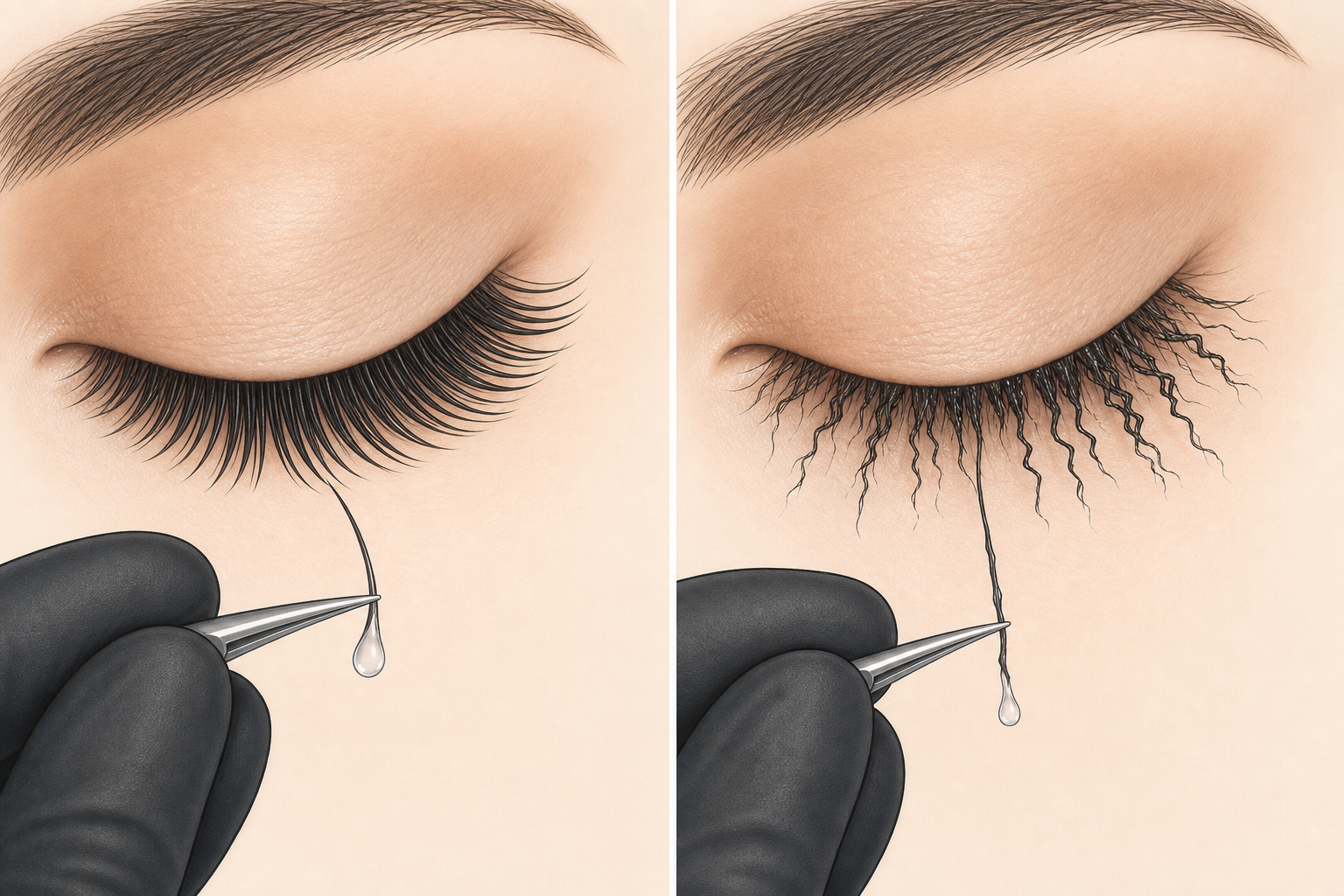
Inspect the lash line for the following red flags that indicate a repeat lift is contraindicated:
- Residual Strong Curl: If the previous lift remains tight across the mid-shaft, re-applying chemical solutions will cause severe over-processing. If you encounter tight or misshapen curl patterns, review protocols for over-curled eyelashes rather than performing a standard re-lift.
- Brittle or Frizzy Textures: Rough cuticle layers and split tips indicate severe moisture loss and broken structural proteins.
- Excessive Shedding or Gaps: Active lash loss signals a weakened follicle or disturbed growth cycle.
- Active Eye Conditions or Irritations: Consult complete lash lift contraindications before proceeding, ensuring the client is free from conjunctivitis, blepharitis, recent eye surgery, or positive patch test reactions.
If any of these conditions are present, refuse the lifting service, explain the structural risks to the client, and initiate a topical repair routine.
Technique Adjustments for Repeat Services
When repeating a service on a client whose lashes are healthy and ready for re-treatment, tailor your processing choices to account for remaining curl patterns and hair density.
When applying perming and fixing lotions from professional lash lift lotion categories, precise timing control is mandatory. Standard processing times vary based on lash thickness.
For repeat services where some mid-shafts retain subtle curvature, adjust shield placement and lotion placement. Apply lifting and setting lotions strictly to the root zone (the lower third to half of the lash shaft). Never extend Step 1 or Step 2 lotions to the delicate tips of the eyelashes, as this causes instantaneous burning and splitting.

For clients with delicate hair or those who require frequent maintenance, consider using gentler cysteamine-based systems or complete lash lift kits. Cysteamine HCl offers a lower alkaline pH alternative that reduces swelling of the hair shaft while delivering reliable curl definition.

Iconic Duo Cysteamine Lash Lift Kit medium

Always perform a hair readiness test during Step 1 by gently lifting a few lashes off the shield with a microbrush to check flexibility. If the hair yields easily, neutralize immediately rather than allowing the full timer to run out.
Maintaining Structural Lash Health Between Services
In-salon treatment safety depends heavily on home care practices maintained between client appointments. Educating clients on proper lash lift aftercare instructions prevents mechanical damage and protects cuticle hydration.
Instruct clients to observe strict initial guidelines, keeping lashes dry and free of steam or oil-based products for the first 24 to 48 hours post-treatment. Beyond the initial setting window, continuous lipid replenishment is essential. Incorporating proper protocols for moisturizing eyelashes prevents protein loss within the cortex.
Recommending targeted home care items from your salon’s lash lift aftercare range helps maintain hair flexibility until the next visit:
- Daily application of non-hormonal, peptide-rich lash serums strengthens new growth at the follicle level.
- Gentle, oil-free foam cleansers remove daily sebum and ocular debris without breaking down structural protein bonds.
- Daily brushing with a clean spoolie aligns growing lashes, preventing cross-tangling as new anagen hairs emerge.


Technicians performing professional eyelash lamination procedures should conclude every service with a keratin-infused nourishing cream. Leaving a professional lamination cream on the lashes for 5 to 10 minutes at the end of the chemical process seals the cuticle, restores lost moisture, and coats the shaft with essential amino acids and argan oil.
Safeguarding natural lash health requires a strict commitment to proper timing intervals, thorough pre-service evaluations, and tailored chemical processing. By maintaining an optimal 6-to-8-week retreatment schedule and equipping clients with professional aftercare routines, technicians can consistently deliver dramatic, lasting curl definition without over-processing hair structures. Explore our complete selection of professional lash lift supplies to stock your salon with premium, Italian-made lifting systems and nourishing formulas.
