

A lash analysis is the short assessment you run before you choose a shield, a lotion and a timer. It answers four questions: how long the lashes are, how thick and resistant they are, how healthy and dense they are, and whether the client is safe to treat at all. Skip it and you end up guessing, which is where over-curled “pigtail” lashes, under-processed lifts and avoidable reactions come from.
This guide focuses on lash lift, where the analysis decides the chemistry as well as the design, and ends with the extra checks you need when a client wears extensions. The table below is the quick version; the sections that follow explain the reasoning.
| What you find | What it changes |
|---|---|
| Lashes under 7-8 mm | Small shield |
| Lashes 8-12 mm | Medium shield |
| Lashes over 12 mm | Large shield |
| Thin, soft lashes | Shortest processing time in the system’s range |
| Medium lashes | Middle of the range |
| Strong, coarse lashes | Longest range |
| Infection, recent eye surgery, positive patch test | No treatment |
What to Check at the Consultation
Length
Measure with the client’s eyes closed and the lashes combed straight, at the inner corner, the centre and the outer corner, then plan around the lashes that carry the visible lift. In published anatomy data, upper lashes are typically 8-12 mm and lower lashes 6-8 mm, with 90-160 lashes on the upper lid. Lashes grow only 0.12-0.14 mm per day and rarely pass 12 mm, so a short lash is not a lash you can “grow out” before next week. Plan the shield for the length you have today.
Thickness and resistance
Fine lashes have less structure for the lotion to work on and process quickly. Coarse lashes resist, and under-processing is the usual failure with them. Judge this by eye under magnification, then confirm with the hair test your system recommends and by flex-checking the lashes as the step nears its end, so you see how quickly this client’s lashes are responding.
Do not carry timings from one system to another. One manufacturer chart runs from 4-5 minutes for very fine lashes up to 8-10 for coarse healthy lashes, while another published guide gives 9-12 minutes for thick lashes. For Iconic Duo, the figures are 4 minutes per step for thin lashes, 6-7 for medium and 8-10 for strong, always after a hair test. Chemistry, pH and viscosity differ, so the chart that ships with your system is the only reliable one.
Density, condition and growth stage
Look for gaps, breakage, a frizzy or brittle texture and a dull surface. Very short, damaged or brittle lashes are poor candidates, because chemical processing adds stress to a hair that has no reserve. Over-processed lashes need recovery time, not a second chemical service.
The growth cycle explains a lot of what clients report. Anagen, the growth phase, lasts roughly 4-10 weeks, catagen about 15 days and telogen about 4-9 months, so a full cycle runs 4-11 months. Lash biology references commonly cite only about 35-40% of upper lashes in anagen at any moment, so at every visit a share of the lashes you lifted are shedding and a share of new, short lashes are coming through. That is why a lift fades gradually rather than all at once, and why the 4-6 week re-lift window in our guide on how soon you can re-do a lash lift makes sense. For more on how phases affect timing, see stages of hair growth.
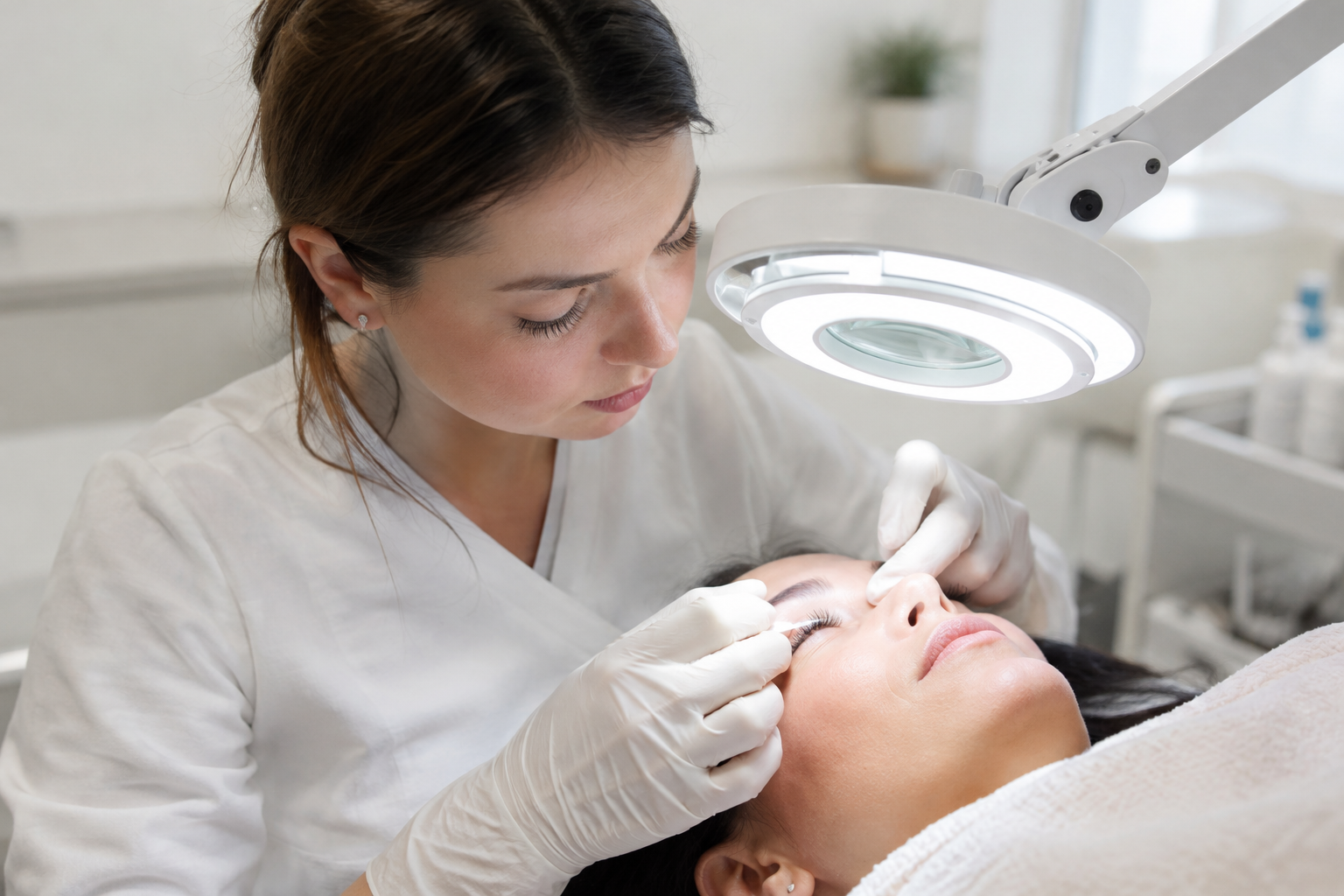
Eye anatomy and direction
Check the eyes open and closed. Note lid space, hooding, deep-set or prominent eyes, asymmetry and the natural growth direction of the lashes. Hooded and deep-set eyes are where shields earn their place: they lift the lashes outward and upward, so the tips do not fold back into the lid crease or touch the brow bone, as we explain in our article on the rod and shield method. Where the lashes cross or grow in different directions, separate them with a Y comb before the shield goes on.

From Analysis to Shield Size
The length bands in the table give you a starting point, and a dry fit confirms it. Place the shield without adhesive, brush the lashes over it and look at where the tips land. Natural lashes should cover roughly two-thirds of the shield’s curve, about 70-80%. If the tips reach the top or go over the edge, the shield is too small and you risk a tight crimp. If they barely reach the midpoint, the shield is too large and the lift will be almost invisible.
Take a client with 9 mm lashes who wants a natural, open look. The 8-12 mm band points to a medium shield. If the dry fit shows the tips stopping at about half the curve, size down. If the same client asks for a dramatic curl, a small shield is the option to test, again by dry fit. For Korean lash lift, we advise sizing up. Our shield size guide covers each size in more detail, and lash lift on short lashes covers the lower end of the range.
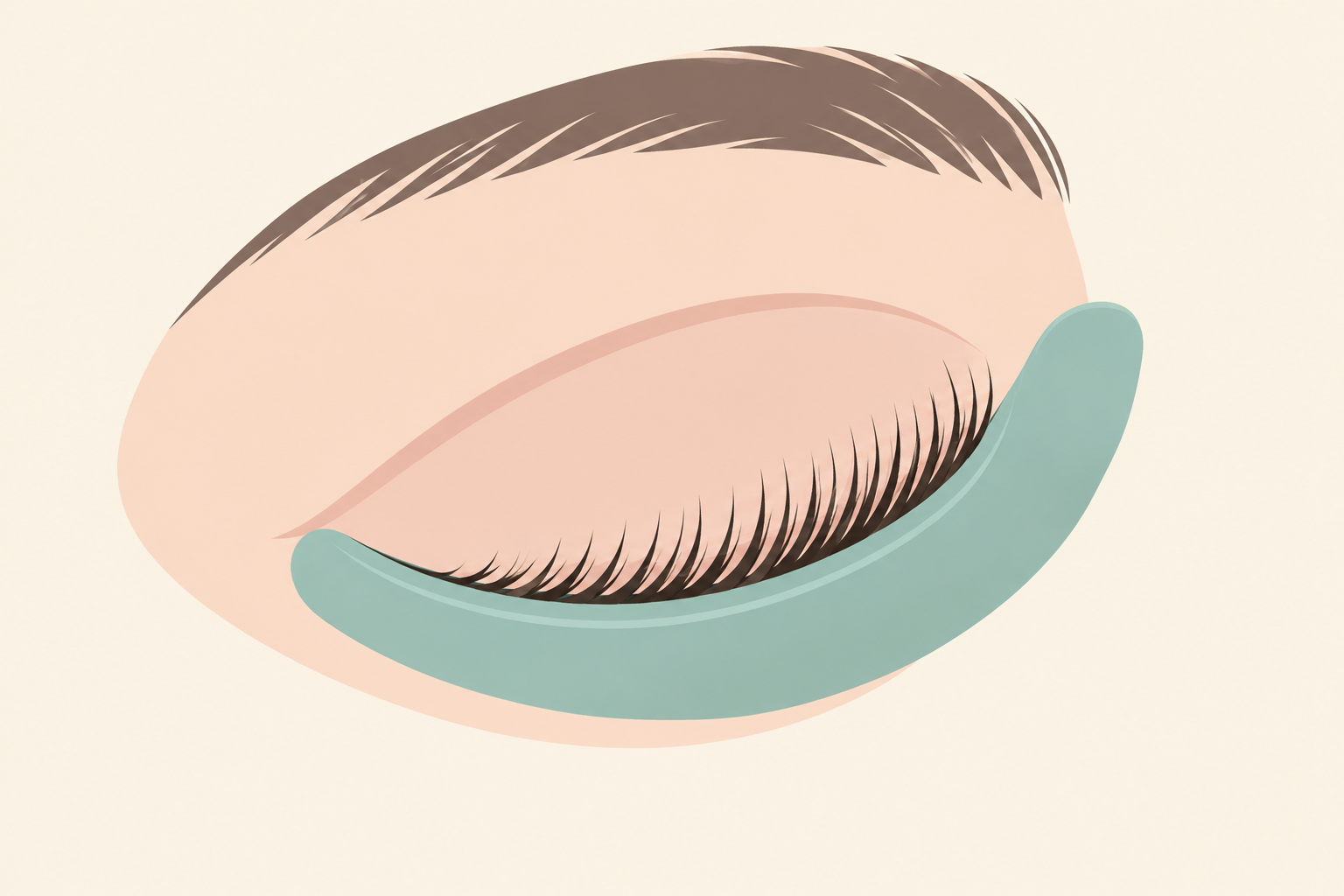
You can stock all three sizes in one set with our lash lift shields and patches.

Matching Chemistry to the Lash
A lifting lotion works by raising the lash from its natural pH of about 5.5 to an alkaline range of roughly 8.1-9.5. This swells the cuticle so the reducing agent can reach the cortex and break the disulfide bonds that hold the curl. The setting lotion then reforms those bonds around the new shape, which is why the shield position at that moment is what you are locking in.
The two common actives behave differently. Ammonium thioglycolate is the traditional, fast-acting reducer and suits thick, coarse or resistant lashes. Cysteamine HCl has a lower pKa, meaning it produces a workable amount of active reducer at a lower pH, and it is the usual choice for fine, tinted or already compromised lashes where you want more control. Our comparison of TGA vs cysteamine and the article on cysteamine HCl lash lift go through the trade-offs.
In practice: if the analysis shows strong, straight lashes that have never been treated, start in the upper part of your system’s range and check the curl. If it shows fine lashes, tinted lashes or a client who has been lifted repeatedly, use the lower part of the range and check early. A cysteamine system is fast-acting, so check the lashes every two minutes toward the end of each step. One manufacturer’s chart groups tinted lashes with fine ones, which matches this logic, but follow your own system’s instructions.
Our Iconic Duo is a two-step cysteamine HCl system that needs no third nourishing step.


Screening Before You Treat
The analysis is also where you decide not to treat. Active conjunctivitis, blepharitis or a stye are absolute stops, and the treatment waits until the infection has cleared. After eye surgery such as LASIK or cataract removal, we advise waiting at least six to eight weeks and asking for the surgeon’s clearance. Our page on lash lift contraindications has the full list.
Patch test the actual products. Manufacturer instructions differ, but a common protocol applies the lifting and setting lotions to separate spots behind the ear or on the inner elbow, rinses them after the stated time, and checks the skin at 24 hours, with some systems asking for 48. Any redness, itching or swelling means no treatment. Record the date and the result on the client card.
Extension Clients: What Changes
If the client wears or wants extensions, the same assessment applies with two extra limits. First, the natural lash decides the weight: one training guide suggests up to 0.12 mm for weak natural lashes, 0.15 mm for average and 0.18 mm for strong, and treats 0.20 mm classic lashes as too heavy even for strong lashes. Second, keep length within about 2-3 mm of the natural lash, because longer extensions increase leverage on the follicle.
Map the design from the eye itself: shape, hooding, spacing and symmetry. Hooded eyes in particular have no single correct map, so judge the lid with the eyes open before you decide where the longest lashes sit.
What to Record
A good record turns each visit into data for the next. Note the measured lengths, the hair-test result, the shield size, the minutes you ran for each step and each eye, the patch test date and any reaction. Add before and after photos. When a client returns after five weeks with a lift that has faded unevenly, those notes tell you whether to change the shield size, the timing or only the interval.
Treat the analysis as a fixed part of every appointment, not a first-visit formality. Lashes change with growth stage, previous treatments and the client’s health, and the notes you take today are what let you adjust tomorrow. Start by building a consultation card from the checks above, then stock your tray with the lash lift tools and accessories and a lash lift kit you can time accurately. For aftercare, a nourishing serum supports the lashes between visits.


