

For professional beauty technicians, mastering eyelash anatomy is not just an academic exercise – it is the foundation of every successful salon service. Whether performing a lash lift, tint, or brow lamination, your ability to assess the physical condition of a client’s hair shaft and understand its biological behavior directly impacts curl retention, structural safety, and client satisfaction.
The Structure of the Eyelash Shaft
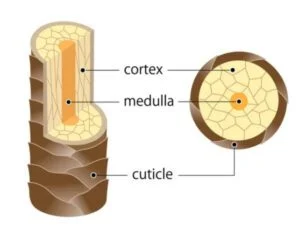
The visible part of the lash, known as the hair shaft, is a highly engineered keratinized structure composed of three concentric layers: the cuticle, the cortex, and the medulla.
- The Cuticle Layer: This is the outermost protective barrier of the lash shaft, composed of flat, overlapping keratinized cells that resemble shingles on a roof. A healthy cuticle lies flat, regulating moisture retention and shielding the internal structures from environmental damage. In professional treatments, the cuticle controls how quickly active chemical agents can penetrate the hair. Overprocessing can raise or permanently damage these delicate scales, leading to moisture loss and brittle, compromised lashes.
- The Cortex: Making up the main structural bulk of the hair shaft, the cortex contains dense bundles of keratin proteins that give the lash its high tensile strength and natural elasticity. The cortex also houses melanin granules, which dictate the natural pigment of the lash. Crucially for technicians, this layer is where the structural disulfide bonds reside. All chemical changes during lifting and curling take place within the cortex.
- The Medulla: Located at the very center of the lash shaft, the medulla is a loose, cellular core. It may be heavily fragmented, reduced, or entirely absent in fine, thin eyelashes. While the medulla plays a minimal role in the outcome of professional styling, recognizing that fine lashes lack this structural core reminds technicians to reduce exposure times to prevent over-processing.
The Anatomy of the Eyelash Follicle
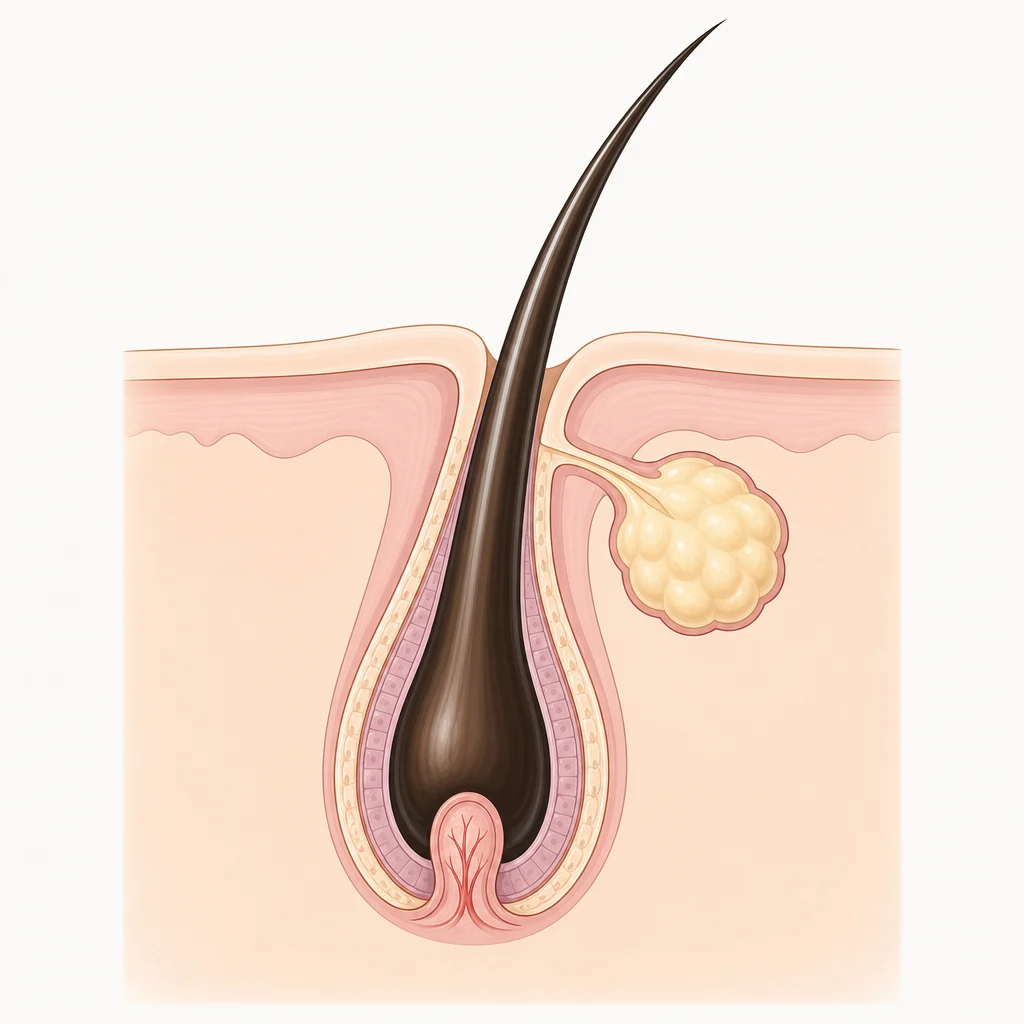
To support long-term lash health, a technician must look beneath the skin surface. The root of each eyelash is anchored deep within the eyelid dermis inside an individual follicle. You can learn more about this system in our comprehensive guide to eyelash follicle anatomy.
At the base of the follicle, the hair root widens into the bulb. This bulb wraps around the dermal papilla, a highly vascularized connective-tissue structure that supplies oxygen and vital nutrients directly to the growing hair cells via capillaries. Surrounding the growing shaft within the follicle is the inner root sheath, which dictates the cross-sectional shape of the lash, and the outer root sheath, which extends continuously from the epidermis to support follicle stability. Associated sebaceous glands near the root naturally secrete lipids to lubricate the lash shaft as it emerges. Disruptions to this delicate follicular environment can lead to stunted growth or early hair loss.
Chemical Bonds and Lash Lifting Dynamics
Every chemical lash treatment relies on manipulating three primary types of chemical bonds within the cortex. Managing these bonds requires a deep understanding of lash lift solution chemistry to alter the lash shape without compromising its structural integrity.
- Hydrogen Bonds: These weak physical bonds make up roughly 30% of lash strength and 50% of its flexibility. Hydrogen bonds are easily broken by water and heat, allowing lashes to be temporarily reshaped when wet or styled with heated tools. They reform naturally as the hair dries.
- Salt Bonds: Contributing approximately 35% to lash strength and 50% to its elasticity, salt bonds are highly sensitive to changes in pH. When alkaline perming lotions are applied to the hair, these bonds temporarily break. They must be re-stabilized using a balancing formula to return the hair to its natural neutral pH.
- Disulfide Bonds: These are the strongest, most stable chemical bonds in the cortex. Unlike hydrogen or salt bonds, disulfide bonds can only be broken and reformed through chemical reducing and oxidizing agents, such as those used in a keratin lash lift guide process. The lifting phase breaks these sulfur-to-sulfur links, permitting the hair to mold to the shape of the silicone shield. The neutralizer or fixing lotion then reforms these bonds in their new position to lock in the shape.
To safely break and rebuild these internal bonds without stripping the hair of vital nutrients, professionals rely on high-grade systems that combine advanced cysteamine-based lifting actions with nourishing botanical extracts.


The Eyelash Growth Cycle
Developing a consistent, predictable treatment schedule requires mapping your appointments to the lash growth cycle. Because lashes do not grow all at once, you must adjust your techniques based on the developmental stages present during your client assessment. Read more on how this impacts scheduling in our hair growth cycles overview.
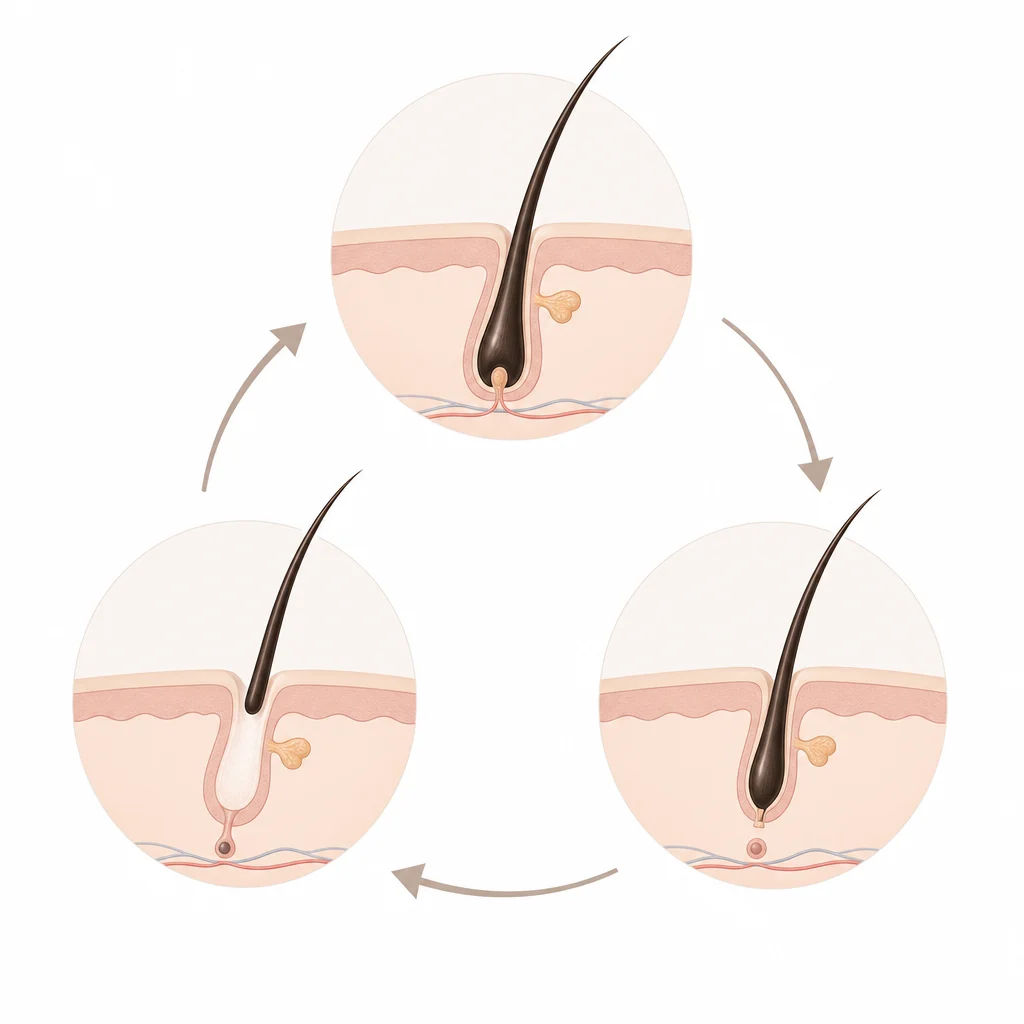
- Anagen (Active Growth) Phase: Lasting approximately 30 to 45 days, this is the active growing period. Growth occurs at an average rate of 0.12 to 0.14 mm per day. Typically, about 35% to 40% of upper lashes (and 15% to 20% of lower lashes) are in the anagen phase at any given moment. Because these young lashes are actively growing, a lash lift performed on them will grow out first, which is why a detailed eyelash growth rate analysis is essential when planning retreatment intervals.
- Catagen (Transition) Phase: Over a brief period of 2 to 3 weeks, active growth stops, the hair follicle begins to shrink, and the lash root detaches from the dermal papilla. Lashes in this phase are highly sensitive; because they are no longer receiving direct nutrients from the bulb, any chemical overprocessing or physical trauma can cause premature shedding.
- Telogen (Resting) Phase: This resting period can last more than 100 days (frequently 3 to 4 months) before the dormant lash naturally sheds to make room for a new anagen hair. Approximately 50% or more of a client’s lashes are in the telogen phase. Understanding this phase helps technicians reassure clients that natural shedding is not a sign of damage. If clients experience excessive loss, you can consult our resource on eyelash shedding solutions to help troubleshoot external causes.
Beyond these natural phases, internal systemic factors can accelerate shedding or weaken the lash structure. For instance, understanding hormonal influences on lash growth or assessing the impact of vitamin D on lash health can help you explain sudden changes in a client’s lash density or texture, allowing you to adapt your processing times accordingly.
Professional Treatment Considerations and Assessment
Before beginning any treatment in the lash lift category, a thorough physical assessment of the client’s lash health is mandatory. Use these physical parameters to guide your clinical decisions:
- Lash Direction: Downward-pointing or stubbornly straight lashes often require slightly longer processing times or a firmer mechanical pull on the silicone shield. For optimal results, master the rod and shield lash lift method.
- Lash Thickness: Fine, fragile, or previously chemically processed lashes require a significantly reduced processing window (e.g., 4 to 6 minutes for step 1 lotions). Coarse, thick lashes with dense cuticle layers can tolerate up to 10 to 12 minutes to ensure the lifting lotion successfully reaches the cortex.
- Adhesive Application: Apply a controlled 1mm layer of water-soluble adhesive to the silicone shield to secure the lashes without creating an impenetrable barrier. Excess adhesive blocks the lifting lotion from penetrating the cuticle, leading to uneven curls.
- Pre-treatment Cleansing: Oil, debris, and cosmetic residue act as chemical barriers on the cuticle layer. Gently cleansing the eye area prior to treatment ensures the perming lotions can work evenly.


Restoring and Protecting Lash Anatomy
Because lifting and lamination temporarily alter the hair’s natural chemical bonds, the post-treatment phase must focus on cuticle closure and deep hydration. Incorporating eyelash lamination techniques into your services helps rebuild the damaged keratin chains.
After neutralizing the lashes, applying a nutrient-dense cream-mask formulated with keratin, argan oil, jojoba oil, and amino acids is recommended. Leaving this on the lashes for 5 to 10 minutes seals the newly lifted cuticle scales, locking in moisture and leaving the lashes looking visibly fuller, darker, and healthier.
To support long-term lash health at home, technicians should direct clients to the lash lift aftercare category and provide a professional guide on maintaining healthy eyelashes. Daily application of a peptide-rich serum from the lash serum category will nurture the follicle from the root up, ensuring the next generation of anagen lashes emerges strong and resilient. To sustain this cycle of care, proper post-treatment lash lift aftercare is highly recommended during the critical 24-to-48-hour window.


By aligning your professional techniques with the biological realities of the eyelash shaft, follicle, and growth cycle, you elevate your services from basic styling to advanced, health-focused lash therapy. To equip your workstation with professional-grade, Italian-manufactured formulas designed to protect the natural lash structure, explore our curated professional systems today.
