


Curling lotion – often referred to as perming or lifting lotion – is the foundational chemical agent in professional lash lifting and brow lamination. Its primary role is to initiate a controlled chemical reaction that restructures the natural hair shaft. By breaking down disulfide bonds within the keratin protein structure, curling lotion makes stiff or straight hairs flexible, allowing beauty technicians to mold lashes over silicone shields or adjust brow hair direction with precision during an eyelash lamination or lift service.
Understanding how these formulations interact with hair biology allows technicians to customize treatment times, select suitable active ingredients, and protect natural hair integrity while achieving consistent, long-lasting results.
Chemical Mechanism and Active Ingredients
The transformation of lashes and brows relies on a two-step redox (reduction-oxidation) chemical process. During the first phase, the active reducing agent in the curling lotion penetrates the hair cuticle to cleave approximately 20% to 30% of the cystine disulfide bonds in the keratin fiber. This temporarily softens the hair shaft so it can conform to the shape of the lifting shield or brow styling direction.
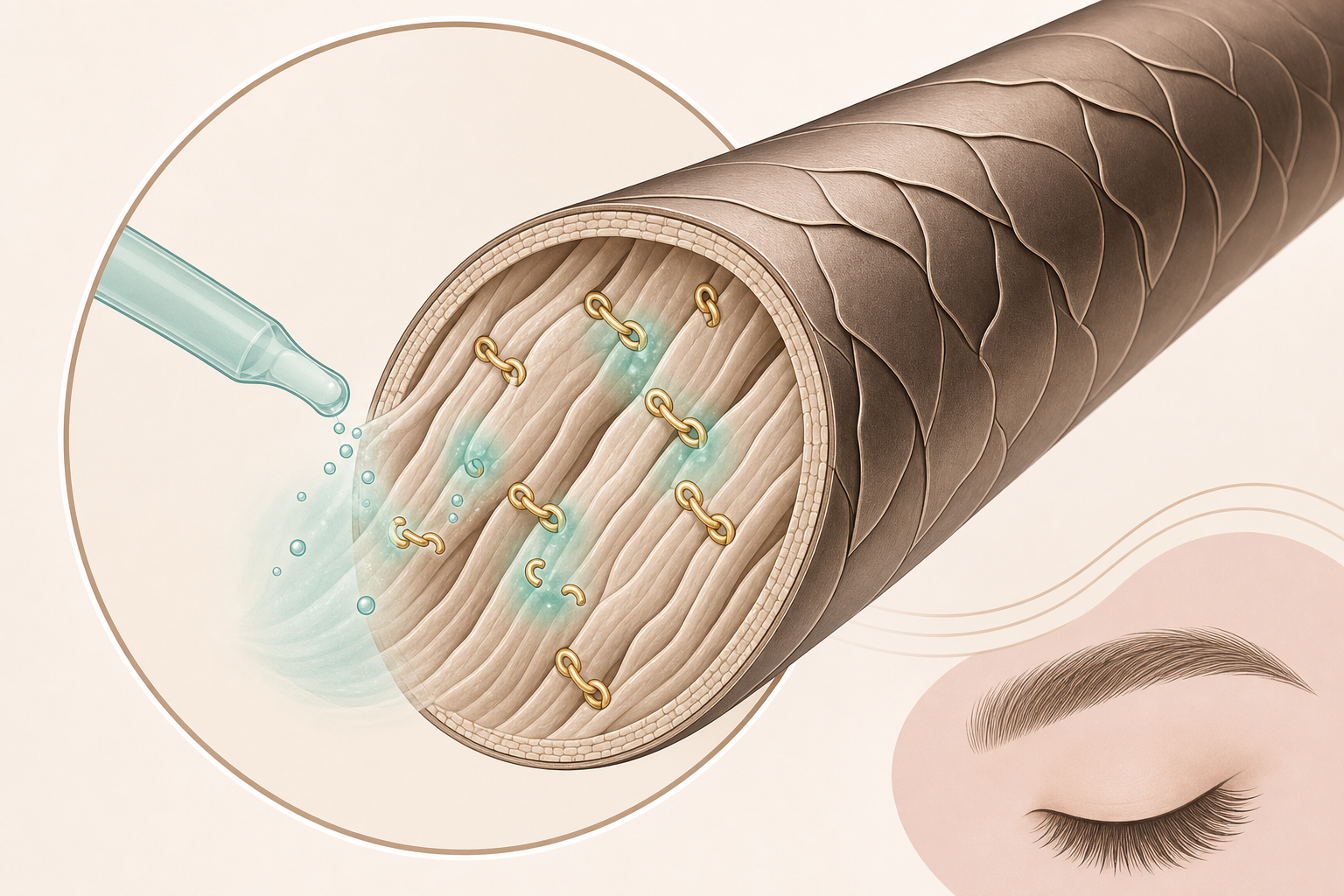
Professional curling lotions primarily utilize one of two active reducing agents, as detailed in our guide on lash lifting lotion active ingredients:
- Ammonium Thioglycolate: A traditional, high-performance reducing agent that efficiently opens hair cuticles and breaks disulfide bonds. It is highly effective on coarse, rigid, or resistant hair structures, making it a reliable choice for clients requiring stronger chemical action.
- Cysteamine HCl: A modern, gentler active ingredient derived from an amino acid analog. Cysteamine HCl softens hair bonds evenly while minimizing the risk of over-processing, making it ideal for fine hair and sensitive eyes.
Modern professional systems frequently pair these active agents with conditioning additives such as aloe vera, castor oil, plant peptides, and plant stem cells to maintain moisture balance during processing.


Selecting Formulas Based on Hair Porosity and Texture
Selecting the correct curling lotion strength and processing time requires a direct assessment of the client’s hair porosity, thickness, and overall hair structure:
- Low-porosity hair: Tight, flat cuticle layers resist moisture and solution penetration. For low-porosity lashes, technicians can use a dedicated prep primer or protein remover to clear surface oils, apply standard or cysteamine-based solutions, and utilize slightly longer processing times while monitoring curl development closely.
- Normal-porosity hair: Cuticles absorb products at an even, predictable rate. Standard processing times using classic lash lift lotions deliver consistent lift without requiring formula modifications.
- High-porosity or damaged hair: Open or compromised cuticles absorb liquid rapidly, increasing the risk of chemical stress. Processing times must be reduced by 10% to 20%, and gentler cysteamine HCl-based solutions or nourishing additives should be selected.
To accommodate different styling preferences and specialized application methods, technicians can choose between classical lash lift formulations and flexible Korean lash lift solutions. Texture modifiers can also be incorporated into lifting lotions to create a stickier, glueless consistency for Asian lash techniques or glueless lift shields.

Lash Lift Glue Powder

Application Techniques for Lash and Brow Services
Precision during application prevents product migration into the eyes and ensures uniform curl development. Technicians should tailor their approach based on whether they are performing a lash lift or brow lamination.
Lash Lift Application
After securing natural lashes onto a silicone shield, apply a 1mm uniform layer of curling lotion along the base and middle third of the lash line using a microbrush or fine applicator tool. Avoid applying lotion directly to the delicate lash tips or contacting the waterline.
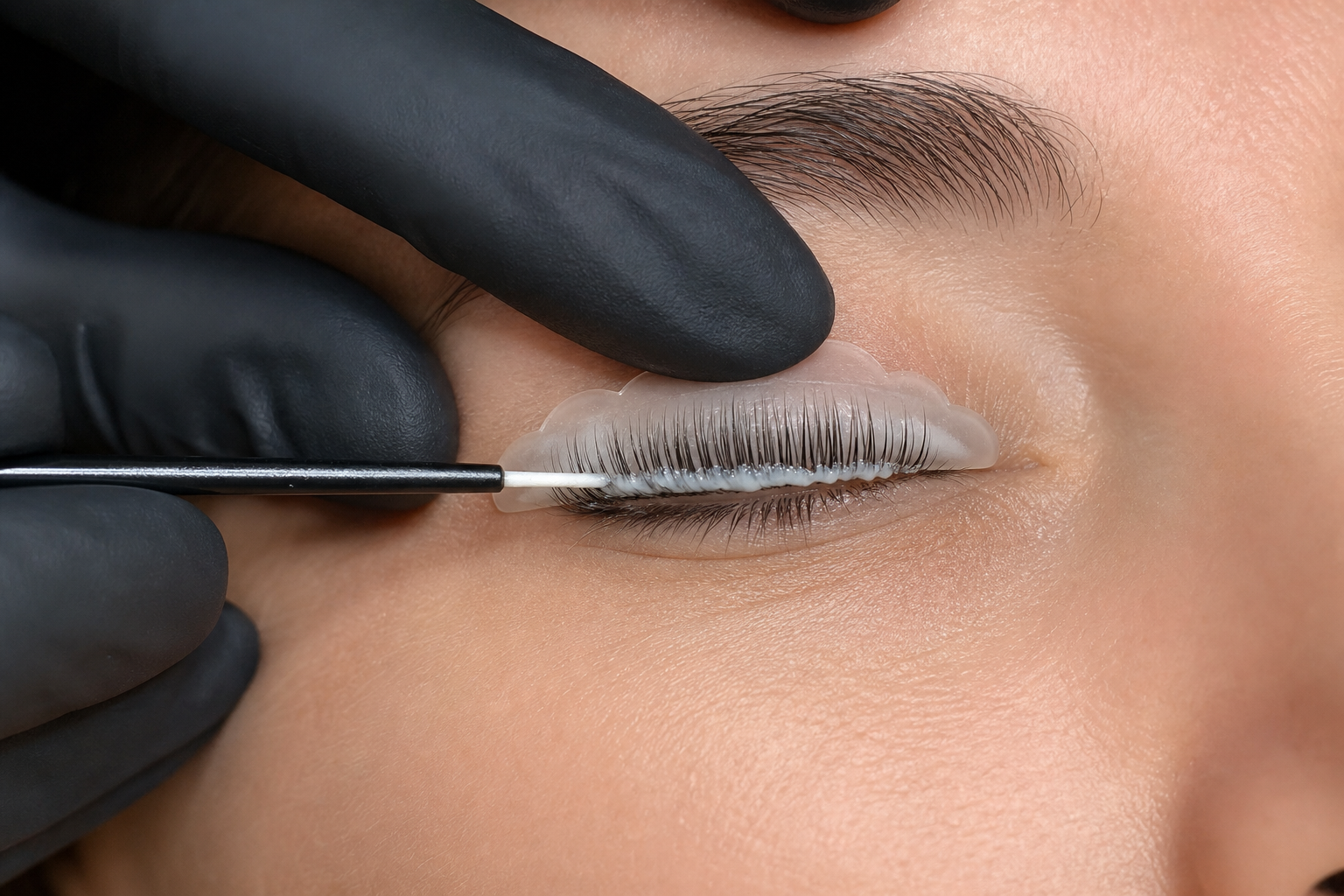
Keep the product in place for the targeted duration based on hair structure. Once processing is complete, remove the lotion thoroughly using a dry cotton swab or microbrush before advancing to the neutralizer phase.
Brow Lamination Application
Brow hairs require even coverage across the entire hair shaft to achieve uniform direction control. Using brow lamination lotions, sweep the product through the brows in gentle upward strokes with a spoolie or applicator brush.
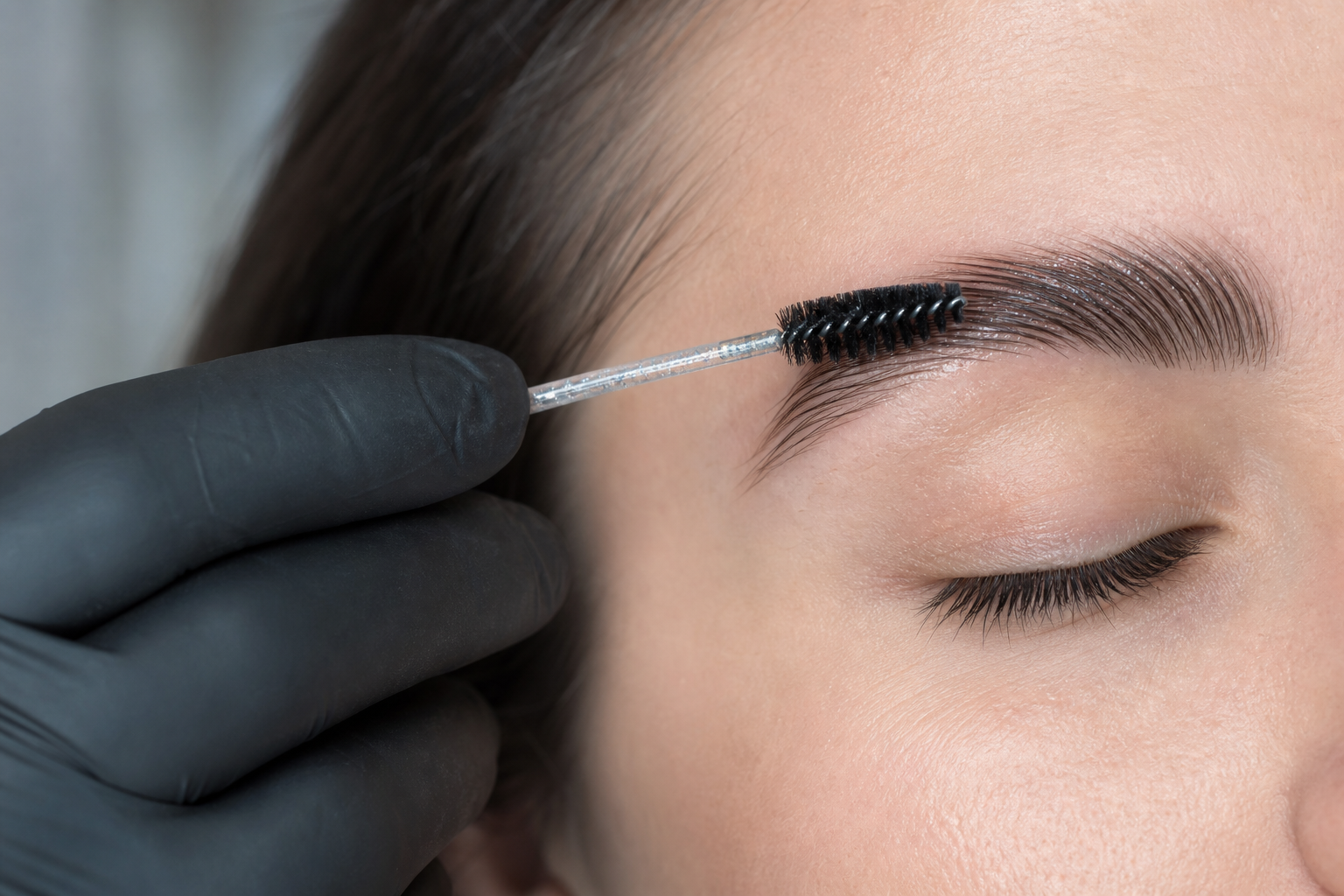
Monitor hair flexibility every 2 minutes by gently nudging the hairs into position.
Neutralization and Bond Reform
Curling lotion only completes half of the structural transformation. It must always be followed by a neutralizer to lock the new shape. Understanding the structural role of fixing lotion is crucial: fixing solutions lower the pH and oxidation state, reforming broken disulfide bonds into their new curled configuration. Skipping or incorrectly timing this step leaves hair bonds open, resulting in rapid curl relaxation or weakened hair fibers.
Troubleshooting and Safety Protocols
Maintaining consistent client safety and hair integrity requires strict adherence to hygiene standards and timing precision.
Preventing Processing Errors
When treatments fall short of client expectations, timing and hair assessment are usually the primary factors:
- Under-processing: Characterized by insufficient lift, uneven curl patterns, or premature dropping within a few days. Review our guide on resolving lash lift under-processing to adjust processing times, refine shield selection, or improve pre-treatment degreasing.
- Over-processing: Results in frizzy, crimped, or brittle ends due to extended exposure or incorrect product strength. If signs of over-processing occur, remove the lifting lotion immediately with a dry swab and apply neutralizing fixing lotion to stop chemical action.
Professional Safety Standards
To ensure safe service delivery across all treatments:
- Conduct patch tests at least 24 to 48 hours prior to the procedure.
- Ensure all applicators, shields, and isolation tools are thoroughly sanitized prior to use.
- Keep eye wash solution nearby and instruct clients to keep their eyes closed throughout the service.
- Store perming lotions in a cool, dry environment around 20°C (68°F), keeping single-use sachets sealed until application to prevent active ingredient oxidation.
Restoring Hair Integrity with Nourishing Care
Chemical treatments temporarily open hair cuticles and remove moisture. Applying a deeply hydrating lamination cream post-fixation closes cuticles, locks in essential vitamins, and reinforces natural keratin proteins. Formulas containing hydrolyzed keratin, argan oil, jojoba oil, and silk protein nourish lashes and brows, leaving them visually thicker, darker, and resilient against daily friction.


Mastering Professional Lash and Brow Restructuring
Understanding the chemical mechanics of curling lotions – from disulfide bond cleavage to formula selection based on porosity – enables beauty professionals to deliver tailored, safe, and striking lash lifts and brow laminations. Matching active ingredients like Ammonium Thioglycolate or Cysteamine HCL to hair texture ensures predictable results while preserving natural hair health.
Elevate your treatment menu and refine your lash and brow styling protocols by exploring our professional lash lift and brow lamination formulations, tools, and education resources today.
