



In professional brow styling, determining that brow hair is “too long” is a matter of structural assessment rather than simple personal preference. While naturally longer hair strands occur in many clients, unruly length can also result from age-related changes, hormonal shifts, or an extended anagen growth phase. For a beauty technician, the main challenge is reducing length while preserving internal density and avoiding gaps that disrupt natural symmetry.
Achieving control over long brow hairs requires combining precise mapping, conservative trimming, and chemical redirection when appropriate. Integrating these steps alongside established brow shaping techniques allows technicians to maintain clean, defined silhouettes that meet high salon standards.
Understanding Brow Growth and Hair Length
Managing length effectively starts with understanding the biological brow growth cycle. Eyebrow hair has a significantly shorter active growth phase than scalp hair. The anagen phase for brows generally lasts between 30 and 45 days (four to eight weeks), growing at a rate of approximately 0.12mm to 0.14mm per day.
When brow hairs appear excessively long, they have typically reached the maximum extension of their anagen phase without shedding. These longer hairs can droop downward or project outward, breaking the top line of the brow shape. Before cutting into the brow body, evaluate whether the extended hair length can be redirected upward or outward to align with current eyebrow trends, such as soft, full, or laminated styles.
Assessing Brows: Trimming vs. Chemical Redirection
Trimming should never be an automatic default for long brow hair. Over-trimming removes the hair’s natural tapered tip, leaving a blunt, thick cross-section that feels stiff and looks coarse. Before reaching for tools, conduct a systematic evaluation during consultation:
- Perform a directional check by brushing brow hairs straight up toward the hairline using a clean spoolie. If a hair extends more than 2mm beyond the mapped top boundary, a micro-trim may be indicated.
- Conduct a density check to evaluate the underlying structure. Long hairs often overlap to cover sparse gaps in the brow map. Removing that length can expose empty areas and make the brow appear thin or patchy.
- Evaluate hair texture. Coarse or rigid hairs that grow at sharp outward angles rarely lay flat after trimming alone. For these clients, chemical redirection through brow lamination treatments is often more effective, transforming extra length into visible fullness.
Hygiene and Tool Sanitation Protocols
Maintaining strict hygiene standards is required before performing any manual trimming or styling service:
- Non-porous multi-use tools, including stainless-steel scissors, separation picks, and brow combs, must be thoroughly cleaned with soap and warm water to remove organic debris prior to use on each client.
- Cleaned implements must be fully immersed in an EPA-registered disinfectant for the manufacturer’s required contact time, then air-dried and stored in a clean, dust-tight container.
- Single-use items such as disposable spoolies, fine-tip applicators, and micro-brushes must never be disinfected or reused between clients; discard them immediately after a single service.
- Any implement that accidentally pierces the skin or comes into contact with blood must be safely discarded or subjected to full cleaning and high-level sterilization before future use.
Step-by-Step Precision Trimming Protocol
When trimming is necessary to clean the mapped outline, technicians must proceed conservatively to avoid altering the core bulk of the brow.
- Thoroughly cleanse the brow area with specialized cleansing foam to remove oil, makeup residue, and sebum, ensuring individual hairs separate cleanly.
- Map the brow boundaries using precise facial landmarks to establish clear upper, lower, and arch reference lines.
- Brush the hair upward toward the hairline using specialized brow lamination tools to reveal protruding tips.
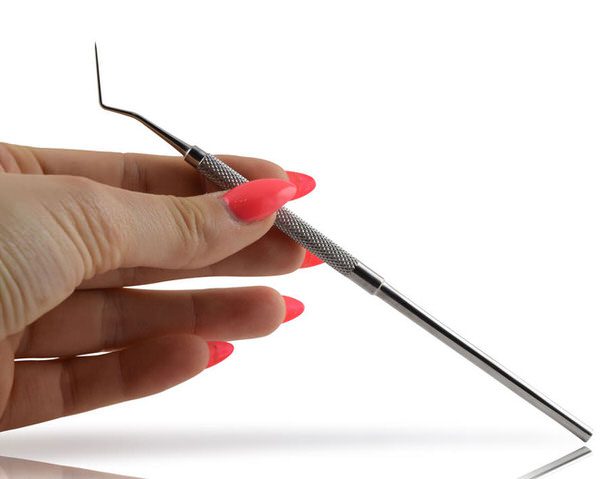
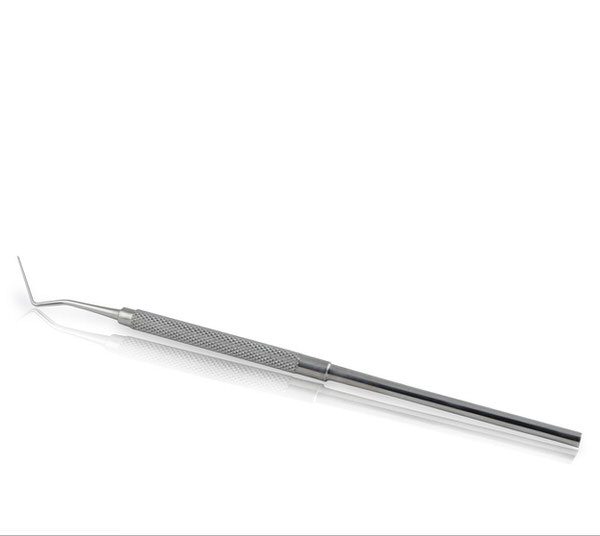
- Use a dedicated separation tool to isolate single long hairs that break the upper border line.
- Hold professional brow scissors at a slight angle matching the brow arch direction. Never hold scissors horizontal or cut straight across a section of hair.
- Trim only the tip of one isolated hair strand at a time, removing no more than 1mm per snip.
- Brush the brow hairs back into their natural growth direction after every snip to evaluate how the length settles before making further cuts.
- Perform a downward check by brushing tail hairs toward the cheek. Trim only extreme tips extending beyond the lower tail boundary, leaving the front bulb untouched to preserve a soft, natural head.

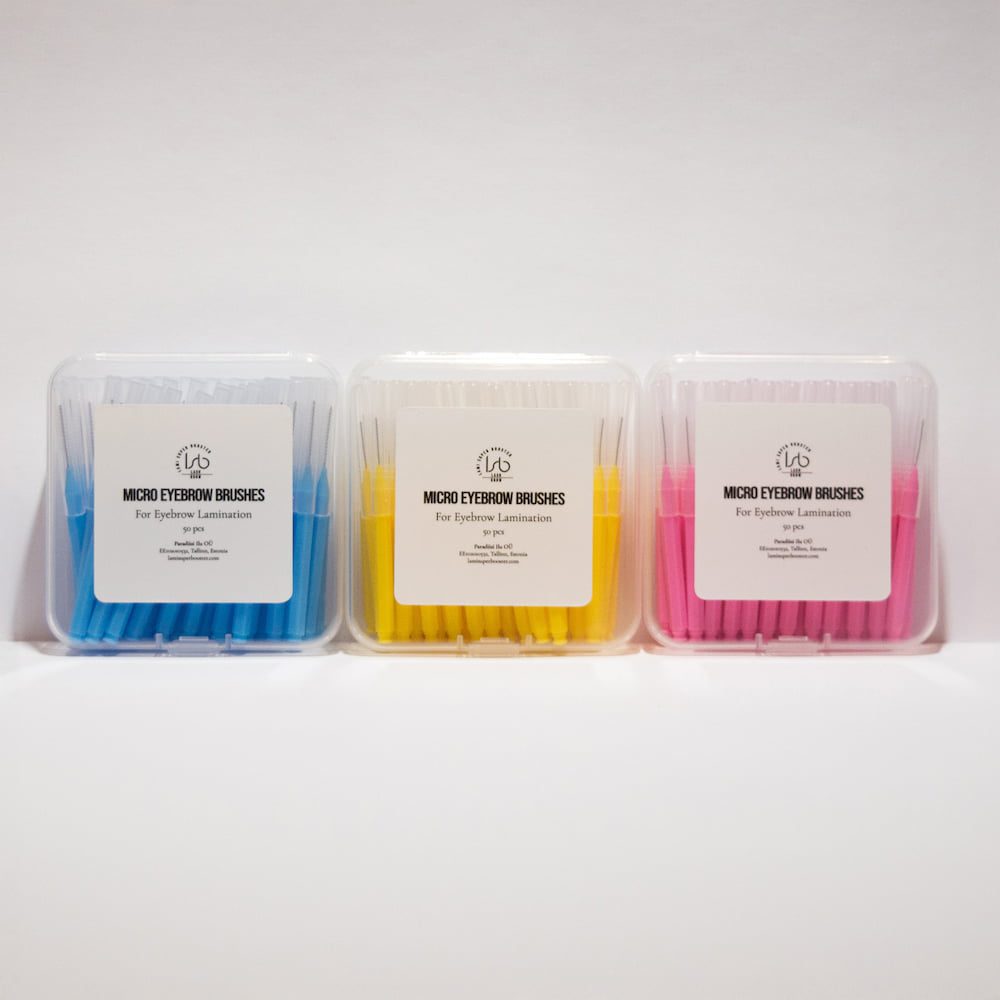
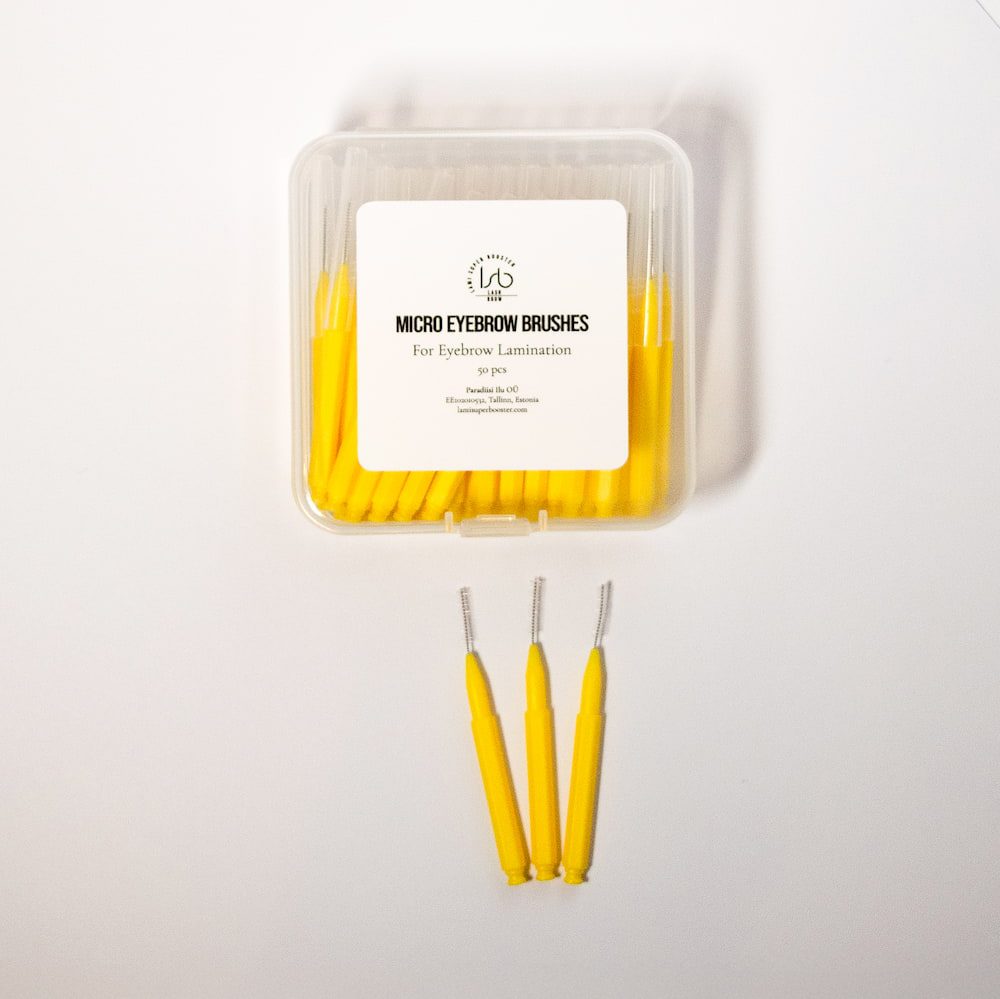
50 Micro Eyebrow Brushes
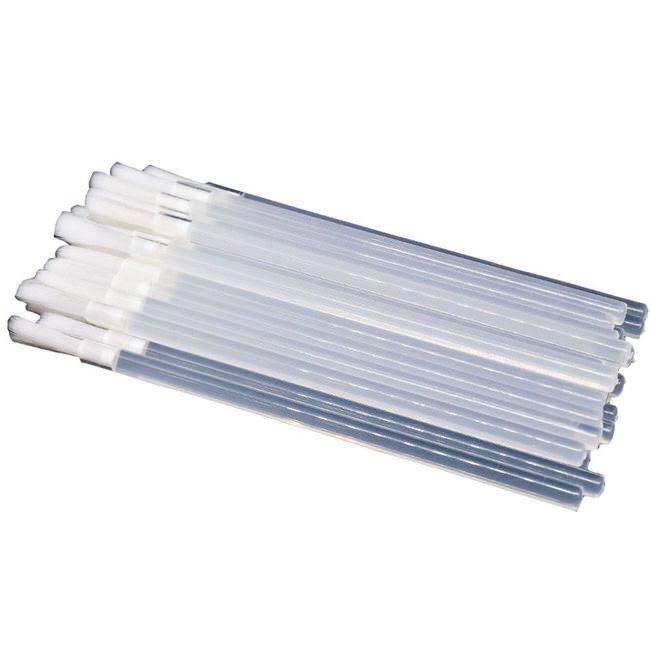


Managing Length with Brow Lamination
Longer eyebrow hairs are frequently an asset during chemical lamination services. Rather than cutting away healthy hair, lamination breaks the hair’s internal disulfide bonds, making coarse or downward-growing hair pliable enough to reset in a lifted, uniform orientation.
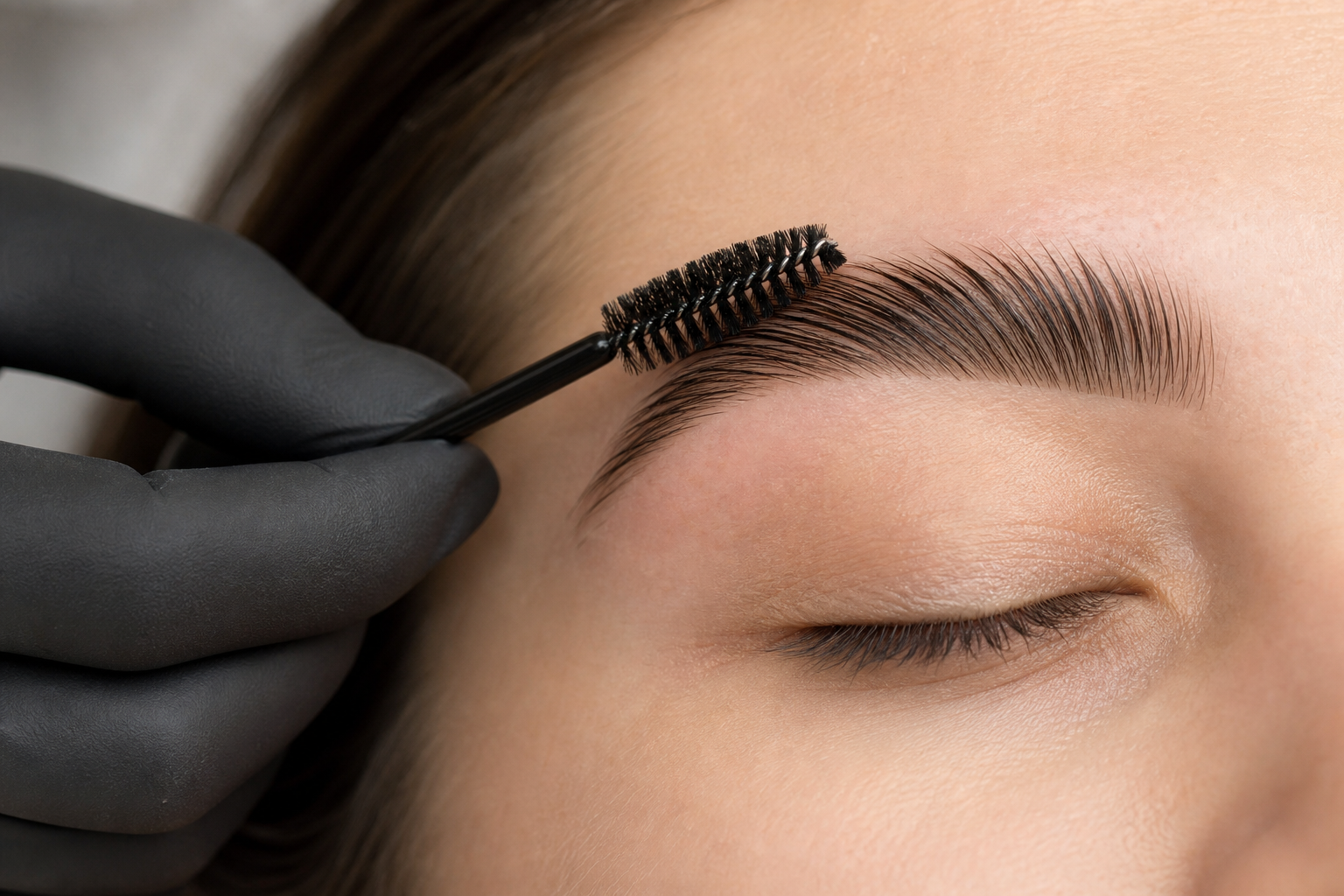
- Apply step 1 perming lotion evenly from root to mid-length, keeping product light near fine hair ends.
- Re-align the brow hairs into the mapped direction using a Y-comb or brush.
- Apply step 2 fixing lotion to lock the newly aligned hair structure into position.
- Apply a dedicated lamination cream for 5 to 10 minutes at the final stage to close the hair cuticles, lock in moisture, and restore flexibility.
- If any irregular tips extend past the design outline after fixing and nourishing, perform a minimal micro-trim on those specific ends at the conclusion of the service.
Educating clients who experiment with at-home brow lamination on these steps helps prevent chemical damage and excessive home cutting.

Safety, Contraindications, and Preventing Over-Thinning
Protecting skin integrity and follicle health must remain central to every service. Before applying chemical solutions or performing hair trimming, evaluate the client for key contraindications:
- Refuse brow services and recommend medical evaluation if active infectious skin conditions are present in or near the treatment area, including folliculitis, impetigo, active pustular acne, or fungal infections.
- Delay treatment if the client exhibits open wounds, abrasions, scabs, severe sunburn, or recent chemical peel irritation around the eye zone.
- Avoid trimming hair short within the bulb (front head) of the brow; doing so creates upright, stubbly ends that cannot be smoothed smoothly.
- If brow hair becomes brittle or mishandled from prior over-processing, refer to protocols for correcting a brow lamination gone wrong to restore structural health before attempting further reshaping.
Client Aftercare and Maintenance
Guiding clients on proper daily care preserves the polished shape between salon visits. For the first 24 to 48 hours following a service that includes lamination or shaping, instruct clients to keep their brows completely dry, avoiding steam rooms, heavy sweating, and face-down sleeping position. Recommend a daily peptide-enriched brow serum after the initial 48-hour window to keep hair flexible, hydrated, and easier to brush into place.
Controlling overly long eyebrow hairs requires a balance of measured micro-trimming and strategic directional styling. By mapping accurate lines, enforcing clean sanitation protocols, and using chemical redirection to preserve density, beauty technicians can deliver symmetrical, polished brow results for every client. Enhance your service precision by reviewing our selection of professional brow kits and styling accessories.
